In-Home Rehab Support for Safer Recovery After Discharge
September 24, 2026
On this page
⚡ Quick Answer
- Recovery after a hospital stay works best where daily life happens: a kinesiologist builds the plan around the actual chair, hallway, and front steps.
- In the first two weeks, clear the walking routes, check chair and bed height, book an assessment, agree a daily minimum, and know the stop signs.
- One-to-one in-home rehab suits early recovery; group wellness programs in care homes keep the gains going once someone is steadier.
- The clearest outcomes are safer independence and restored confidence: standing up more easily, walking farther, and managing stairs with control.
Coming home after a hospital stay can bring relief, but it often comes with new worries too.
Simple tasks like getting out of a chair, walking to the bathroom, or managing stairs can suddenly feel less certain.
For many older adults and their families, the real challenge begins after discharge, when recovery needs to continue safely in everyday life.
In Canada, 70% of older adults who had a fall-related injury sought medical attention, which is why recovery at home should focus on lowering the risk of a setback, not just healing, as Canadian fall prevention guidance makes clear.
Safe recovery is about rebuilding confidence and helping seniors stay independent at home, which is why personalized in-home support matters so much, especially when it is guided by professionals who understand mobility, strength, and fall prevention.
At HomeStretch, our kinesiologists deliver pre- and post-operative rehabilitation in seniors' homes across Ontario, so recovery happens where daily life does.
Why recovery works better when support happens at home
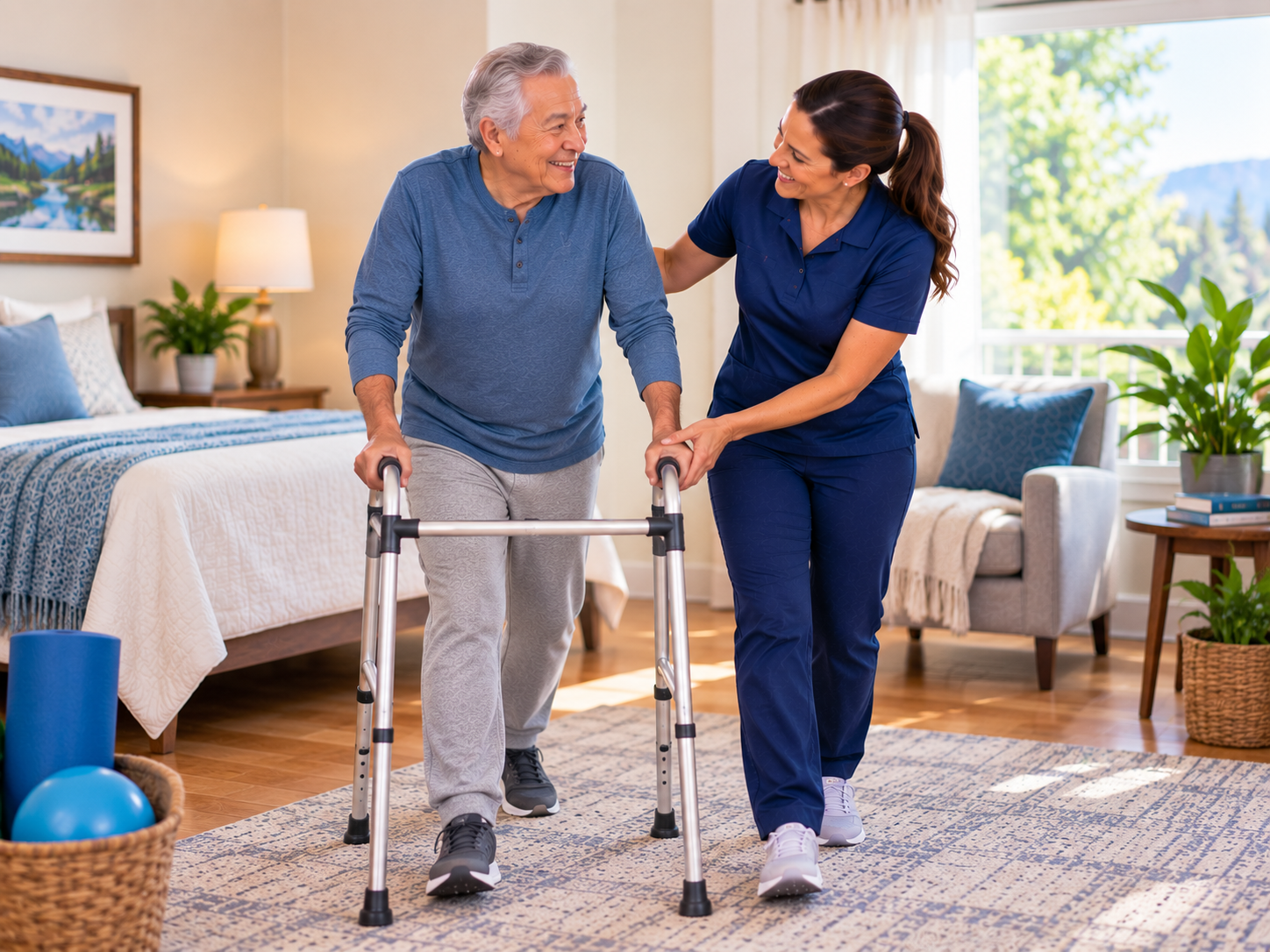
After discharge, a generic exercise sheet is rarely enough. Older adults recover best when movement plans match their actual home setup, current abilities, and personal goals. In-home rehab support allows us to see where recovery is happening, whether that means practicing a safer sit-to-stand from a favourite chair, improving balance in a narrow hallway, or building enough leg strength to manage front steps with more confidence.
This kind of support is especially valuable after surgery, illness, or a decline in mobility, because progress needs to be practical. Our pre and post-operative rehab work focuses on building strength, improving mobility, and helping seniors recover confidently where daily life actually happens, at home. That is also why many families find in-home support for seniors more effective than asking an older adult to travel while they are still regaining stability.
Guided by kinesiologists, not guesswork
Professional oversight matters during recovery. Kinesiologists are trained in human movement, functional exercise, and safe progression, which makes a meaningful difference for older adults who need more than motivation alone. We assess how someone moves, where they feel unsteady, what activities matter most to them, and how to build a plan that supports safer day-to-day function.
Our team is kinesiologist-led, and our programs are built specifically for seniors, not adapted as an afterthought from general fitness services. That means the work is grounded in evidence, informed by real movement mechanics, and shaped around independence, balance, and confidence. You can see that approach in how our team and services are built around fall prevention, senior fitness, post-surgery rehabilitation, and community wellness.
The first two weeks after discharge
The days right after coming home set the tone for recovery. Five things families can do in that window:
- Clear the walking routes. Bed to bathroom, chair to kitchen, front door to car. Move rugs, cords, and low furniture out of the way and add a night light along the bathroom route.
- Check chair and bed height. A seat that is too low makes every sit-to-stand harder. A firm cushion or bed risers can make the difference on day one.
- Book the assessment. Once the discharge team has cleared activity, an in-home assessment turns the hospital's instructions into a plan that fits the house and the person.
- Agree a daily minimum. A few short walks indoors and a handful of supported sit-to-stands, done every day, beat one long effort followed by three days of rest.
- Know the stop signs. New or sharp pain, dizziness, swelling, or unusual shortness of breath mean stop and call the care team, not push through.
You can also read What In-Home Rehab Services Help After Surgery in Canada? for a closer look at what a typical in-home rehab session includes.
Group wellness programs that fit care home settings
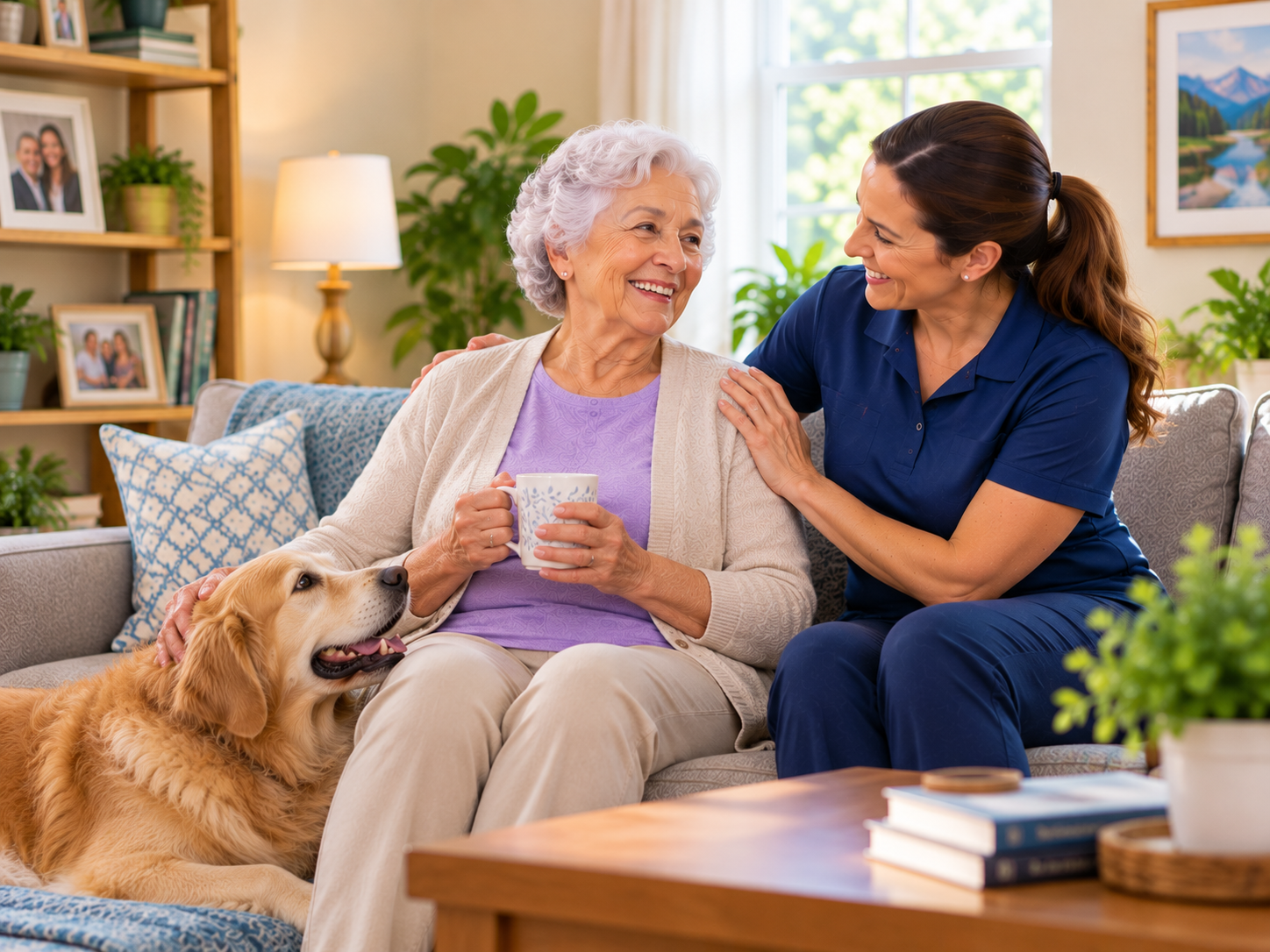
One-on-one rehab is not the only way to support healthy aging. In many care homes and senior living communities, small group programming adds structure, social connection, and ongoing movement practice that helps residents stay engaged. For seniors who are ready for a shared setting, group wellness programs can reinforce many of the same goals as in-home rehab, including better balance, stronger legs, safer walking, and more confidence in daily routines.
These programs work best when they are tailored for older adults rather than treated like standard exercise classes. In care home settings, that often means chair-based options, standing balance drills, gentle strength work, functional movement practice, and fall prevention education delivered in a clear, supportive way. Because falls remain a major public health issue for older adults in Canada, this kind of programming should be seen as part of practical health support, not just an optional activity, as outlined in the national surveillance report.
A flexible model for individual and shared support
Some seniors need focused one-on-one rehab after discharge. Others benefit from transitioning into group classes once they are steadier and ready for more routine activity. Our model supports both. We provide in-home services for personalized recovery, and we also deliver group sessions, workshops, and senior wellness programming that can be hosted in care homes and community settings.
That flexibility matters for families planning beyond the first few weeks after discharge. Recovery is rarely a single event. It is a process that often starts with close supervision and gradually moves toward ongoing strength, mobility, and confidence-building.
What seniors and families gain from this approach
The clearest benefit is safer independence. Recovery support should help an older adult do more for themselves, with less fear and less strain. When exercises are matched to real-life tasks, progress often shows up in meaningful ways, standing up more easily, walking farther indoors, climbing steps with more control, or feeling stable enough to get back to regular routines.
Confidence is another major outcome, and it should never be underestimated. Many older adults limit activity after a fall or hospital stay because they worry about falling again. Statistics Canada has reported that concern about falling is common among seniors, which can affect how freely they move through daily life. Thoughtful rehab and wellness support can help restore a sense of capability, not just physical function, as reflected in national findings on fall risk perception.
At a glance, how support options differ
| Support format | Best fit | Main benefits |
|---|---|---|
| In-home one-on-one rehab | Early recovery after discharge, surgery, or illness | Personalized exercise, home-specific safety support, reduced travel stress |
| Group wellness in care homes | Ongoing activity and community participation | Routine, social connection, balance practice, fall prevention education |
| Combined approach | Seniors moving from recovery into maintenance | Continuity, flexibility, and steady progress over time |
What makes our approach different
Families need more than a checklist of exercises. They need a service that understands older adults, respects their dignity, and builds plans around what matters most to them. We start with assessment, not assumptions. That means looking at mobility, balance, confidence, health history, and functional goals before building a program.
Our work is also personal. Every body is different, and every recovery path is different. Some clients want to get back to gardening, some want to walk safely to the dining room, and some simply want to feel steady enough to live with less fear. We design around those goals because real recovery is measured in daily life, not just repetitions. That senior-focused, personalized model is central to our rehabilitation programs. We support families across the Niagara Region, Hamilton, Burlington, Oakville, Mississauga, the Greater Toronto Area, and Thunder Bay; see all service areas.
Taking the next step with confidence
If your family is planning for recovery after discharge, the goal is not just to fill time with exercise. It is to create safe, steady progress with the right support in the right setting. In-home rehab can reduce stress, strengthen mobility, and help an older adult recover in familiar surroundings. Group wellness programs can then extend those gains through regular, engaging movement in care homes and community spaces.
Start recovery with the right support
A thoughtful plan now can make the months ahead safer and more manageable. Contact HomeStretch for a free consultation, and let us help your loved one rebuild strength, confidence, and independence at home.
Frequently Asked Questions
What types of exercises support safe post-surgery recovery in Canada?
The most helpful programs usually focus on mobility, strength, balance, and functional movement. That can include sit-to-stands, walking practice, gentle lower-body strengthening, stair work, posture training, and balance exercises, all adjusted to the person's recovery stage and supervised by qualified professionals.
Do in-home senior wellness services include group programs?
Yes. Alongside one-on-one in-home sessions, we also offer group fitness, workshops, and wellness programming that can work well in care homes and community settings for seniors who benefit from shared activity and routine.
What healthy living programs can be hosted in Canadian care homes?
Well-run care home programs often include senior fitness classes, balance and fall prevention sessions, mobility-focused movement, wellness workshops, and recreational activity that supports physical function and confidence. For older adults, the most useful programs are the ones that keep movement safe, consistent, and connected to everyday independence.
Author Bio - Melissa Gunstone, BSc, Kinesiologist
Melissa Gunstone is the founder of HomeStretch, a kinesiologist with years of experience supporting seniors across Canada. Her mission: to give older adults safe, effective, and individualized movement programs, from in-home training to community-based senior fitness classes and to build a nationwide movement that elevates the role of kinesiology in healthy aging.