Healthy Living Programs for Seniors in Canadian Care Homes
August 27, 2026
On this page
⚡ Quick Answer
- A healthy living program should make everyday life safer and steadier, not just fill time, so it is built around the movements a senior actually uses each day.
- In Canada, 20% to 30% of seniors fall each year, and falls account for more than 85% of injury-related hospitalizations for older adults.
- Half of the falls that lead to hospitalization happen at home, which is why in-home programs work on the real hallway, chair, and step.
- Canadian movement guidance calls for muscle-strengthening and balance-challenging activity at least twice a week for adults 65 and older.
A healthy living program should do more than fill time. For older adults, it should make everyday life safer, steadier, and more comfortable.
Families want reassurance that a parent or loved one can stay active without being pushed too hard, and seniors deserve support that protects dignity and independence.
That need is real across Canada. Falls remain one of the biggest threats to healthy aging. In fact, 70% of older adults who suffer a fall-related injury seek medical attention, most often in an emergency department, and falls are the leading cause of injury-related hospital visits and deaths among older Canadians.
Public guidance also shows that staying active helps seniors remain healthy, strong, and flexible, which is closely tied to living independently for longer through fall prevention and healthy aging.
Why Personalized Programs Matter
No two seniors need the same kind of support. One person may be rebuilding strength after a hospital stay, while another wants to walk more confidently in the hallway, stand up from a chair with less effort, or move safely after joint surgery. A good program meets the person where they are now, then builds from there.
That is why tailored mobility and wellness plans work so well. They can improve confidence, reduce fear of falling, support recovery, and help with daily tasks such as getting up, turning, walking, and transferring safely. Canadian guidance for older adults consistently encourages movement that supports strength, flexibility, and function, rather than a one-size-fits-all routine from healthy living for seniors.
What Healthy Living Programs Look like in Care Homes
In care homes, healthy living programs work best when they feel like part of daily life, not an extra activity that only a few residents can manage. The strongest programs are structured, supervised, and practical. They focus on the movements seniors use every day.
Common program formats
Care-home wellness programs often include:
supervised walking
seated and standing strength work
balance practice
stretching and range-of-motion exercises
mobility and transfer training
simple recovery-focused movement after illness or surgery
These formats matter because consistency matters. Research tied to Canadian movement guidance supports muscle-strengthening and balance-challenging activities at least twice a week for adults 65 and older. In other words, balance and strength work should be built into regular care, not treated as occasional recreation, as reflected in the MoveStrong analysis.
What Families Should Expect from a Strong Program
Families often ask what separates a meaningful senior wellness program from general activity. The answer is simple: it should support safe movement in a way that carries over into real life.
| Program Feature | Why It Matters |
|---|---|
| Balance Training | Helps reduce instability during walking and turning |
| Strength Exercises | Supports standing, stairs, and transfers |
| Mobility Practice | Improves confidence in daily movement |
| Supervised Progression | Lowers the risk of doing too much too soon |
| Personalized Pacing | Matches support to energy, pain, and recovery level |
| Home or Room-Based Relevance | Focuses on the spaces where movement actually happens |
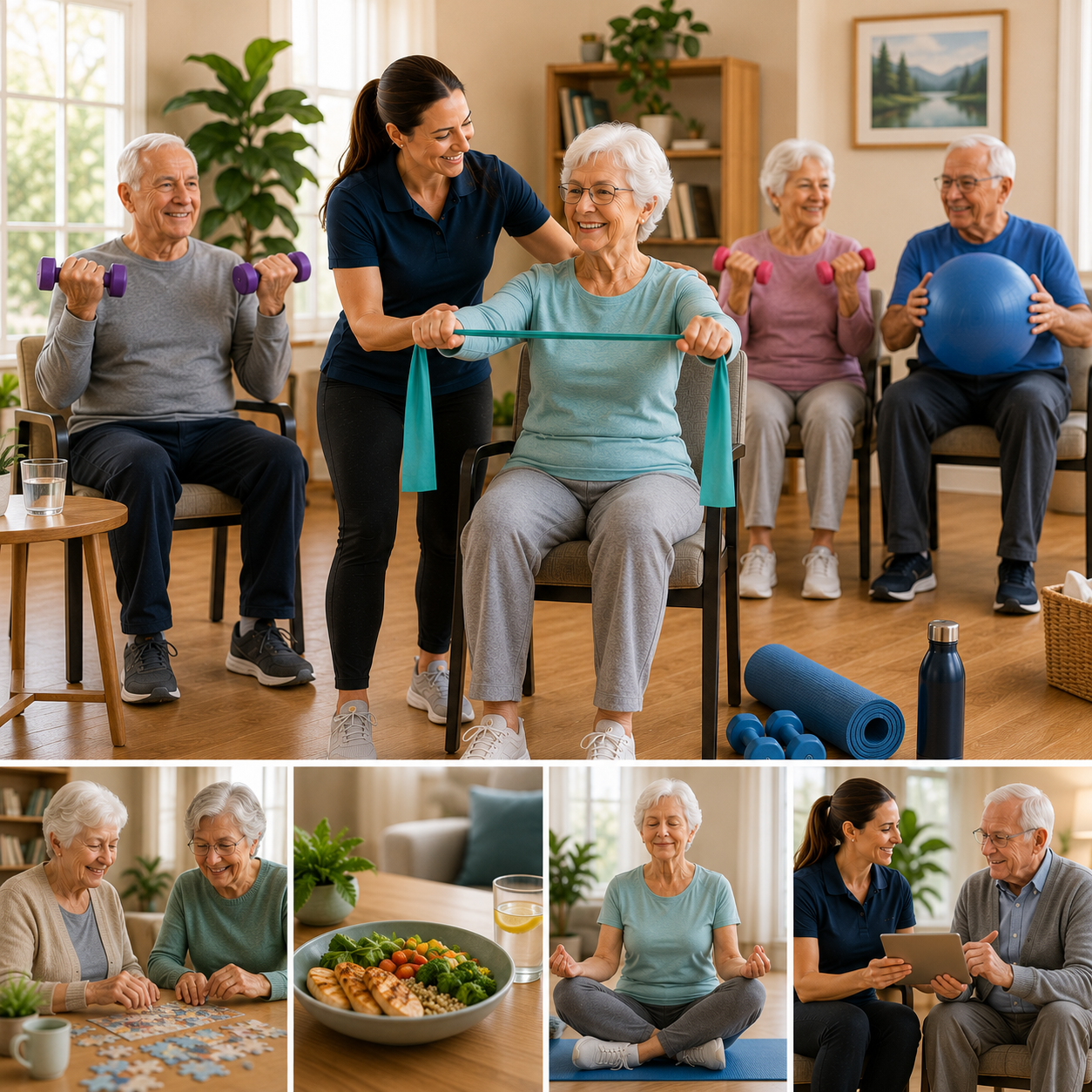
Professional like registered Kinesiologist oversight is important here. In Canada, seniors' health and fall prevention are established priorities within physiotherapy and movement-focused care, which reinforces the value of structured, senior-specific support guided by seniors' health professionals.
Fall Prevention Should be Central, Not Optional
For many families, the main goal is not athletic performance. It is avoiding the setback that comes after a fall. That concern is justified. Falls account for more than 85% of injury-related hospitalizations for seniors, and 20% to 30% of seniors fall each year, with half falling more than once. Just as important, 50% of falls that cause hospitalization happen at home, which is why prevention needs to be practical and environment-specific through fall prevention and balance training and what to do after a fall.
For seniors recovering from surgery or illness, the risks can rise even further when strength, endurance, and confidence have dropped. A safe program should include gait support, guided exercise progression, transfer practice, and a clear plan for returning to daily activity without unnecessary strain.
Safe Exercises Seniors Can Do At Home
At-home exercise is often the easiest place to start because it removes transportation barriers and allows support to happen in a familiar setting. The right exercises are simple, controlled, and matched to the senior's current ability.
Useful at-home movements
Safe options often include:
chair stands
supported squats
heel raises
marching in place
gentle walking
standing balance holds with support
resistance-band exercises
shoulder, hip, and ankle range-of-motion work
These exercises help seniors maintain mobility without adding unnecessary complexity. Public guidance for older adults encourages activity that improves strength, posture, and balance, especially when it can be practiced regularly and safely at home through older adult activity tips.
You can also read more about Exercises for Seniors: Routines to Improve Balance, Strength, and Mobility
Why In-Home Support Often Works Better
Care-home programs can offer structure and social connection, but in-home personal training with a Kinesiologist has one major advantage: it happens in the exact place where challenges occur. That means we can work on the hallway, the bathroom transfer, the front step, the kitchen turn, or the rise from a favourite chair, instead of relying only on general exercise.
This is where kinesiologist-guided support becomes especially valuable. A trained movement professional can watch technique closely, adjust intensity, build strength safely, and connect exercise to real daily function. For seniors after surgery, after a fall, or during a period of visible decline, that kind of hands-on progression can make the difference between avoiding movement and regaining confidence.
How HomeStretch supports safer, more independent living
At HomeStretch, we bring senior-safe mobility support directly into the home. Our focus is practical and clear: safer movement, stronger daily function, and more confidence in the routines that matter most. We do not treat wellness as a generic fitness service. We look at how a person stands, walks, transfers, recovers, and manages the spaces they use every day.
Our in-home approach is especially helpful for seniors who need support after surgery, after a fall, or during a period when mobility feels less certain. Because sessions happen where real risks and routines exist, we can tailor movement plans to the person, the home, and the family’s concerns. That helps turn professional guidance into meaningful progress, one step at a time.
Choosing the right next step
Healthy living programs for seniors should protect more than physical health. They should protect independence, confidence, and peace of mind. In care homes, that means structured movement that supports balance, strength, and mobility. At home, it means professional guidance that fits the senior’s real environment and real needs.
The stakes are high. Falls are not minor events for older adults. They often lead to emergency care, longer hospital stays, and a loss of confidence that can be hard to rebuild. Canadian data shows the average senior stays about 9 days longer in hospital after a fall-related admission than after other causes, which is one more reason to act early with Canadian falls data.
If your family is looking for thoughtful, personalized mobility support, contact HomeStretch. We help seniors stay safer, move better, and keep more independence where it matters most, at home.
Frequently Asked Questions
-
Programs that combine strength work, balance challenges, and fall-prevention strategies are the most helpful. Walking practice, supported standing work, chair-based strengthening, and transfer training all contribute to steadier movement.
-
Yes, when they are guided by trained professionals. A supervised in-home program can help a senior rebuild strength and mobility gradually, while reducing the risk of overdoing it or using poor technique.
-
Look for a service with professional oversight, a clear safety-first approach, and a strong focus on balance, mobility, and daily function. The best programs are personalized, practical, and designed around the senior’s real living environment.
Related Posts
Does Exercise Really Reduce Falls? What the Research Actually Shows
Exercises for Seniors: Routines to Improve Balance, Strength, and Mobility
Author Bio - Melissa Gunstone, BSc, Kinesiologist
Melissa Gunstone is the founder of HomeStretch, a kinesiologist with years of experience supporting seniors across Canada. Her mission: to give older adults safe, effective, and individualized movement programs, from in-home training to community-based senior fitness classes and to build a nationwide movement that elevates the role of kinesiology in healthy aging.