In-Home Senior Wellness Programs for Care Homes in Canada
August 24, 2026
On this page
⚡ Quick Answer
- In-home and care-home wellness programs work best when tied to a senior's real daily movements, not generic workouts.
- In Canada, 1 in 3 seniors falls at least once a year, and 5.8% report a fall-related injury annually.
- Group programs in care homes combine movement, routine, and social connection to boost both mobility and motivation.
- Kinesiologist-led fall prevention targets lower-body strength, balance reactions, and safe transfers, not just generic exercise.
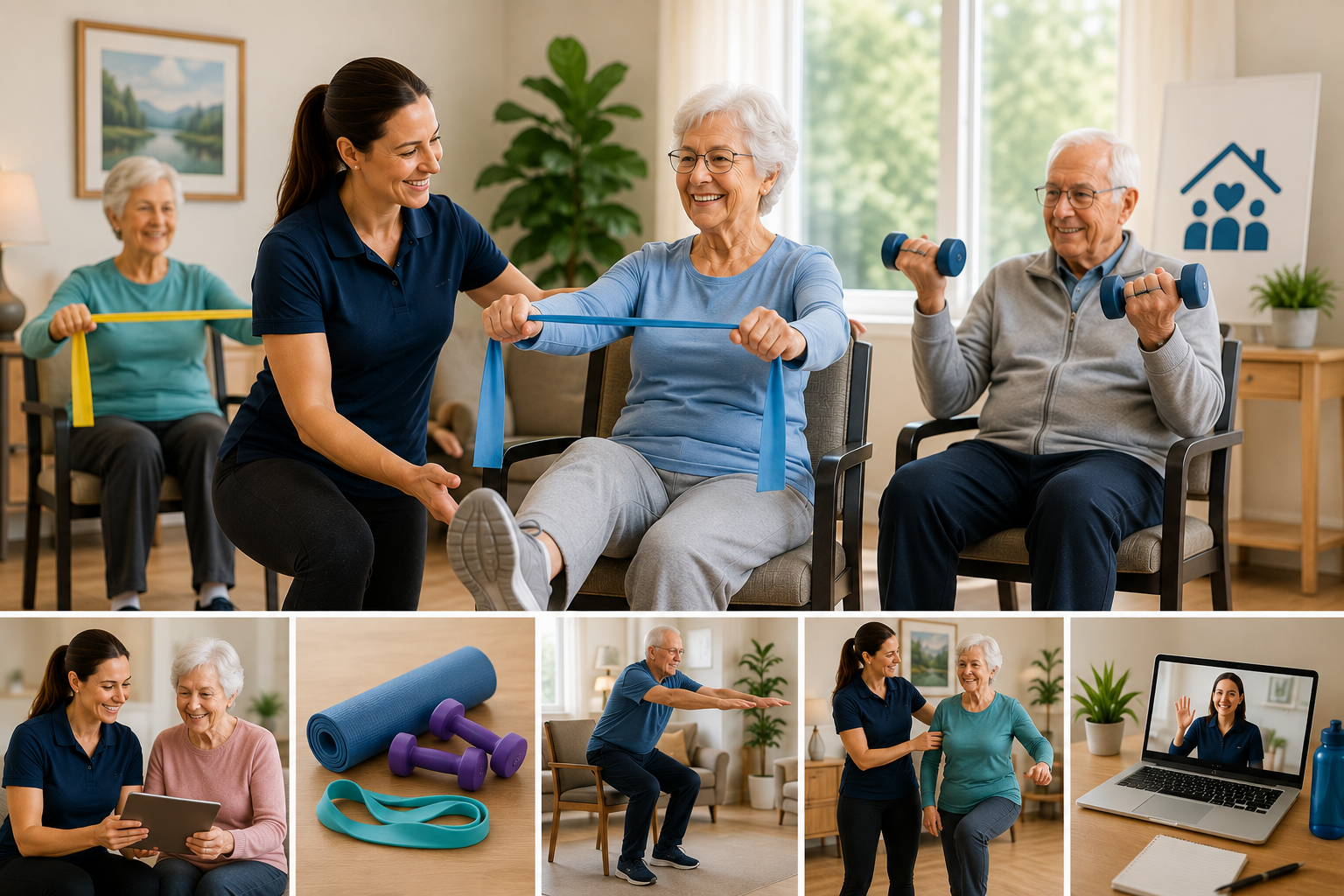
Aging at home, or in a familiar care setting, often supports something that matters deeply to seniors and families alike: dignity. Daily routines feel more comfortable, familiar spaces reduce stress, and small moments of independence can remain part of everyday life. For that independence to last, though, seniors need support that protects mobility, safety, and confidence.
That is where in-home senior wellness programs make a real difference. Across Canada, older adults want to remain in their homes and communities as long as possible, and federal research on aging in the community confirms that aging in place remains a strong preference. Our role is to help make that possible through practical movement support, fall prevention, and recovery-focused care that fits the senior, not the other way around.
This need is not theoretical. Falls remain one of the biggest health risks facing older adults in Canada. According to national fall prevention guidance, one in three seniors falls at least once each year. A wellness program delivered in the home or in a care residence is not just convenient, it is a proactive way to help seniors stay steadier, stronger, and more secure in the places where they live.
Why in-home senior wellness matters
Safer movement starts where seniors live
A senior does not move through life in a clinic. They move from the bed to the bathroom, from the kitchen to the living room, and from a chair to the front door. That is why movement support is most effective when it is tied to real daily routines. Working in the home or care-home environment allows us to focus on the exact transfers, walking patterns, and balance challenges a person faces every day.
This approach is especially important because falls rarely happen for just one reason. Poor balance, reduced muscle strength, changes in vision or hearing, and home hazards all increase risk. We address those issues through guided movement, practical safety awareness, and exercises that build stability where it counts most, as Health Canada highlights.
Better mobility supports confidence
Strength and balance are only part of the picture. Many seniors also start limiting activity because they are afraid of falling. That loss of confidence can quietly reduce independence long before a major injury occurs. A thoughtful wellness program helps break that cycle by improving how seniors walk, stand, turn, and manage everyday tasks.
As mobility improves, confidence often follows. Seniors are more willing to participate in daily activities, keep up routines, and remain engaged with family and community. That emotional benefit matters as much as the physical one.
Recovery feels more manageable at home
After surgery or a health setback, travel can feel exhausting. In-home recovery support removes that barrier. Gentle, supervised movement in a familiar setting can make recovery feel less overwhelming and more consistent.
This matters because the consequences of falls can be serious. In Canada, 5.8% of adults aged 65 and older reported a fall-related injury in the previous 12 months, and 34% of fall-related hospitalizations involved a hip fracture, according to the national surveillance report. Recovery support at home helps seniors rebuild safely while reducing the strain of unnecessary travel.
Wellness programs for care homes
Group sessions that match residents' abilities
Care homes need more than a generic exercise class. Residents often have different mobility levels, different health histories, and different comfort levels with movement. Our group programs are built around senior-friendly pacing, adaptable exercises, and clear instruction that helps residents participate safely.
That can include chair-based mobility work, gentle strength exercises, balance practice, and functional movement patterns that support daily living. The goal is not to push residents beyond their limits. It is to help them move more safely and consistently within them.
Social connection supports participation
Movement is easier to maintain when it becomes part of a shared routine. Group wellness sessions in care homes can improve morale, create structure, and encourage residents to stay engaged. For some seniors, the social aspect is what helps them participate regularly. For others, it reduces the fear that often comes with starting again after a fall or illness.
| Program focus | How it helps residents |
|---|---|
| Chair-based movement | Supports participation for seniors with limited mobility |
| Balance training | Helps reduce fall risk during standing and walking |
| Gentle strength work | Builds lower-body stability for transfers and daily tasks |
| Guided group sessions | Encourages routine, motivation, and social connection |
| Functional movement practice | Improves confidence in everyday activities |
Fall prevention that goes beyond basic exercise
Balance and strength training with a clear purpose
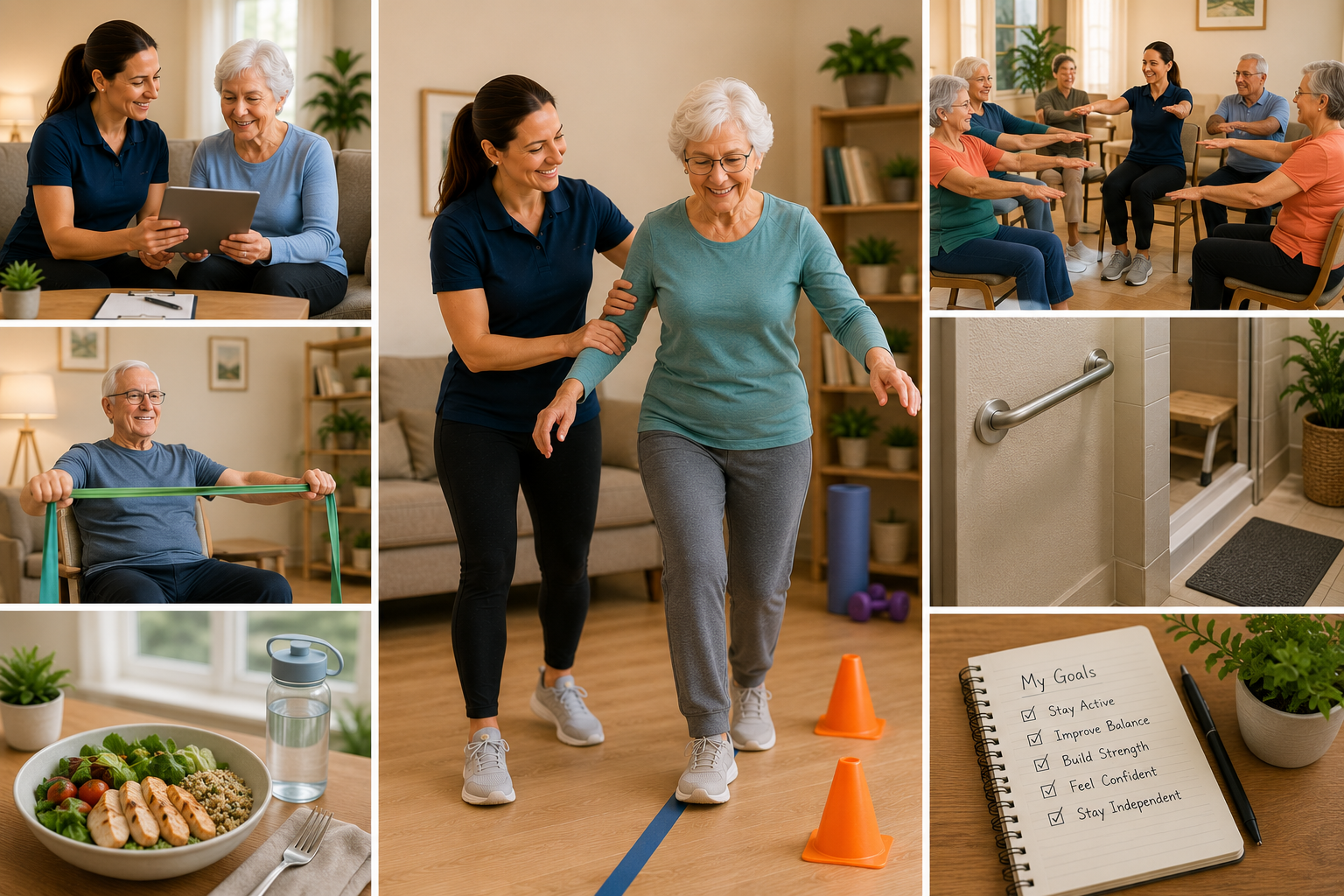
Fall prevention should never be treated like a standard fitness class. It needs to reflect how seniors actually move, where they feel unsteady, and what daily tasks are becoming harder. Our programs focus on lower-body strength, posture, balance reactions, walking confidence, and functional patterns such as sitting, standing, and turning safely.
Because we work in the senior's own environment, we can also reinforce safer habits around furniture, pathways, and everyday movement. That makes prevention practical, not abstract.
Support from trained kinesiologists
Professional guidance matters. Kinesiologists bring movement expertise that helps seniors exercise safely, progress appropriately, and stay focused on outcomes that matter in daily life. For families, that expertise offers reassurance. For seniors, it creates a structured plan that feels supportive rather than intimidating.
This kind of work is especially relevant in Canada, where falls are both common and costly. Prevention is strongest when it is specific, consistent, and grounded in the real risk factors identified by federal guidance.
Why families and care teams choose us
We provide senior wellness with a clear focus: safer mobility, stronger daily function, and greater confidence at home or in care settings. That includes one-to-one in-home support, care-home group programming, and recovery assistance after surgery or illness.
What sets our approach apart is not flashy language. It is the combination of practical in-home service, senior-specific movement support, and a strong focus on fall risk reduction. We do not treat wellness as separate from daily life. We build it around the way seniors actually live.
That means families can expect support that is personal, respectful, and grounded in what helps older adults remain independent for longer.
How our programs help seniors stay independent
A good senior wellness program should lead to visible changes in everyday life. That may mean getting up from a chair more easily, feeling less anxious on stairs, walking with better control, or returning to routine after surgery with more confidence.
Our work is built around those outcomes. We help reduce fall risk with tailored balance exercises. We support post-surgical recovery in the comfort of home. We create group programs in care homes that encourage both movement and participation. Most importantly, we help seniors hold onto the freedom that comes from feeling steady in their own space.
You can also read Senior Health & Wellness: A Practical Guide to Living Well at Every Stage
Supporting safer aging at home and in care settings
Senior wellness is about much more than exercise. It is about protecting independence, reducing risk, and helping older adults feel capable in daily life. For families and care homes, that kind of support offers peace of mind. For seniors, it helps preserve confidence where it matters most, at home.
If you are looking for trusted support for a parent, resident, or loved one, we are here to help with personalized wellness programs that put safety, mobility, and dignity first.
Frequently Asked Questions
-
Effective fall prevention usually includes balance exercises, lower-body strengthening, safer walking patterns, and reducing trip hazards in the home. It also helps to have expert support that can spot movement challenges early and build a program around them.
-
Group programs support both mobility and motivation. Residents benefit from guided movement, a predictable routine, and social interaction that encourages regular participation. That combination can help improve confidence while also lowering fall risk.
-
Yes. In-home recovery support helps seniors rebuild strength and mobility safely in a familiar setting. It can also reduce the stress of transportation and make it easier to stay consistent during recovery.
-
Most older adults still need approximately seven to nine hours of sleep each night. Aging changes how people sleep more than it changes how much sleep they need.
Related Posts
Spring Safety Tips for Seniors Safe Outdoor Activities and Fall Prevention
Spring Gardening for Seniors: Stay Active, Safe, and Prevent Falls
Exercises for Seniors: Routines to Improve Balance, Strength, and Mobility
Author Bio - Melissa Gunstone, BSc, Kinesiologist
Melissa Gunstone is the founder of HomeStretch, a kinesiologist with years of experience supporting seniors across Canada. Her mission: to give older adults safe, effective, and individualized movement programs, from in-home training to community-based senior fitness classes and to build a nationwide movement that elevates the role of kinesiology in healthy aging.