Senior Health & Wellness: A Practical Guide to Living Well at Every Stage
February 09, 2026

Aging brings new priorities. Strength, balance, memory, energy, and confidence in daily life matter more than ever not just for health, but for independence.
Senior health and wellness isn’t about dramatic lifestyle changes or rigid routines. It’s about small, consistent habits that support the body, mind, and daily function over time.
Short walks, simple balance exercises, nutritious meals, social connection, and the right support systems all work together to protect quality of life.
This guide breaks senior wellness into clear, manageable areas, physical, mental, social, and nutritional and explains how they connect.
You’ll also learn how in-home services, professional guidance, and technology can support aging well at home.
If you or someone you care for is looking to stay independent, confident, and active, this is a practical place to start.
What Are the Essential Elements of Senior Wellness?
Senior wellness includes four interconnected pillars:
Physical health – strength, balance, mobility, and fall prevention
Mental & emotional well-being – mood, memory, stress management
Social connection – relationships, purpose, and community
Nutrition & hydration – fueling the body for energy and recovery
Each pillar supports the others. When one area declines, others often follow. A balanced approach helps seniors maintain independence and adapt as needs change.
Regular check-ins, annually or semi-annually with a clinician or wellness professional allow goals to be updated and emerging issues addressed early.
How Do Physical, Mental, Social, and Nutritional Wellness Interconnect?
These areas don’t exist in isolation:
Regular movement supports mood and brain health
Nutritious meals fuel energy and cognitive function
Social engagement encourages activity and routine
Mental well-being improves motivation and consistency
For example, a short group walk combines physical activity, social interaction, fresh air, and often shared meals or conversation. These small overlaps make wellness more sustainable.
Why Is Personalized Wellness Planning Important for Older Adults?
Every older adult has unique health conditions, routines, preferences, and goals. Personalized wellness plans are more realistic and more effective, than one-size-fits-all advice.
Personalization allows for:
Adaptations for chronic conditions
Exercises that match current ability
Nutrition plans that reflect taste, budget, and culture
Flexibility as health and interests change
Working with healthcare providers, kinesiologists, or dietitians helps ensure plans remain safe, achievable, and meaningful.
How Can Seniors Maintain Physical Health and Prevent Falls?
Physical activity and home safety are two of the strongest predictors of independence.
Key strategies include:
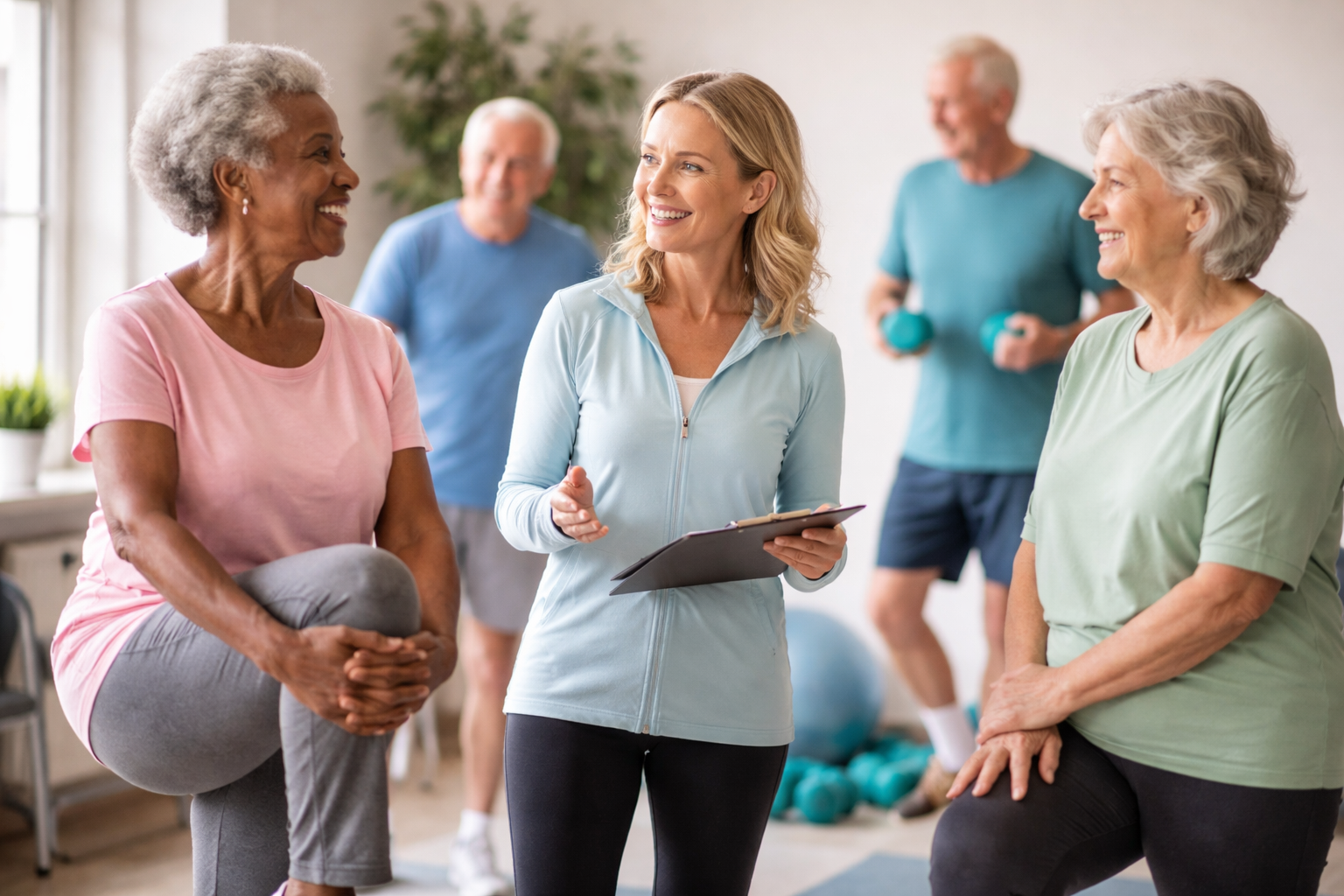
Regular strength and balance training
Gradual activity progression
Medication and vision reviews
Removing home trip hazards
Wearing proper footwear
Even short, consistent routines, 10 to 20 minutes, can significantly reduce fall risk and improve confidence.
What Are Effective Strength and Balance Exercises for Seniors?
Simple, proven movements include:
Chair Stands – build leg strength for daily tasks
Heel-to-Toe Walking – improves coordination and stability
Tai Chi – enhances balance, flexibility, and body awareness
Start with supported versions when needed and increase repetitions slowly. If pain, dizziness, or discomfort occurs, pause and consult a healthcare professional.
How Does Managing Chronic Conditions Support Physical Wellness?
Well-managed conditions support mobility, safety, and quality of life.
Common strategies:
Consistent medication routines
Condition-specific nutrition adjustments
Low-impact, guided exercise
Regular monitoring and follow-ups
For example:
Diabetes management supports foot health and energy
Arthritis care preserves joint mobility
Heart-health programs allow safe, gradual activity
What Strategies Support Mental Well-Being for Seniors?
Mental health is foundational to overall wellness.
Helpful habits include:
Predictable daily routines
Cognitive stimulation
Social engagement
Stress-management practices
Persistent mood changes, anxiety, or withdrawal should be discussed with a primary care provider or mental health professional.
How Can Seniors Maintain Brain Health and Cognitive Fitness?
Effective brain-health activities include:
Reading and puzzles
Learning new skills
Memory games
Creative hobbies
Group classes
Short, regular sessions, several times per week are more effective than occasional long sessions.
How Can Seniors Reduce Loneliness and Build Social Connection?
Social engagement protects emotional and cognitive health.
Options include:
Community or hobby groups
Volunteering
Faith-based or cultural groups
Video calls and online communities
Starting small, a weekly class or monthly meet-up helps build confidence and consistency.
What Nutrition Guidelines Support Healthy Aging?
Nutrition supports:
Bone and muscle health
Brain function
Energy levels
Immune strength
Simple meal planning works best:
Lean protein
Fiber-rich carbohydrates
Fruits and vegetables
Regular hydration
Preparing easy, ready-to-eat options helps prevent skipped meals.
Key Nutrients for Older Adults
| Nutrient | Benefit | Food Sources |
|---|---|---|
| Calcium | Bone strength | Dairy, leafy greens |
| Vitamin D | Bone & immune health | Fortified foods, fatty fish |
| Fiber | Digestion & regularity | Whole grains, fruits, vegetables |
| Protein | Muscle maintenance | Fish, poultry, beans, dairy |
Hydration is equally important, dehydration increases fall risk and confusion.
What Senior Support Services Are Available at Home?
In-home services help seniors remain safe and independent, including:
Personal care assistance
Home health services
In-home personal training
Therapy services
Start by identifying the most challenging daily tasks and matching support accordingly.
How Do Professional Services Improve Independence?
Professional support:
Reduces fall risk
Preserves daily function
Provides accountability and companionship
Supports caregivers
Therapists and trained movement professionals can tailor programs to changing needs and environments.
How Does a Free Senior Wellness Consultation Help?
A consultation helps:
Identify current challenges
Clarify goals and priorities
Match appropriate services
Create a realistic plan
Bringing medication lists, recent health changes, and caregiver input improves outcomes.
Support for Caregivers
Caregivers benefit from:
Education and training
Support groups
Respite services
Shared responsibility
Early planning helps prevent burnout and crisis-driven decisions.
How Is Technology Supporting Senior Wellness?
Helpful tools include:
Medication reminder apps
Telehealth visits
Wearable activity trackers
Emergency response systems
Technology works best when introduced gradually and matched to real needs.
A Practical Path to Healthy Aging
Healthy aging isn’t about perfection, it’s about steady, achievable habits supported by the right guidance and resources.
By addressing physical strength, mental well-being, nutrition, and social connection together, seniors can live with greater confidence and independence. Personalized plans and professional support make wellness practical, not overwhelming.
If you’re ready to take the next step, a free senior wellness consultation can help create a plan that truly fits your life.
Frequently Asked Questions
-
It reduces loneliness, improves mood, and encourages healthy habits.
-
They catch issues early and allow care plans to adapt as needs change.
-
Yes, when programs are appropriate, guided, and progressed gradually.
-
Falls, difficulty with daily tasks, weight loss, memory changes, or social withdrawal.
Related Posts
What You Really Get with an In-Home Personal Trainer for Seniors
A Safer New Year Starts at Home Understanding Fall Risk Assessments for Seniors
Author Bio - Melissa Gunstone, BSc, Kinesiologist
Melissa Gunstone is the founder of HomeStretch, a kinesiologist with years of experience supporting seniors across Canada. Her mission: to give older adults safe, effective, and individualized movement programs, from in-home training to community-based senior fitness classes and to build a nationwide movement that elevates the role of kinesiology in healthy aging.
The 3 Biggest Barriers to Aging in Place - Niagara - St. Catharines, Hamilton, Dundas, Burlington, Toronto - Fall Prevention | Strength & Mobility | Caregiver Resources