How to Start When You’re Not Ready for Change
January 08, 2026
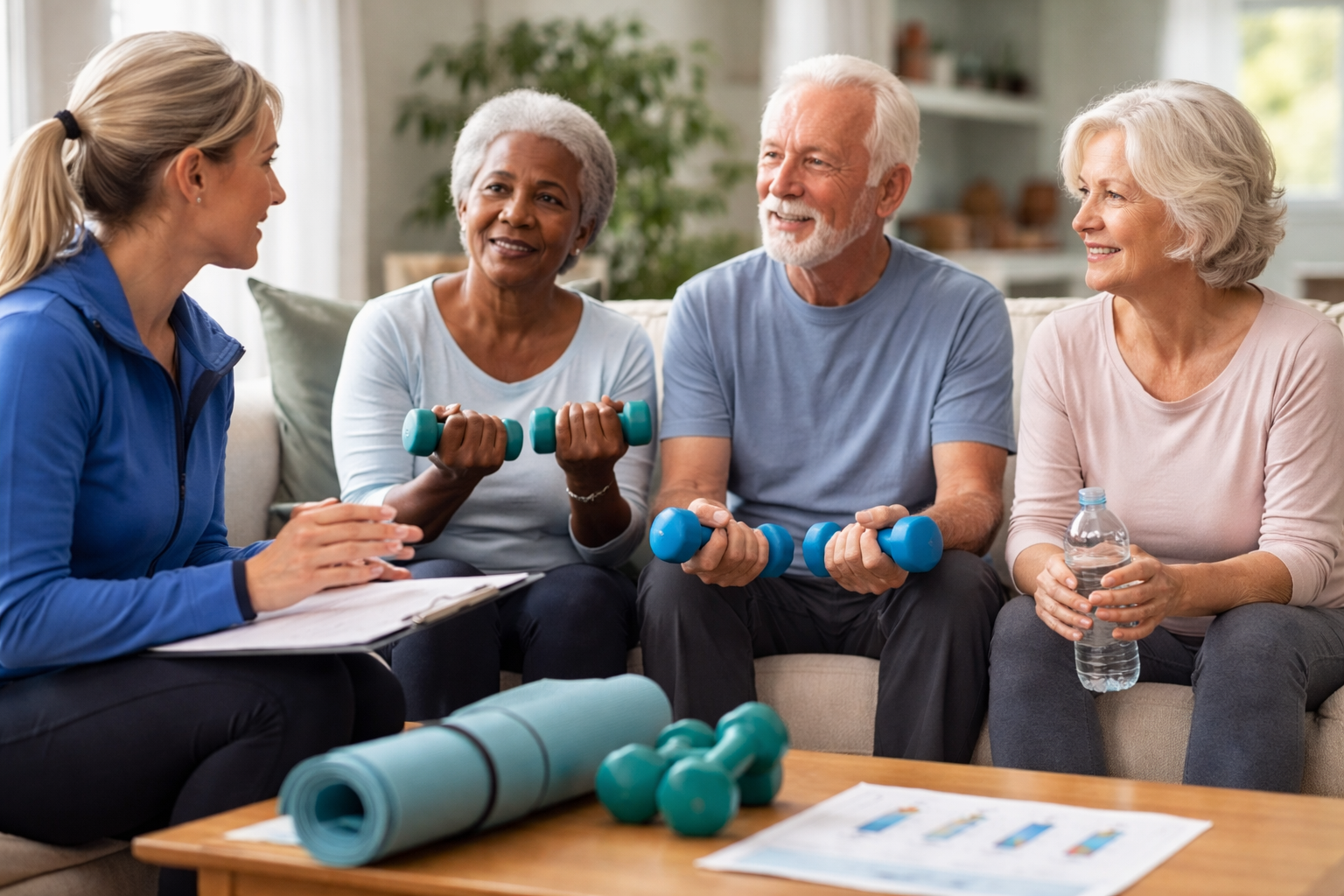
An Interview on Building Healthy Habits, Fall Prevention, and Taking the First Step
Knowing You Should Start Isn’t the Same as Being Read
Building healthy habits, fall prevention, and in-home personal training for seniors are phrases I hear every single week, not just online, but directly from older adults themselves.
“I know I should start.”
“I’ve been thinking about it for a while.”
“I’m just not quite ready yet.”
I hear this from seniors in Toronto, seniors in Vancouver BC, and seniors across the Niagara region who reach out to us.
They’re not unaware. They’re not in denial. In fact, many already understand the risks of inactivity, the fear of falling, and the importance of staying strong as they age.
So the real question isn’t why don’t seniors know they should start?
What actually helps someone move from knowing… to booking that first appointment?
To explore this gap, the space between intention and action.
I recently sat down with Michael Waters, a former Health Promotion Director of a 55+ gym in Oregon. His career spans decades, and his work focuses not just on exercise, but on why people don’t start and even when they care deeply about their health.
What follows is a conversation about readiness, confidence, autonomy, and why “not being ready” might actually be a normal and necessary part of change.
Seniors Aren’t Unmotivated, They’re Overwhelmed
One of the biggest misconceptions in health and fitness is that people who haven’t started simply don’t care.
In my work with older adults, the opposite is usually true.
Many seniors:
Have already experienced a fall or near-fall
Have seen a spouse or friend lose independence
Have been told by a doctor to “stay active”
Are aware that strength and balance matter
And yet, they pause.
They hesitate.
They wait.
Why?
Because readiness for change isn’t about information. It’s about confidence, identity, and safety.
This is where my conversation with Michael Waters became incredibly validating, not just for me as a kinesiologist, but for the thousands of seniors who quietly feel “stuck” at the starting line.
Interview Insight: Why Traditional Exercise Messaging Fails
Michael shared something that stood out immediately.
“Earlier in my career, we were very prescriptive. Exercise science was linear. You did this, this, and this and people would change. Except… they didn’t. Because a lot of people just weren’t ready to change.”
This mirrors what I see with seniors today.
They’ve been told:
Walk more
Join a gym
Do these exercises
Follow this routine
But being told what to do doesn’t address the internal barriers that stop action.
Michael explained that one of the biggest shifts in health promotion came when professionals stopped asking “What exercise should this person do?” and started asking:
“Where is this person in their readiness to change?”
The Missing Link: Self-Efficacy and Confidence
One of the most powerful concepts Michael referenced was self-efficacy and the belief that you are capable of doing something successfully.
“Confidence is huge. A lot of people had early experiences, in school, in gyms, where movement felt hard, embarrassing, or unsafe. That sticks with them.”
This is something I see constantly with seniors.
Many believe:
“I’m not athletic.”
“I’ve never been good with exercise.”
“I don’t want to look foolish.”
“What if I make things worse?”
These beliefs quietly block action and even when motivation exists.
This is why in-home personal training for seniors can be such a powerful starting point. Not because it’s intense, but because it’s private, supportive, and adaptable.
Why Fall Prevention Messaging Often Misses the Mark
Michael made an important point about fear-based motivation.
“Even major health events, heart attacks, cardiac rehab and don’t always lead to lasting change.”
Fear alone doesn’t create habits.
In fact, for many seniors, fear can freeze action:
Fear of falling
Fear of injury
Fear of failure
Fear of being judged
We talk about fall prevention, but we’re careful how we talk about it because the goal isn’t to scare someone into moving. It’s to help them feel capable enough to begin.
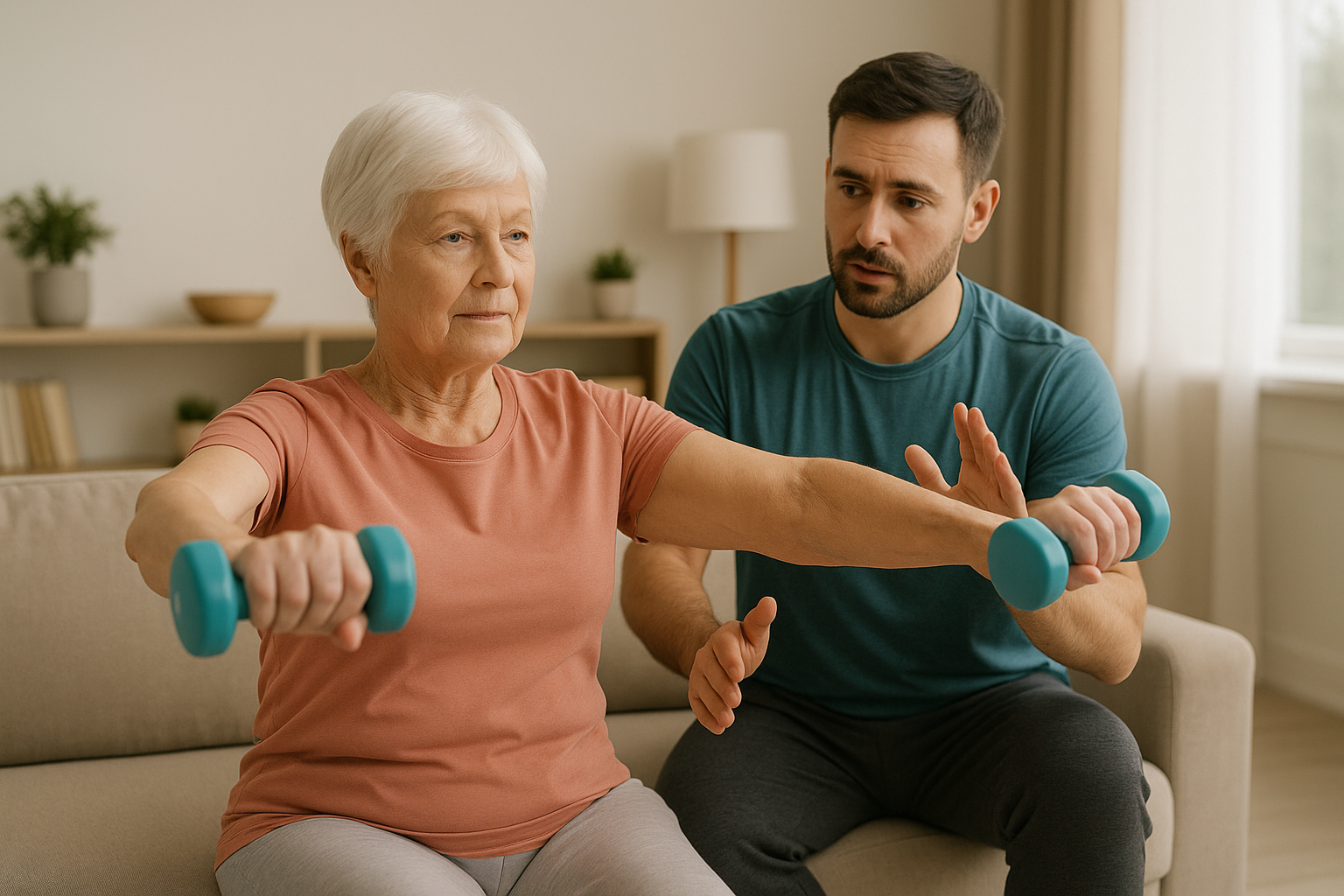
This holistic approach produces more sustainable results than addressing one area alone.
The Importance of Community and Caregiver Support
Social connection improves motivation, mental health, and adherence to wellness routines. HomeStretch offers Community Workshops and Presentations focused on fall prevention, goal-setting, and safe exercise for seniors and caregivers.
Families play a key role by:
Supporting realistic goal-setting
Encouraging daily routines
Assisting with home safety changes
Celebrating progress
Education and shared understanding reduce caregiver stress and improve outcomes.
Why Choice Matters More Than the Perfect Plan
One of my favourite insights from Michael was about autonomy.
“People need to feel they’re choosing how they move and not being prescribed something that doesn’t fit who they are.”
This aligns deeply with how we train seniors.
Instead of saying:
“Here’s the program.”
“Do this routine.”
We ask:
What feels doable right now?
What movements feel safe?
What do you enjoy or at least tolerate?
What would make this feel manageable?
This is how building healthy habits actually starts and not with perfection, but with ownership.
Exercise Personality: Why One Size Never Fits All
Michael introduced a concept I now actively integrate into Homestretch assessments: exercise personality.
Some people love structure.
Others need variety.
Some prefer quiet.
Others thrive on social connection.
“If the movement doesn’t fit the person, they won’t stick with it, no matter how good it is.”
This is why generic programs fail so many seniors and why individualized, in-home support works when nothing else has.
From “I Should” to “This Is Just What I Do Now”
One of the hardest transitions is moving from:
“I know I should exercise”
to
“This is part of my life now.”
Michael explained this using the stages of change, especially the gap between contemplation and action.
That gap isn’t laziness.
It’s uncertainty.
It’s waiting for:
The right time
The right support
The right fit
The right feeling
And sometimes, the most helpful thing we can offer seniors isn’t urgency and it’s permission to start slowly.
Why This Matters So Much
I want to share something personal here.
At HomeStretch, my mission is not just to help seniors move better.
It’s also to support Canadian kinesiologists, professionals trained in movement, behaviour change, and aging, and to give them the recognition they deserve.
I believe we are at the beginning of a shift.
A movement where:
Seniors get proactive support before a fall
In-home personal training becomes a standard option
ER visits from preventable falls decrease long-term
Movement is seen as care and not punishment
And that movement starts by meeting people before they’re ready and helping them feel safe enough to begin.
If You’re Not Ready Yet, That’s Okay
Michael offered advice that I now share often.
“Change has to come from inside. You can’t force it. But you can create environments where people feel safe enough to try.”
If you’re reading this and thinking:
“I know I need to start…”
“I’m just not there yet…”
That doesn’t mean you’ve failed. It means you’re human and sometimes, the first step isn’t exercise AND it’s a conversation.
A Conversation Is Still a Step
If you’re a senior in Toronto, Vancouver BC, or the Niagara region or a family member supporting one and you’re not sure you’re “ready”…
You don’t have to commit to anything.
You can simply talk to us.
At HomeStretch, our consultations are designed to meet you where you are and not where you think you should be.
No pressure.
No expectations.
Just clarity, safety, and support.
Frequently Asked Questions
-
Yes. Feeling unready is extremely common among seniors and is a normal stage of behaviour change. It often reflects uncertainty, fear of injury, or low confidence and not laziness or lack of motivation.
-
Supportive environments, confidence-building experiences, and feeling safe are key. Seniors are more likely to begin when exercise feels manageable, personalized, and aligned with their comfort level and not rushed or prescribed.
-
In-home training focuses on real-life movements, balance, strength, and confidence. It addresses both physical risk factors (like weakness or instability) and psychological ones (such as fear of falling), which improves long-term safety.
-
A conversation. You don’t need to commit to a program. An introductory call helps clarify concerns, assess readiness, and explore options without pressure.
Related Posts
Author Bio - Melissa Gunstone, BSc, Kinesiologist
Melissa Gunstone is the founder of HomeStretch, a kinesiologist with years of experience supporting seniors across Canada. Her mission: to give older adults safe, effective, and individualized movement programs, from in-home training to community-based senior fitness classes and to build a nationwide movement that elevates the role of kinesiology in healthy aging.
The 3 Biggest Barriers to Aging in Place - Niagara - St. Catharines, Hamilton, Dundas, Burlington, Toronto - Fall Prevention | Strength & Mobility | Caregiver Resources