

In-Home Personal Training for Seniors in Toronto, Ontario
Registered kinesiologists delivering in-home personal training, fall prevention and balance programs to seniors in downtown, midtown and east Toronto, with the first consultation free.
Programs and Services for Toronto Seniors
Curated programs, community links, and HomeStretch services, all in one place.
Physical Activity and Fitness
Fall Prevention and Health
Caregiver Support
Kinesiology Goes Beyond Personal Training
HomeStretch kinesiologists are degree-trained movement specialists who understand aging bodies, arthritis, joint replacements, and post-surgery recovery. Every program is built around your body and your home, not a generic routine.
- 1-on-1 sessions with the same kinesiologist every visit, building trust and real progress
- Personalized Movement Score Report tracks your top 3 priorities over time
- Programs designed for any mobility level, from walkers to those who can run
- Family communication available with your permission, giving caregivers peace of mind
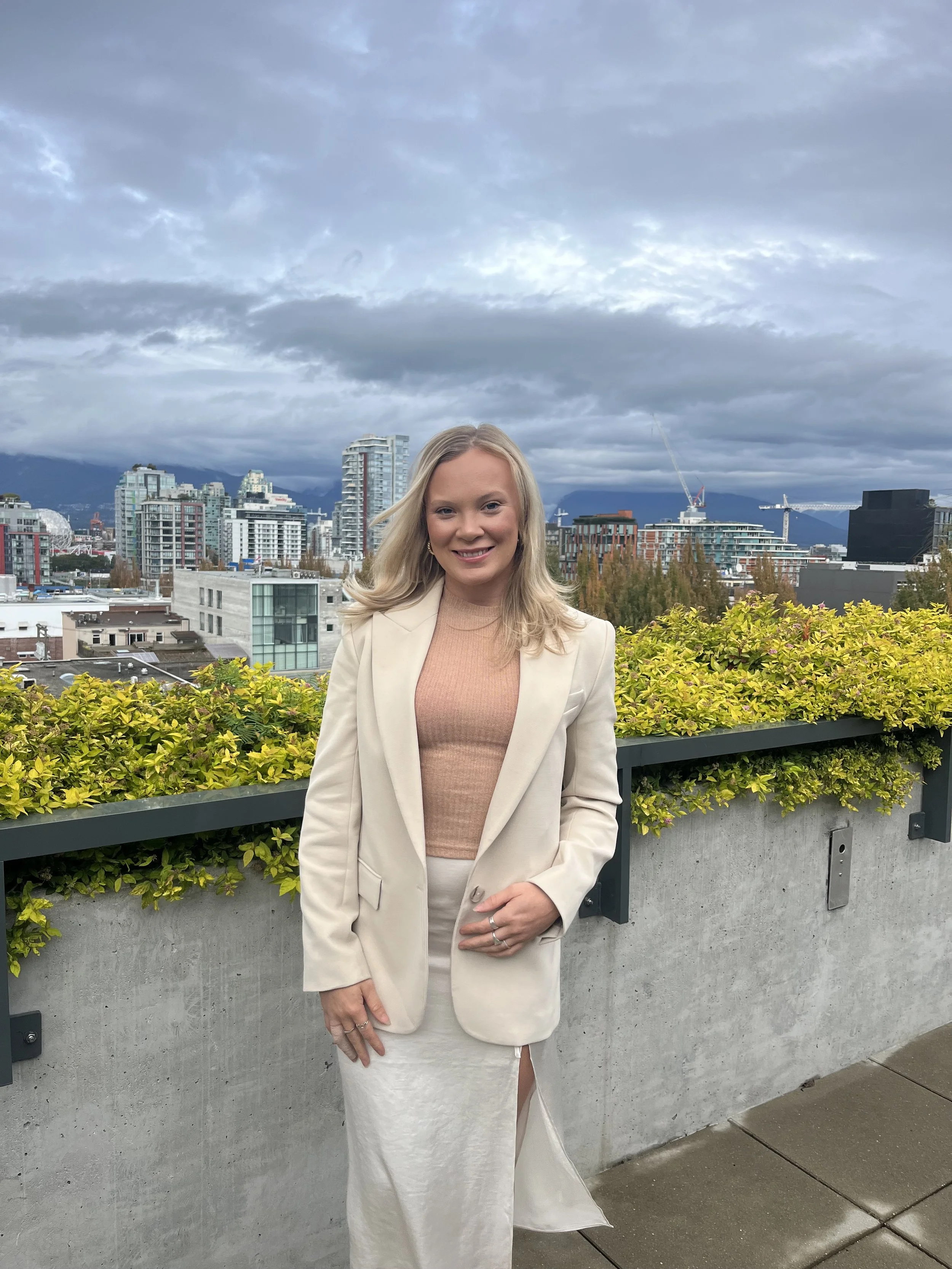
Melissa Gunstone
BSc Kinesiology, Founder of HomeStretch Active Living
"We all want our parents and grandparents to age safely and comfortably in their own homes. Not just live longer, but live better."
A Western University Kinesiology graduate, Melissa founded HomeStretch after identifying the gap between clinical discharge and true independence. She personally selects every kinesiologist on her Ontario and BC teams, ensuring every client receives the same standard of compassionate, expert care.
Our Services for Toronto Seniors
Every service is kinesiologist-led and delivered in-home. No commute, no equipment, and no commitment needed to get started.
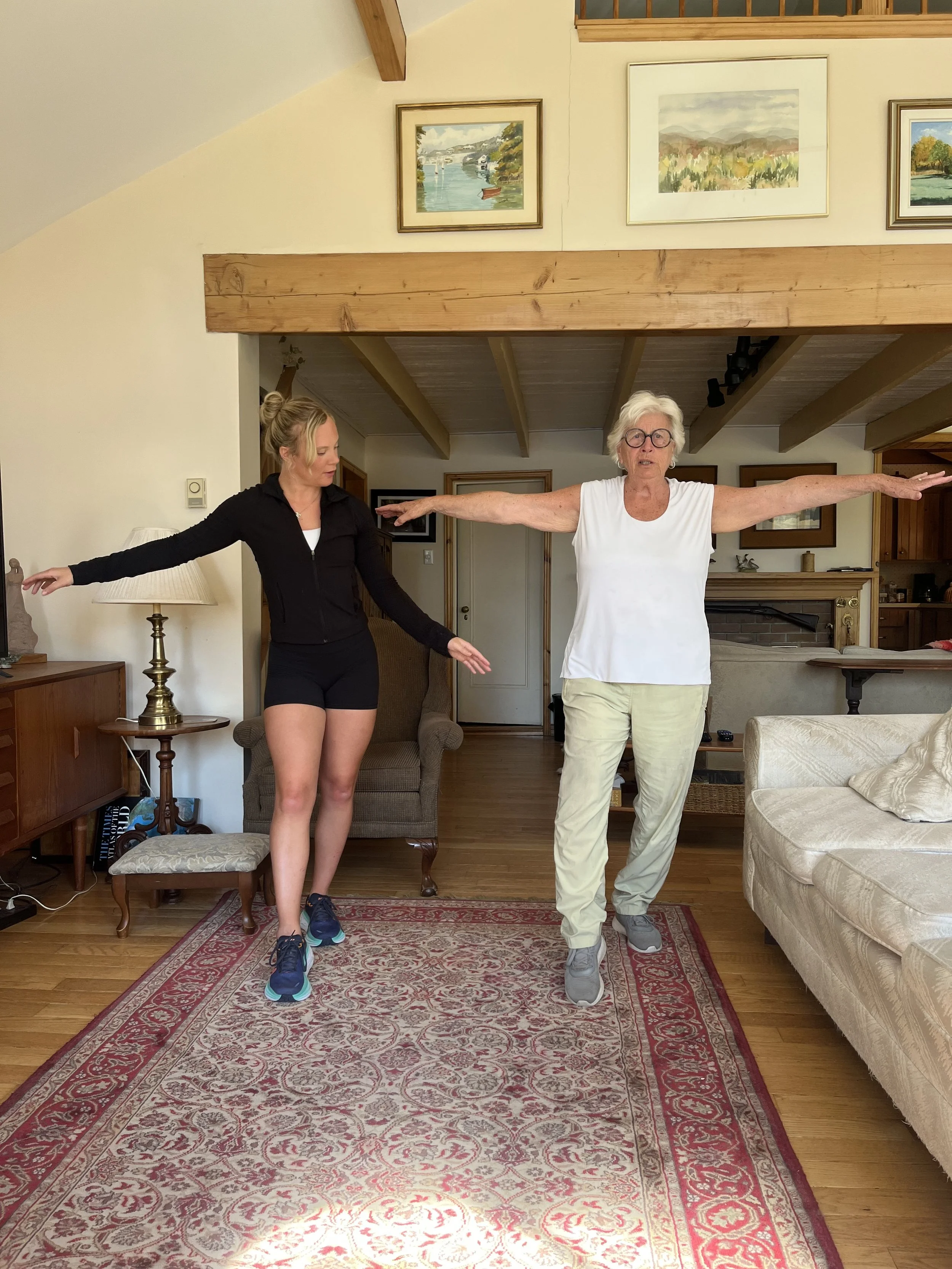
In-Home Personal Training with a Kinesiologist
1-on-1 sessions built around your health history. We assess your balance, mobility, and fall risk, then design a realistic plan for your daily life at home.
Build Strength at Home →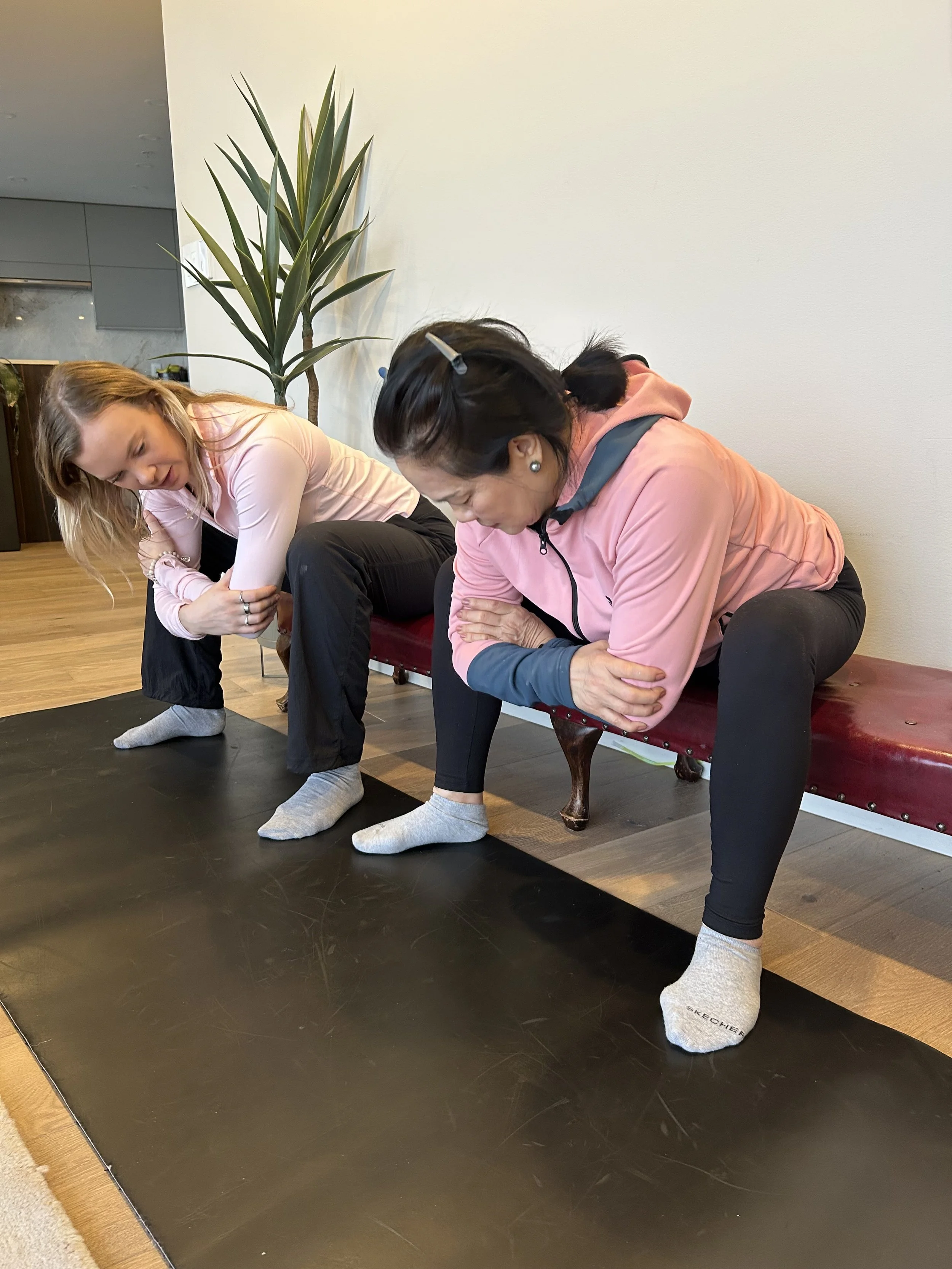
Fall Prevention Programs to Keep You Steady and Safe
Balance and strength training to reduce fall risk, restore confidence, and support independent living in the comfort of your own home.
Find Out How We Can Help →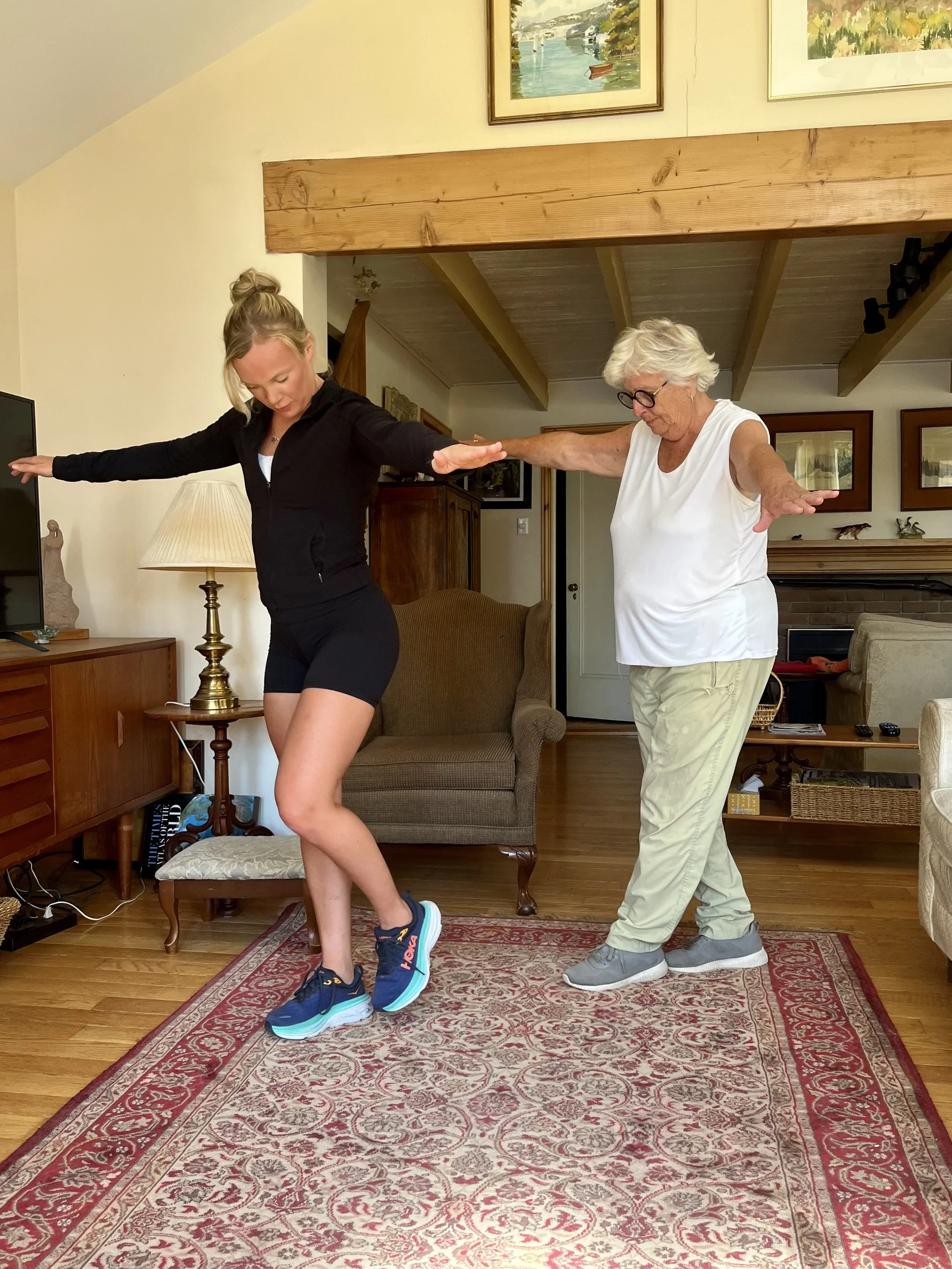
Pre and Post Operation Rehabilitation
Safe recovery support for hip, knee, and shoulder procedures, guided by a registered kinesiologist who specializes in aging bodies.
Recover with Confidence →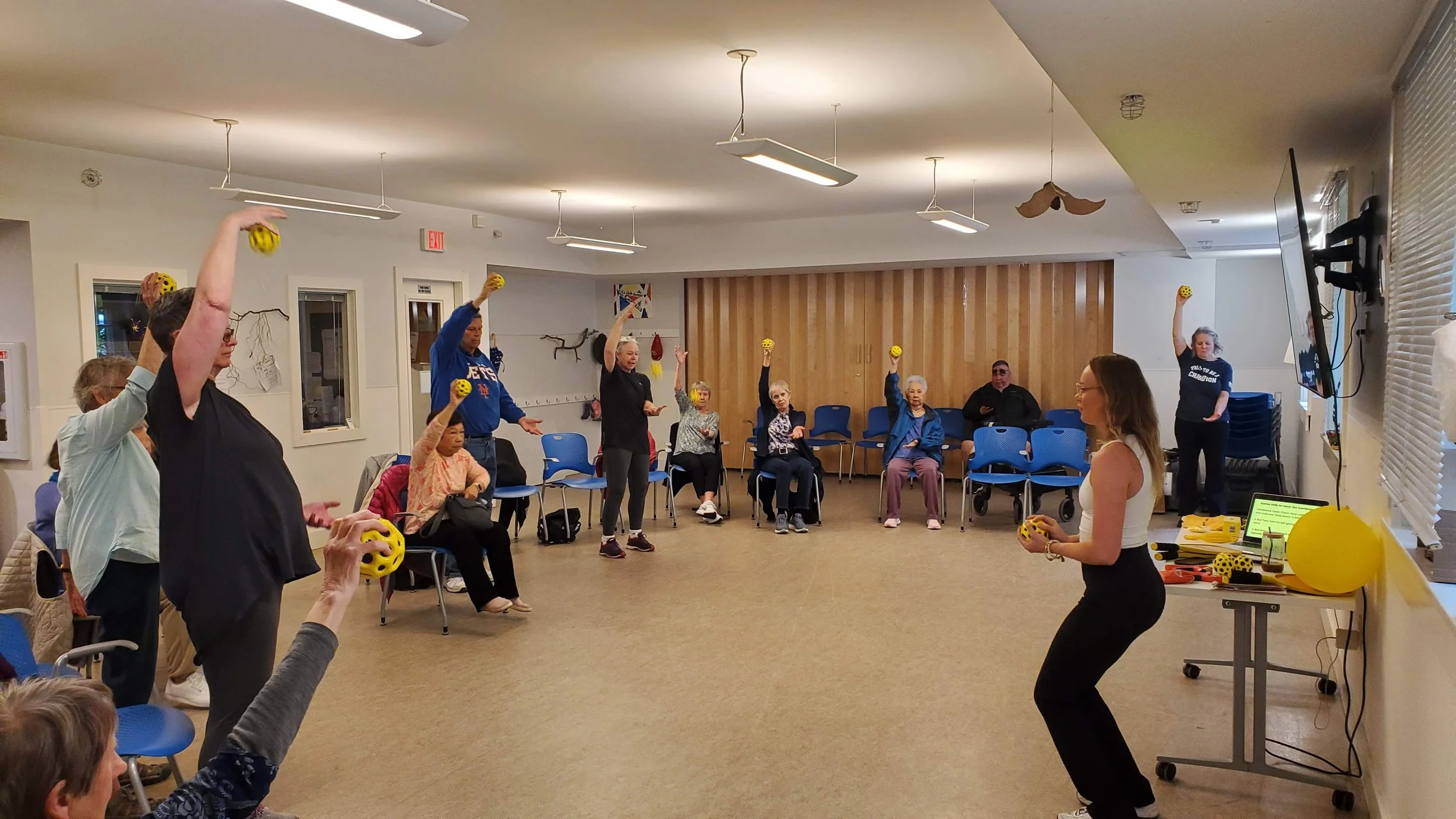
Community Workshops and Presentations that Keep Seniors Moving
Brain and Balance Series for seniors groups, Legions, libraries, and community centres across Toronto. Education meets movement.
Bring Workshops to Your Community →Why Movement Matters for Seniors
adults over 65 fall each year, and many of those falls are preventable
Public Health Agency of Canadafewer falls among older adults who exercise regularly
Cochrane Reviewthe ages we train, in homes right across Ontario
HomeStretch Active Livingof injury-related hospitalizations among Canadians 65 and older are fall-related
Public Health Agency of CanadaTower Suites, Walk-Ups and Three-Storey Houses: Training at Home in Toronto
Close to half of all homes in Toronto are apartments in buildings of five or more storeys, and fewer than one in four is a detached house (Statistics Canada, 2021 Census). From one neighbourhood to the next the mix changes a great deal, and so does the age of the people living there: in Rosedale and Moore Park, 27.9 percent of residents are 65 or older (City of Toronto neighbourhood profiles, 2021 Census). We plan each session around the home you live in, whether that is a tower suite, a walk-up or a house with the staircase in the middle.
Rosedale and Moore Park
Rosedale and Moore Park mix large detached houses with apartment buildings, and plenty of older residents live in each. In the houses the bedrooms are often upstairs and the staircase gets climbed many times a day, so the stairs are often exactly what we train for. In the apartments the way in is a lobby and an elevator, and we build the session around the room you have and the furniture you can steady yourself on.
Looking for a program nearby? The Toronto Reference Library is at 789 Yonge Street, and Toronto Public Library lists a wheelchair-accessible washroom on its main level and hours until 8:30 p.m. on weekdays. If you are driving, the library points visitors to the paid parking lots on Asquith Avenue and Church Street.
For a walk, the Kay Gardner Beltline runs through the neighbourhood. It is level the whole way because it was built on an old railway line, but most of it is gravel and it is not a route to rely on in snow and ice, so treat it as a spring-to-autumn goal. Moorevale Park on Moore Avenue makes a shorter outing, with a washroom the City lists on site, and it is home to the Moore Park Lawn Bowling Club, founded in 1925.
Yonge and St. Clair
Around Yonge and St. Clair most homes are in apartment towers and detached houses are rare, so the way in to a session is nearly always a buzzer or a front desk, then an elevator, then a suite. A suite has room enough for a full session, with a sturdy chair, a kitchen counter and a clear stretch of wall. When you book, just tell us how a visitor gets into your building.
Looking for a program nearby? The Deer Park library branch is at 40 St. Clair Avenue East. Toronto Public Library lists washrooms inside, with the accessible one on the main floor, and paid parking on Alvin Street. For a City community centre, head north to North Toronto Memorial Community Centre at 200 Eglinton Avenue West, which the City lists with an indoor track.
For a walk, the parks right around the intersection are small squares and parkettes. For a longer walk, Oriole Park is to the north at 201 Oriole Parkway, and the City lists a washroom there. When the sidewalks ice over, the indoor track at North Toronto Memorial is the place to keep walking: level, dry and out of the weather.
Forest Hill
Forest Hill's detached houses are large, many of them three storeys with the staircase at the heart of the house, and there are apartment buildings along Eglinton Avenue West and Bathurst Street. In a big house the useful question is which floors you really need every day, and we train for that climb first. The session itself happens on whichever floor has the most room.
Looking for a program nearby? The Forest Hill library branch is at 700 Eglinton Avenue West. Two things to plan for: Toronto Public Library notes that the washrooms are outside the library in a City-owned space and are not wheelchair accessible, and that parking is on the street only, so if you drive, look for a spot south of Eglinton.
For a walk, Cedarvale Ravine starts at Bathurst Street, close to St. Clair West station, on a wide gravel path, and there are outdoor exercise stations near that end, including step-up platforms. It is a different place from Cedarvale Park on Arlington Avenue, so check which one you mean before you set out.
The Beaches
Many people in the Beaches live in low-rise apartment buildings with no elevator, or in older houses with steps up to the front porch, so stairs are part of getting home. We train on the stairs you use every day, with your own railing to hold, and there is no equipment for anyone to carry up them.
Looking for a program nearby? Community Centre 55 is at 97 Main Street, a City of Toronto agency and registered charity that has served the Beaches and East York since 1975. The Beaches library branch at 2161 Queen Street East opened in 1916, and Toronto Public Library lists an accessible washroom on its lower level and a paid parking lot on Lee Avenue. For a pool, Beaches Recreation Centre at 6 Williamson Road has a 25-metre indoor pool.
For a walk, Kew Gardens and Beaches Park share one address, 2075 Queen Street East, with the boardwalk along the lake just to the south. The City lists a public washroom at Kew Gardens and outdoor exercise equipment in Beaches Park, and the Kew Beach Lawn Bowling Club sits between the park and the lake at the foot of Lee Avenue. Pantry Park at 70 Kewbeach Avenue has a track, and the City lists a washroom there too. The City's parks bylaw keeps its parks open from 5:30 a.m. until midnight, so an early walk before the crowds is well within the rules.
You see the same kinesiologist at every session, in whichever part of downtown, midtown or east Toronto you live. Toronto Public Health's advice on preventing falls in older adults notes that most indoor falls happen in the bedroom and the bathroom, and recommends strengthening activities on at least two days every week. At HomeStretch we bring in-home kinesiology to those rooms, in the tower suite, the walk-up or the house you already live in, so you can build strength for real life and stay independent at home. How in-home training with a kinesiologist works.

Bringing Wellness to Toronto Seniors, Together
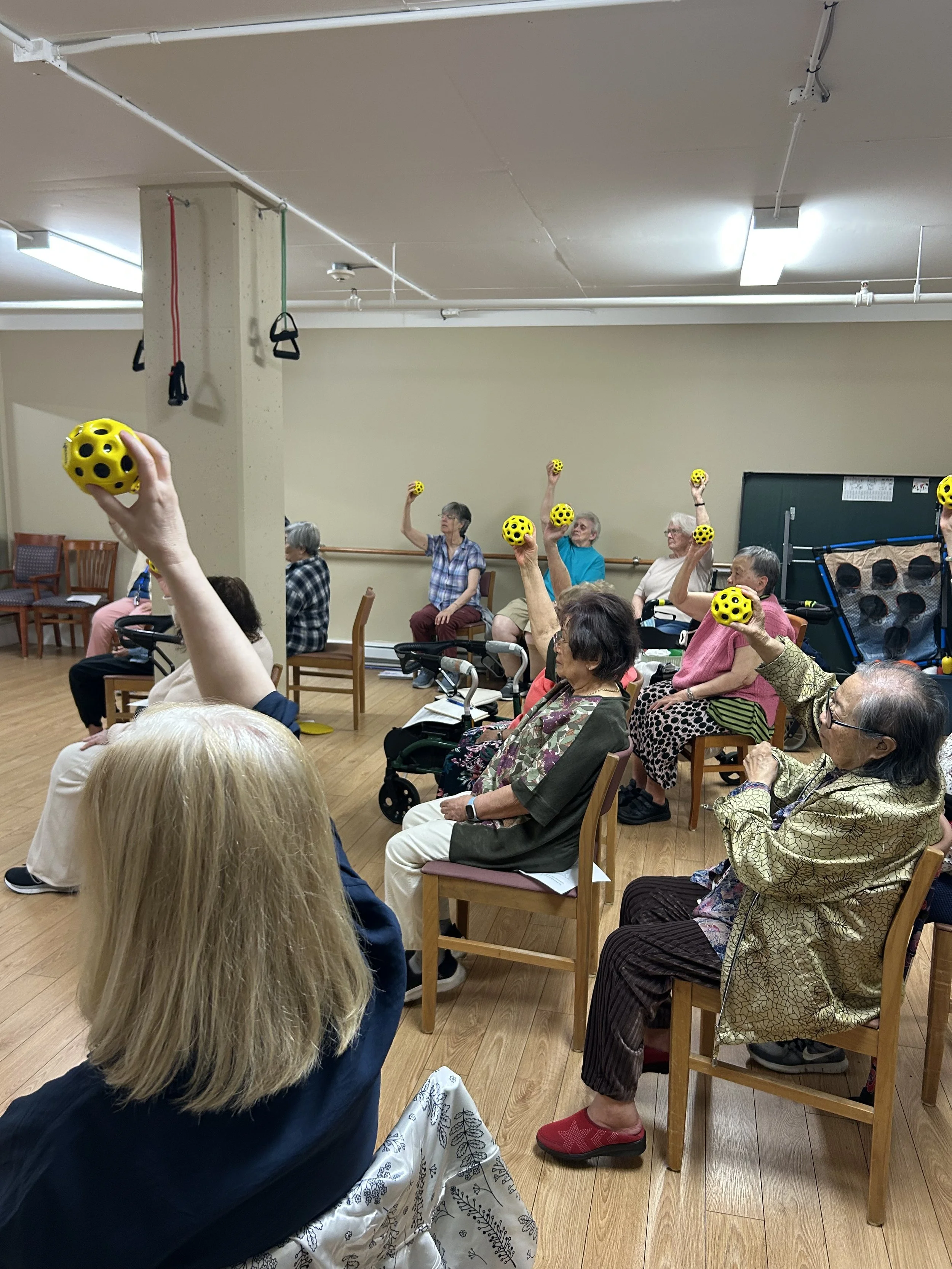
HomeStretch workshops bring seniors together in community centres, Legions, and retirement residences across Toronto. Every session blends evidence-based education with hands-on movement so participants build skills they can use every day.
- Brain and Balance Series delivered in your community or residence
- Educational presentations on fall prevention, muscle loss, and arthritis
- Fun, team-based activities designed for all mobility and fitness levels
- Participants leave stronger in body, sharper in mind, and more connected
Hear from Seniors Who've Found Strength and Confidence with Us
"Melissa is a knowledgeable, engaging trainer who keeps sessions light and fun. We always look forward to her visits and highly recommend her for at-home training."
"Michelle helped me with in-home balance and mobility exercises. She was knowledgeable, professional, and punctual and made it fun. She tailored exercises to my needs, which made all the difference."
"Kseniya is always professional, punctual, and caring, making every session productive and tailored to my needs. I am grateful for her support and look forward to working with her again."
From the HomeStretch Journal
Practical guides for Toronto seniors and the families who support them.

Kinesiology for Seniors: In-Home Personal Training, Rehabilitation & Fall Prevention in Toronto
How kinesiologist-led programs build strength, balance and lasting independence for Toronto seniors.
Read More →
In-Home Personal Training for Seniors in Toronto: Why Local Kinesiology Matters
Why training at home with a local kinesiologist helps Toronto seniors move with more confidence.
Read More →
Why Toronto Seniors Need Better Fall Prevention Programs
A kinesiologist's view on building the strength and balance that help older adults stay steady at home.
Read More →FAQs for Toronto
Everything you need to know before getting started.
Do you provide in-home personal training for seniors in Toronto?
Yes. Registered kinesiologists come to clients in downtown, midtown and east Toronto, including Rosedale, Moore Park, Yonge and St. Clair, Forest Hill, Casa Loma, Cabbagetown, Riverdale and the Beaches. Every session is one to one in your own home, with nothing to buy and nowhere to drive. If you live in another part of the city, ask us when you call.
Can you train someone who lives in a condo or apartment?
Yes. Close to half of all homes in Toronto, 46.7 percent, are apartments in buildings of five or more storeys (Statistics Canada, 2021 Census), so a suite is an ordinary place for a session. We plan it for the room you have, using a sturdy chair, a counter, a wall or a doorway rather than equipment, and we choose exercises you can repeat on your own without moving furniture. When you book, tell us whether we buzz up or sign in at a front desk, and where a visitor can park.
What if my building has no elevator?
We still come to you. About one Toronto home in seven, 14.0 percent, is an apartment in a building of fewer than five storeys (Statistics Canada, 2021 Census), and many of those are walk-ups. If you climb a flight of stairs to reach your own door, those stairs usually become part of the plan, because getting up and down them with confidence is what lets you keep living there. No equipment is needed, so there is nothing heavy to carry up.
What is the difference between a kinesiologist and a personal trainer?
A personal training certificate can take a few months. A kinesiologist has a four-year university degree in how the body moves, heals and adapts, and in Ontario the title is regulated by the College of Kinesiologists of Ontario. That background is what lets a program work safely around arthritis, osteoporosis, a joint replacement or a recent operation, which matters more to an older adult than general fitness does.
What senior fitness programs are available in Toronto?
HomeStretch offers three. The first is one-to-one training in your own home, planned from an assessment and usually focused on balance and fall prevention, strength and mobility for arthritis or a joint replacement, or recovery before and after surgery. The second is Brain and Balance, a six-week small-group program that pairs balance work with cognitive exercises. The third is workshops we bring to retirement residences, libraries and community groups. When you call, we can talk through which of the three suits you.
How do I get started, and is it covered by benefits?
Book a free phone consultation. We talk through your health history, goals and any concerns, and explain how in-home training works and what it costs, with no commitment. If it is a good fit, a kinesiologist visits your home for an initial assessment of balance, strength and fall risk and builds your plan. No equipment is needed. Many extended health benefit plans cover kinesiology, so it is worth checking your plan before you start, and we provide receipts and session documentation to support a claim.

Ready to Get Started in Toronto?
We come to you. No equipment, no commitment, no pressure.
Or call us directly: 519-427-4522