Spring Gardening for Seniors: Stay Active, Safe, and Prevent Falls
April 13, 2026
On this page
⚡ Quick Answer
- Raised beds, seated gardening, and clear pathways cut fall risk while keeping gardening enjoyable.
- Ergonomic and long-handled tools reduce strain on joints and lower the need to bend or kneel.
- Short 20 to 30 minute sessions with breaks work better than long stretches of yard work.
- Pre-gardening stretches and balance work during breaks help translate strength into the garden.
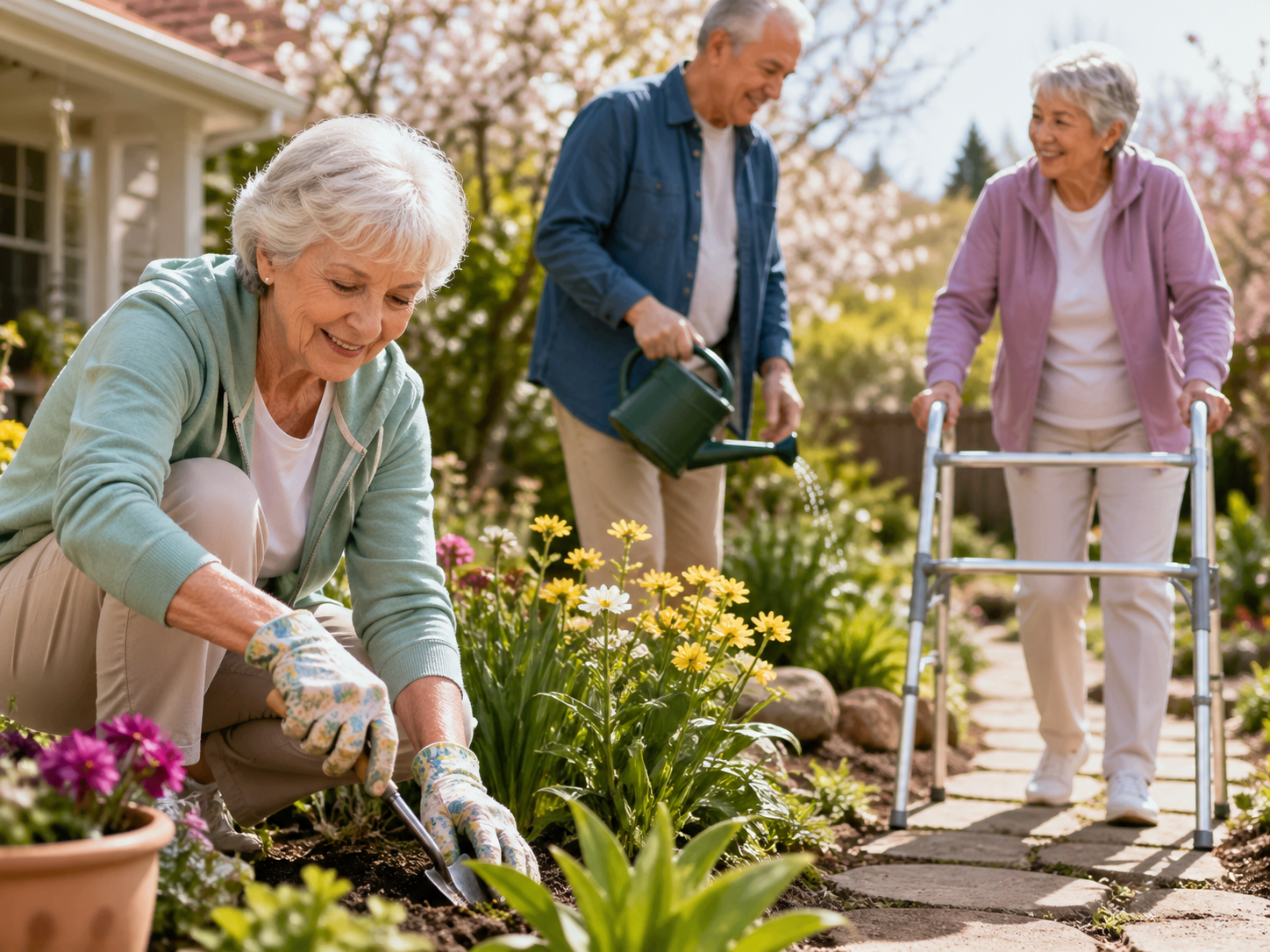
Spring gardening is one of the most enjoyable ways for older adults to stay active, improve mobility, and boost mood.
However, without proper precautions, it can increase the risk of falls.
At HomeStretch Active Living, we focus on helping seniors stay independent through safe movement and practical strategies.
With the right approach, gardening becomes both a therapeutic and fall-prevention activity.
Safe Gardening Practices for Seniors
Use ergonomic tools to reduce strain
Build raised garden beds to limit bending
Wear non-slip, supportive shoes
Keep pathways clear and well-lit
These simple adjustments significantly reduce fall risks while gardening.
Recommended Gardening Activities
Focus on low-impact, controlled movements:
Planting flowers or herbs
Watering plants using lightweight tools
Working in 20–30 minute sessions
Taking movement breaks between tasks
Tip: Pair gardening with simple exercises like those in our Senior Mobility Workouts Guide and Chair Exercises for Seniors
Sturdey Tools to Support Safe Gardening
Using the right tools can significantly improve safety, coordination, and strength while gardening.
From the Sturdey Tools to Stay Sturdy collection, here are great additions:
Balance & Reaction Tools → Improve stability and prevent trips
Coordination Training Tools → Enhance reaction time (important for uneven ground)
Grip & Control Tools → Help maintain strength for handling gardening equipment
Example: The Strikey Ball is excellent for improving hand-eye coordination and reaction, skills that directly support safer outdoor movement.
💡 These tools are especially helpful when combined with guided routines from HomeStretch Active Living programs.
Exercises That Support Gardening
To garden safely, your body needs balance, strength, and flexibility.
Key Exercises:
Heel-to-Toe Walk → improves walking stability
Chair Stands → builds leg strength for standing and lifting
Single-Leg Balance → enhances coordination
Tai Chi Movements → improves control and awareness
👉 You can explore more in:
💡 Pair these exercises with Sturdey coordination tools for even better results.
General Safety Tips
Stay hydrated
Take frequent breaks
Avoid rushing movements
Clear tools and hoses after use
Check for uneven or slippery surfaces
How Can Seniors Garden Safely to Prevent Falls?
Use raised beds
Sit when needed (gardening stool or kneeler)
Keep tools within easy reach
Improve lighting in shaded areas
These small adjustments reduce strain and improve safety.
Best Gardening Tools for Seniors
Ergonomic hand tools
Long-handled gardening tools
Gardening kneeler or bench
Lightweight watering systems
How to Combine Exercise with Gardening
Stretch before starting
Use breaks for balance exercises
Keep sessions short and consistent
This creates a natural “movement routine” without needing a structured workout.
Health Benefits of Gardening for Seniors
Improves strength and flexibility
Enhances balance and coordination
Boosts mood and reduces stress
Encourages social interaction
Gardening is one of the most effective functional fitness activities for seniors.
Support & Fall Prevention Guidance
Many seniors benefit from professional support to stay safe.
At HomeStretch Active Living, programs are designed to bridge the gap between rehab and real-life independence, helping seniors maintain progress long-term .
Spring gardening is a powerful way to stay active, independent, and engaged—but safety is key.
By combining:
Smart gardening practices
Simple exercises
The right tools (like Sturdey products)…seniors can enjoy gardening while reducing fall risk and building long-term strength.
Frequently Asked Questions
-
The best exercises include single-leg stands, heel-to-toe walking, and side-to-side weight shifts. These improve coordination and reduce fall risk.
-
Seniors should aim to perform balance exercises at least 2–3 times per week for optimal results.
-
Yes, when done correctly. Exercises like chair squats, wall push-ups, and light resistance training are safe and effective.
-
Start with low-impact movements, use support (like a chair), and gradually increase intensity. Consulting a professional is also recommended.
Related Posts
Better Sleep for Older Adults, Practical Strategies for Restful Nights
Kinesiology for Seniors: In-Home Personal Training, Rehabilitation & Fall Prevention in Toronto
In-Home Personal Training for Seniors in Toronto: Why Local Kinesiology Matters
Author Bio - Melissa Gunstone, BSc, Kinesiologist
Melissa Gunstone is the founder of HomeStretch, a kinesiologist with years of experience supporting seniors across Canada. Her mission: to give older adults safe, effective, and individualized movement programs, from in-home training to community-based senior fitness classes and to build a nationwide movement that elevates the role of kinesiology in healthy aging.