What In-Home Rehab Services Help After Surgery in Canada?
August 31, 2026
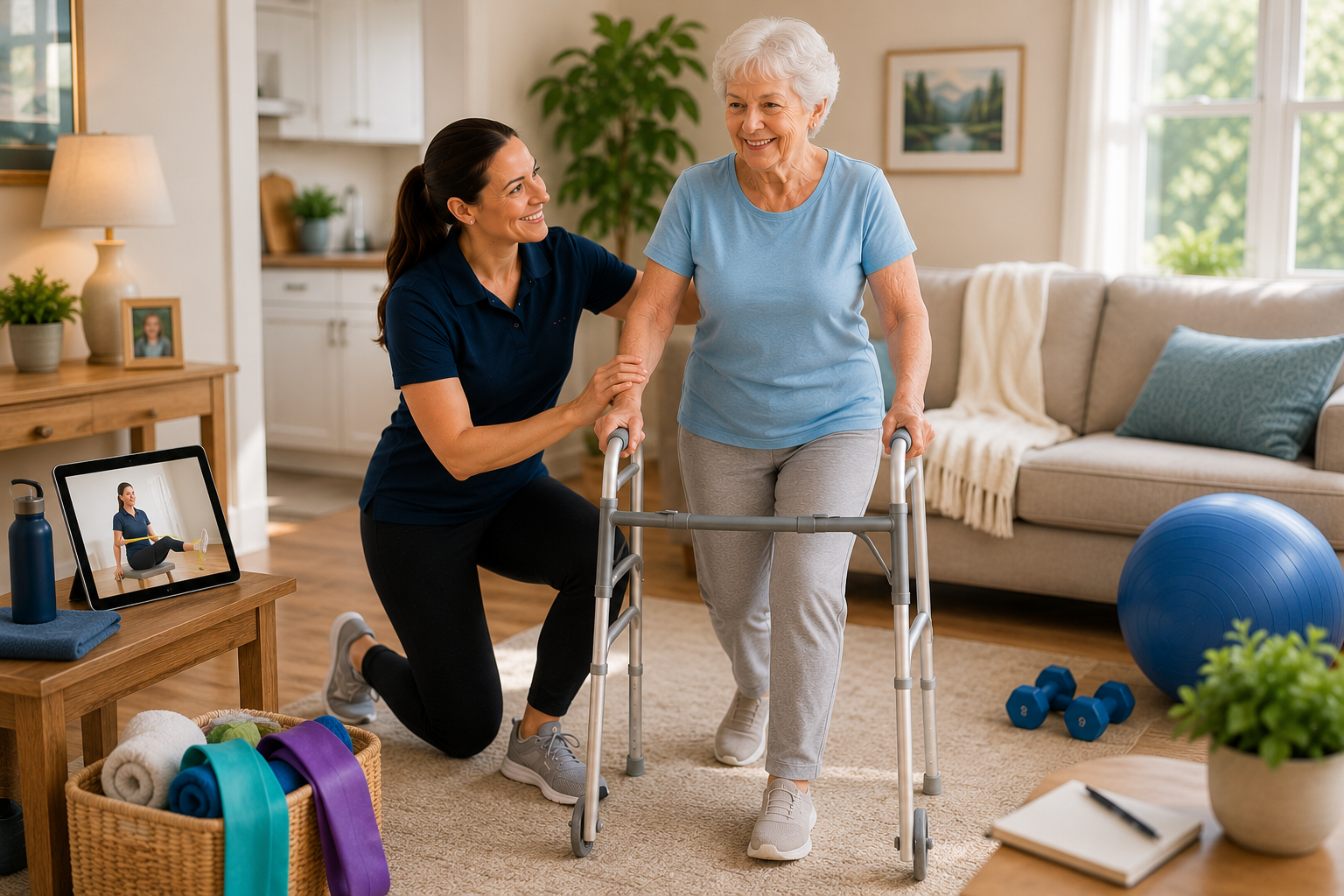
Recovering after surgery can feel like a lot, especially for older adults who are also managing pain, fatigue, stiffness, or a fear of falling.
For many families, the hardest part is not just the surgery itself. It is figuring out how to rebuild strength and confidence safely once someone is back home.
That is where in-home rehab can make a real difference. Instead of asking a senior to travel while sore, tired, or unsteady, recovery happens in the place where daily life actually unfolds, in the bedroom, hallway, kitchen, and bathroom.
This makes support more practical, more personal, and often more reassuring.
For older seniors in Canada, the need is clear. Canadian data shows that 1 in 5 seniors living in the community reported a fall, which helps explain why post-surgical recovery should focus on balance, strength, and safe movement, not just rest or general exercise.
At HomeStretch, we provide one-to-one, kinesiologist-led support that helps older adults regain strength, balance, and confidence at home, with free consultations and services across several Ontario areas.
Why Recovering At Home Matters
In-home rehab is not simply a more convenient version of clinic care. It changes the recovery experience itself.
After surgery, small barriers can become major ones. A few front steps, icy sidewalks, a long car ride, or a crowded waiting room may be enough to make someone skip a session or push too hard before they are ready. At home, those barriers disappear. That often leads to better consistency, and consistency is what helps recovery move forward.
Just as important, in-home rehab supports independence in a very direct way. We do not only work on general strength. We help seniors practice the movements that matter in their own environment, such as getting up from a chair, turning safely in a narrow hallway, stepping into the bathroom, or moving around the kitchen without losing balance.
That approach lines up with Canadian fall-prevention guidance. Public health recommendations identify balance and gait deficits as important fall risks, and they note that exercise targeting balance, gait, and strength is among the most effective ways to reduce that risk, as outlined in national fall prevention guidance.
The in-home Rehab Services that Help most After Surgery
Kinesiologist-led strength and balance sessions
One of the most helpful services after surgery is one-to-one rehab led by a kinesiologist. At HomeStretch, these sessions are tailored to the person in front of us, not built around a standard template.
We start by looking at health history, current mobility, daily routines, and the level of independence the client wants to regain. From there, we build a personalized movement plan and track progress over time. Sessions are typically 60 minutes and often take place once or twice per week, depending on recovery needs and goals. That structure gives seniors enough support to improve steadily without feeling rushed or overwhelmed, as described in our in-home rehab approach.
Post-operative rehab at home
After procedures involving the hip, knee, or shoulder, recovery often depends on safe repetition of everyday movement. That includes standing up, walking with control, rebuilding strength, and restoring confidence in the affected area.
We provide pre- and post-operative rehab that meets seniors where they are on that day. Some clients need a very gentle start. Others are ready for more focused work on endurance, coordination, and functional mobility. The goal is always the same, to help the body do what it can safely do now, then build from there. This is especially valuable after common orthopedic procedures, including support for hip, knee, and shoulder recovery.
Canadian evidence also supports home-based recovery for some older adults after serious orthopedic events. A Canadian position paper on post-hip-fracture care found that early discharge followed by geriatric interdisciplinary home rehabilitation can produce comparable recovery of independence in daily activities at 3 and 12 months for appropriate patients, which strengthens the case for rehab in the home setting.
Wellness and group programs that support long-term recovery
Recovery does not end when pain goes down or the surgical site heals. Seniors often need continued movement practice to maintain gains, prevent deconditioning, and stay socially engaged.
That is why in-home senior wellness can extend beyond one-to-one rehab. We also support community wellness through workshops and group programming for care homes and senior communities. These sessions are led by kinesiologists with experience in aging, mobility, and fall prevention, and they can include balance-challenging movement, coordination, agility, and reaction-time training.
For care homes and long-term care communities, group wellness programs can reinforce what clients are learning in individual rehab. They create routine, keep residents active, and support confidence after formal post-surgical recovery ends. We also work with clients living with mild to severe cognitive impairments, which helps more seniors participate safely in meaningful movement.
| Service type | How it helps after surgery | Who it suits |
|---|---|---|
| 1:1 in-home kinesiology | Rebuilds strength, mobility, and confidence with personalized guidance | Seniors recovering at home |
| Pre- and post-op rehab | Supports safe recovery after hip, knee, shoulder, and similar procedures | Older adults needing structured progress |
| Fall prevention and balance training | Reduces fall risk and improves steadiness in daily movement | Seniors with weakness, fear of falling, or gait changes |
| Group wellness in care homes | Maintains activity, routine, and social connection after rehab | Residents in retirement, assisted living, and care settings |
Balance and Mobility Support that Lowers Fall Risk
Many seniors do not just need rehabilitation after surgery. They also need help feeling steady again.
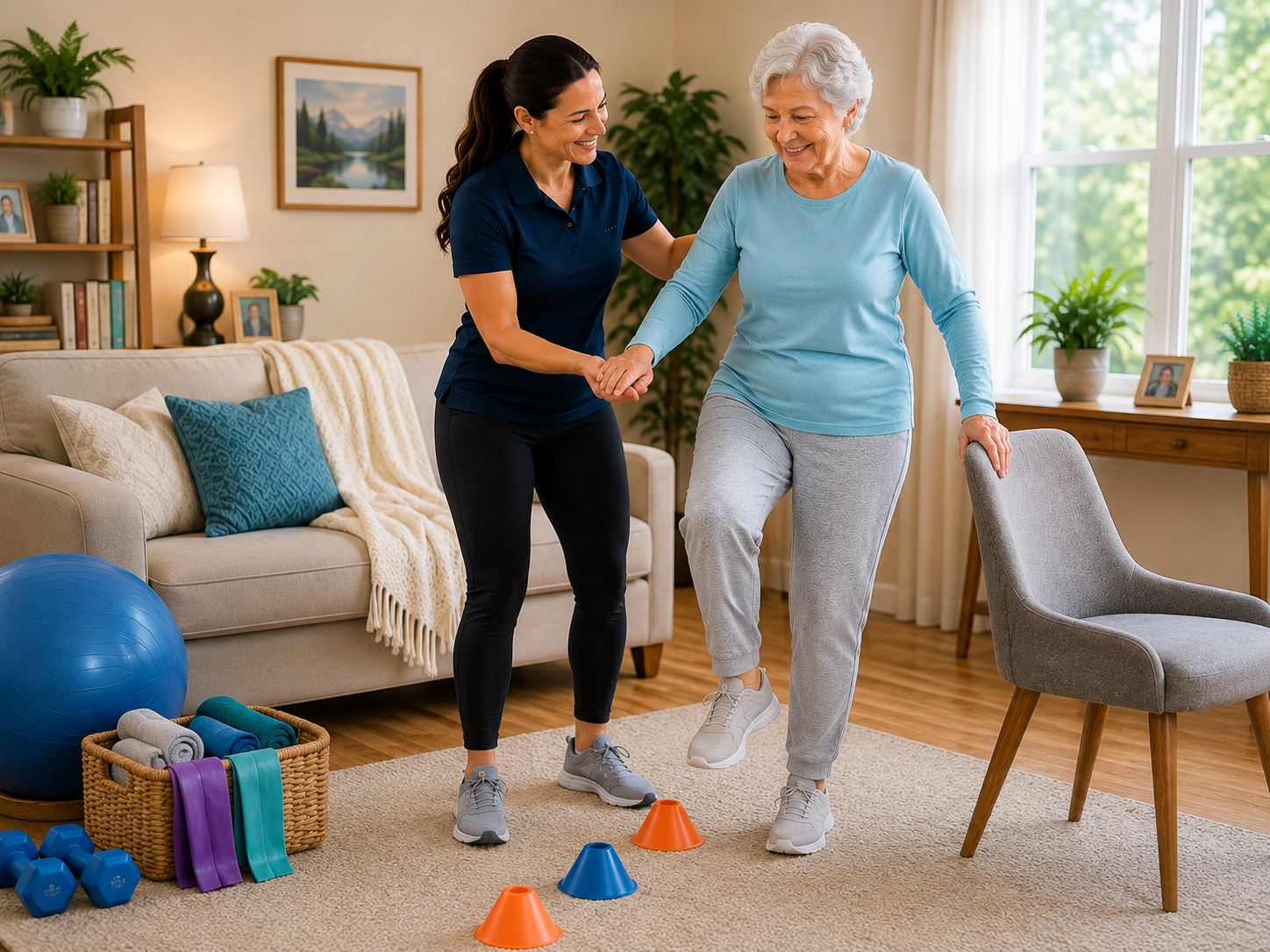
Our balance and mobility programs are built for that stage of recovery. They can include in-home fall-risk assessments, home safety recommendations, balance training, mobility work, and customized exercise prescriptions for strength and stability. That kind of support matters because a senior who feels unsteady may start moving less, and less movement often leads to more weakness.
The exercises themselves do not need to be complicated to be effective. Chair stands, heel-to-toe walking, stepping patterns, and other functional drills can improve control and confidence when they are taught properly and progressed carefully. Broader guidance also supports individualized exercise that includes balance-challenging and functional movements, often several times per week over at least 12 weeks for stronger results, as noted in the current falls guidance.
Why in-home care often works better than facility-based recovery
For many older adults, the home setting is not just more comfortable. It is more realistic.
We see the actual chair a client struggles to rise from. We see the hallway turn that causes hesitation. We can adapt exercises using what is already in the home, such as a sturdy chair or kitchen counter, instead of relying on specialized equipment. That makes each session directly relevant to everyday life.
There is also value in consistency. The same kinesiologist works with the client each session, which builds trust and allows for better progress tracking. With permission, we can also communicate with family members, which reassures adult children who want to understand how recovery is going.
In some service areas, families also appreciate the practical advantages, no commute, no travel strain, and no waiting to start building strength again.
You can also read In-Home Senior Rehabilitation: Personalized Care for Safer Movement, Faster Recovery, and Independence
Why families choose our support after surgery
Families want recovery support that feels safe, skilled, and dependable. That is exactly what we provide.
Our approach is grounded in kinesiology, healthy aging, and functional movement. We create rehabilitation plans around the client’s current ability, home environment, and personal goals. We track progress, adjust carefully, and keep the focus on what matters most, walking safely, moving with less fear, and staying independent as daily life resumes.
We also serve seniors across Niagara, Hamilton-area communities, the Greater Toronto Area, and Vancouver-area communities, giving families access to specialized in-home support in multiple Canadian regions through our available service areas.
Start recovery with more confidence
The right in-home rehab service should do more than fill time between medical appointments. It should help a senior move better, feel safer, and regain trust in their body after surgery.
If you are arranging care for yourself or a loved one, we can help you take the next step with a clear plan, compassionate guidance, and practical support at home. Reach out to discuss your recovery goals and book a consultation.
Frequently Asked Questions
-
Programs that combine strength work, balance challenges, and fall-prevention strategies are the most helpful. Walking practice, supported standing work, chair-based strengthening, and transfer training all contribute to steadier movement.
-
Yes, when they are guided by trained professionals. A supervised in-home program can help a senior rebuild strength and mobility gradually, while reducing the risk of overdoing it or using poor technique.
-
Look for a service with professional oversight, a clear safety-first approach, and a strong focus on balance, mobility, and daily function. The best programs are personalized, practical, and designed around the senior’s real living environment.
Related Posts
Does Exercise Really Reduce Falls? What the Research Actually Shows
Exercises for Seniors: Routines to Improve Balance, Strength, and Mobility
Author Bio - Melissa Gunstone, BSc, Kinesiologist
Melissa Gunstone is the founder of HomeStretch, a kinesiologist with years of experience supporting seniors across Canada. Her mission: to give older adults safe, effective, and individualized movement programs, from in-home training to community-based senior fitness classes and to build a nationwide movement that elevates the role of kinesiology in healthy aging.