How Personalized Home Physical Therapy Supports Independence and Faster Recovery
December 5, 2025

On this page
⚡ Quick Answer
- Personalized plans are built around your health conditions, mobility level, and goals — far safer than generic routines.
- Kinesiologists assess strength, gait, and balance to tailor exercises for arthritis, osteoporosis, or post-surgery recovery.
- In-home training removes gym barriers and trains seniors in the real-life environment where falls actually happen.
- The AgeProof Assessment tracks measurable progress in sit-to-stand speed, balance, gait, and strength.
For many older adults, recovery doesn’t end when they leave the hospital or clinic. That’s often when the hardest part begins.
Families juggle follow-up appointments, transportation, and changing care needs while seniors try to remember exercises, manage pain, and get their confidence back. Missed clinic visits, long car rides, icy sidewalks, or fatigue can quietly slow progress.
At the same time, most of the challenges getting out of bed, walking to the bathroom, climbing stairs, or preparing a simple meal happen at home, not in a treatment room.
That’s where in-home senior rehabilitation comes in. By bringing structured, clinician-led care into the home, seniors can work on the exact tasks that matter most: safer transfers, steadier walking, and more confidence moving around their own space.
In this guide, you’ll learn how personalized home physical therapy and kinesiology-led programs work, what to expect before and after surgery, and how in-home rehab supports long-term independence, fall prevention, and chronic condition management.
What Is In-Home Senior Rehabilitation?
In-home senior pre-operative and post-operative rehabilitation is structured, goal-oriented care delivered where the person lives. Clinicians combine assessment, tailored exercise, functional task practice, and a home safety review to help older adults regain or maintain independence.
Key elements include:
Movement assessment – gait, balance, strength, transfers, and mobility in real-world home environments.
Individualized exercise programs – progressive strength, balance, and mobility plans aligned with daily activities.
ADL (Activities of Daily Living) practice – getting in/out of bed, using stairs, toileting, reaching cupboards, and more.
Home safety checks – identifying trip hazards and suggesting simple changes to reduce fall risk.
The result? Better carry-over from exercises to everyday life, improved confidence, and often faster recovery than clinic-only programs.
Core Benefits of In-Home Rehabilitation for Seniors
In-home rehab offers several practical advantages for older adults and caregivers:
Convenience & access
Clinicians travel to the home, so bad weather, fatigue, or lack of transport don’t lead to missed sessions.
Training in real-life context
Exercises happen where daily tasks actually occur, at the bed, in the bathroom, by the kitchen counter, so skills transfer directly.
Personalized safety checks
A room-by-room review identifies loose rugs, poor lighting, cluttered pathways, or unsafe setups and offers targeted fixes.
Faster, more relevant gains
Early, frequent, and focused sessions help rebuild mobility, reduce pain, lower fall risk, and support a quicker return to independence after illness or surgery.
How Home-Based Physical Therapy Builds Mobility and Confidence
Home-based physical therapy links targeted exercise with practical behaviour strategies. Instead of generic routines, the clinician:
Assesses gait, transfers, and balance inside the home.
Designs progressive challenges that mirror daily life (chairs, bed height, stairs, door thresholds).
Uses graded exposure to gently tackle “scary” tasks, like shower transfers or stair climbing.
Sets clear, measurable goals (for example, stand up from the couch independently 10 times).
Practising these skills in familiar surroundings reduces fear of falling and builds confidence. Seniors see progress where it matters most: in their own hallway, kitchen, bathroom, and bedroom.
What Makes Kinesiology-Led Rehab Different?
Kinesiology-led rehabilitation brings movement science and exercise physiology to the centre of care.
A kinesiologist will typically:
Perform detailed movement analysis (posture, joint mechanics, gait).
Create precise exercise prescriptions with clear progression rules.
Track objective measures like gait speed or Timed Up-and-Go (TUG).
Tie milestones directly to independence goals (stairs, outdoor walking, housework).
For seniors, this means:
Safer progression with less risk of over-doing it.
Clear “why” behind each exercise.
Visible progress over time, which motivates continued participation.
HomeStretch Active Living uses a kinesiology-led model to support pre- and post-surgery rehab as well as ongoing in-home strength and fall-prevention programs.
Pre-Operative and Post-Operative Rehab at Home
How Pre-Op and Post-Op Phases Work
Pre-operative (“prehab”) and post-operative care follow a structured path:
Pre-operative assessment – baseline strength, balance, and functional testing, plus home review.
Prehab – short, focused program to improve readiness before surgery.
Early post-op care – gentle, safe mobilization, pain and swelling management.
Progressive recovery – structured strength, balance, and walking progression.
ADL retraining & transition to self-management – preparing for long-term independence.
Pre-Op vs Post-Op: Side-by-Side
| Phase | Typical Components | Primary Goal |
|---|---|---|
| Pre-operative Assessment | Baseline tests; home environment review | Improve readiness & reduce surgical risk |
| Prehab Interventions | Strength, breathing exercises, mobility-aid education | Boost pre-surgery function & confidence |
| Early Post-op Care | Pain/swelling control, early mobilization, wound-safe exercises | Prevent deconditioning & complications |
| Progressive Recovery | Graded strength, balance, and ADL retraining | Restore independence & measurable mobility |
By preparing the body beforehand and delivering structured follow-up at home, many seniors experience smoother recoveries and faster returns to everyday activities.
Fall Prevention Programs for Seniors at Home
Effective fall-prevention programs address both the body and the environment.
Core components include:
Balance training – static and dynamic tasks (tandem stance, single-leg holds, stepping patterns).
Strength training – especially lower-limb work to improve sit-to-stand and stair confidence.
Gait & mobility practice – walking, turning, and obstacle navigation using the home’s layout.
Home safety modifications – lighting, grab bars, clutter reduction, non-slip mats.
Balance and Strength Exercises That Reduce Fall Risk
Common, evidence-informed exercises may include:
Sit-to-stand repetitions from a stable chair
Heel-to-toe (tandem) walking or standing
Supported single-leg stance
Step-ups to a low step or bottom stair
Resistance-band leg strengthening
Most seniors benefit from 2–3 supervised sessions per week, plus short daily practices, progressing gradually from supported to more challenging versions. Safety supervision is essential for new tasks.
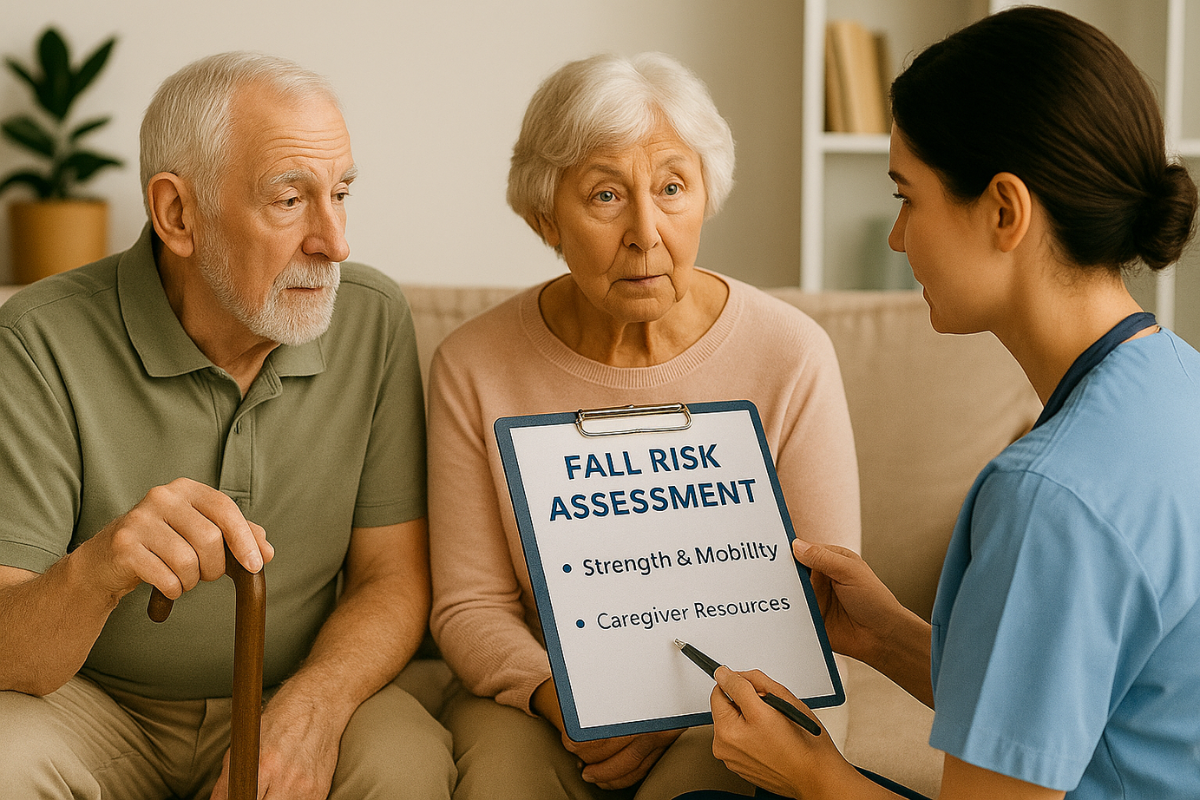
For a deeper dive into practical balance strategies and real-world safety tips, check out Highlights from Our Fall Resiliency Webinar: Building Confidence, Balance, and Movement for Life
Home Safety Assessments and Modifications
A home safety assessment looks for modifiable risks such as:
Loose or lifted rugs
Poor lighting in hallways and stairwells
Cluttered walkways
Cords across walking paths
Low, unstable seating or high, difficult-to-reach storage
Recommended changes often include:
Non-slip mats in kitchens and bathrooms
Grab bars near toilets and in showers
Better lighting and night lights
Rearranged furniture to create clear walking paths
These environmental changes work hand-in-hand with exercise to reduce overall fall risk.
| Program Module | Core Elements | Expected Impact |
|---|---|---|
| Balance Module | Tandem stance, single-leg holds, dynamic steps | Better reactive balance; lower fall likelihood |
| Strength Module | Sit-to-stand, resistance-band leg work | Improved power; easier transfers and stair use |
| Environment | Lighting, grab bars, clutter removal | Fewer trip hazards and safer home navigation |
| Education | Caregiver coaching, pacing strategies | Better adherence and safer daily behaviour |
Personalized In-Home Fitness for Chronic Conditions
Many seniors live with arthritis, Parkinson’s disease, cardiac conditions, or chronic pain. Personalized in-home programs adapt to these realities instead of ignoring them.
A condition-specific plan might look like:
| Condition | Targeted Intervention | Typical Frequency |
|---|---|---|
| Arthritis | Range-of-motion, low-impact strengthening, pacing strategies | 2–3× weekly initially |
| Parkinson’s | Amplitude-based drills, cueing, balance/dual-task work | 2–4× weekly |
| Cardiac recovery | Low-to-moderate aerobic progression with monitoring | 2–3× weekly |
| Chronic pain | Graded activity, strengthening, pacing education | 2–3× weekly → maintenance |
The focus is on symptom management, safety, and building capacity for daily activities—walking further, climbing stairs, or standing to cook without excessive fatigue.
Why Choose In-Home Rehab Over Clinic-Only Care?
For many seniors, in-home rehabilitation is simply more practical and more effective.
Advantages include:
Less travel stress and fewer missed sessions
Exercises tailored directly to the home environment
Real-time tweaks to both movement and surroundings
More relevant outcomes: independent toileting, dressing, stair use, and safe community outings
For families, having a clinician see the “real picture” at home often leads to more realistic plans and fewer surprises.
Convenience, Comfort, and Caregiver Support
Delivering rehab at home has extra benefits:
Scheduling flexibility around appointments, energy levels, and caregiver availability.
Lower anxiety for seniors who feel safer and more comfortable at home.
Hands-on caregiver education during sessions (safe transfers, spotting technique, exercise cues).
Engaged caregivers can help reduce hospital readmissions by spotting early warning signs and supporting safer daily routines.
How to Book and Prepare for In-Home Rehabilitation
Getting started is straightforward. Before your first visit:
Identify needs and goals
List recent surgeries, falls, mobility concerns, and what you’d most like to improve.
Gather medical information
Have medications, discharge summaries, imaging reports, or surgeon instructions nearby if available.
Prepare a safe practice area
Clear a 2–3 metre walking path, provide a stable chair (no wheels), and ensure good lighting.
Schedule an introductory consultation
Book a free or low-cost first visit to review needs and design a personalized plan.
What to Expect at the First In-Home Consultation
During the initial visit, the clinician will typically:
Review your medical history and current concerns
Perform functional tests (for example, sit-to-stand, walking, balance tasks)
Observe key daily tasks (getting up from bed or chairs, walking to the bathroom)
Check the home environment for risks and opportunities
Outline a starting exercise plan and safety recommendations
Discuss frequency of visits and expected milestones
You’ll have a chance to ask questions and clarify goals so everyone is working toward the same outcomes.
How Caregivers Can Support Successful Rehab
Caregivers are essential partners in recovery. Helpful roles include:
Preparing the space before visits
Assisting safely during practice (as instructed)
Encouraging daily exercises between sessions
Tracking changes in pain, energy, or mobility
Communicating concerns or setbacks to the clinician
Regular caregiver involvement boosts adherence, reduces anxiety, and helps tailor the program as needs change.
Call to Action
If you or a loved one are preparing for surgery, recovering from a hospital stay, or noticing more unsteadiness and near-falls, in-home rehabilitation can bridge the gap between “discharged” and truly independent.
Book a free consultation to review your goals, home setup, and medical history. Together, you can build a kinesiology-led plan that supports safer movement, lower fall risk, and more confident daily living at home.
Frequently Asked Questions
-
Look for kinesiology with relevant degrees current licensure in your province or state, and experience working with older adults and common conditions like arthritis or Parkinson’s. Additional training in geriatric or home-based rehabilitation is a plus, as are strong communication skills and a respectful, patient approach.
-
Clear clutter from walkways, improve lighting, move or secure loose rugs, and ensure cords are tucked away. Have a stable, non-rolling chair available and make sure any mobility aids (walkers, canes) are easy to access. Let your clinician know about any “trouble spots” so they can plan appropriately.
-
Most programs blend strength training, balance work, mobility drills, and task-specific practice. Examples include sit-to-stand exercises, walking and turning drills, resistance-band work, and range-of-motion exercises tailored to surgeries or conditions. The goal is always to support safer, more confident daily activity not just gym-style workouts.
-
Frequency depends on medical status and goals, but many seniors do best with 2–3 visits per week in the early phase of recovery, along with shorter daily home practices. As strength and confidence grow, the schedule may step down to maintenance sessions and a self-directed program.
-
Keep the practice area clutter-free, use recommended assistive devices, and ensure a caregiver is nearby when needed. Follow the clinician’s instructions carefully, stop any exercise that causes sharp or worsening pain, and report new symptoms promptly. Regular reassessment helps keep the program safe and effective over time.
Related Posts
Author Bio - Melissa Gunstone, BSc, Kinesiologist
Founder of HomeStretch Ontario Helping Ontario seniors stay strong, safe, and independent — one step at a time.
The 3 Biggest Barriers to Aging in Place - Niagara - St. Catharines, Hamilton, Dundas, Burlington, Toronto - Fall Prevention | Strength & Mobility | Caregiver Resources