Hip Replacement Recovery Timeline: What Happens After Physical Therapy?
July 14, 2026
On this page
⚡ Quick Answer
- A Brain & Balance Workshop combines balance training, strength work, and cognitive challenges in one session.
- Sessions move through a warm-up, balance drills, dual-task brain challenges, and fall prevention education.
- Balance training two to three times a week delivers the best results for mobility and fall prevention.
- No prior falls or fitness experience needed, exercises are modified for every ability level.
Hip replacement surgery is one of the most successful orthopedic procedures performed today.
For many older adults, it offers the opportunity to reduce joint pain, improve mobility, and return to activities they enjoy.
But while surgery and physical therapy are important milestones, they're often not the end of the recovery journey.
Many seniors are discharged from outpatient physical therapy once they've met clinical goals such as walking independently, climbing stairs safely, or demonstrating basic functional movement.
While these milestones are significant, many individuals still don't feel completely confident returning to everyday life.
Questions often remain.
Can I safely walk longer distances?
When should I start exercising again?
Is it normal to still feel weak?
How do I prevent another fall?
What if I'm nervous about moving the wrong way?
These concerns highlight what many professionals call the post-physical therapy recovery gap, the period between completing formal rehabilitation and feeling fully confident living independently.
For many older adults, this stage is where personalized exercise and continued movement support become just as valuable as the early stages of rehabilitation.
Why Recovery Doesn't End When Physical Therapy Does
Physical therapy focuses on helping patients recover safely after surgery.
Typical goals include:
Improving range of motion
Reducing swelling
Restoring basic walking ability
Teaching safe transfers
Regaining functional independence
Once these goals are achieved, patients are usually discharged with a home exercise program.
The challenge?
Exercise sheets can't replace personalized coaching, accountability, or progression.
Many seniors gradually stop doing their exercises because they aren't sure:
if they're doing them correctly
when it's safe to progress
how much discomfort is normal
how to rebuild endurance
how to return to hobbies and community activities
Without ongoing guidance, strength improvements may plateau, confidence can decrease, and fear of falling may limit activity levels.
This doesn't mean surgery wasn't successful, it simply means recovery often continues beyond formal therapy.
You can also read Personalized Care for Safer Movement & Faster Recovery
What Is the Hip Replacement Recovery Timeline?
One of the most common questions people ask is:
"How long does it take to recover from a hip replacement?"
The answer varies depending on age, overall health, activity level, and individual recovery. While every person's journey is different, most recoveries follow a similar progression.
| Recovery Stage | What Usually Happens |
|---|---|
| Weeks 1–2 | Walking with assistive devices, managing swelling, and beginning gentle exercises. |
| Weeks 3–6 | Increased mobility, improved walking, and gradual strengthening exercises. |
| Weeks 6–12 | Many patients complete formal physical therapy and resume basic daily activities. |
| Months 3–6 | Continued improvements in strength, endurance, balance, and overall mobility. |
| 6–12 Months | Ongoing recovery as mobility, confidence, functional ability, and participation in everyday activities continue to improve. |
Understanding the Post-Physical Therapy Recovery Gap
Many people assume that once physical therapy ends, recovery is complete. In reality, discharge from therapy usually means you've reached important clinical milestones, not necessarily your full potential.
For example, you may be able to:
Walk safely without a walker
Get in and out of a chair independently
Climb a flight of stairs
Perform basic daily activities
These are meaningful achievements, but they don't always prepare you for the physical demands of everyday life.
Many older adults still want to:
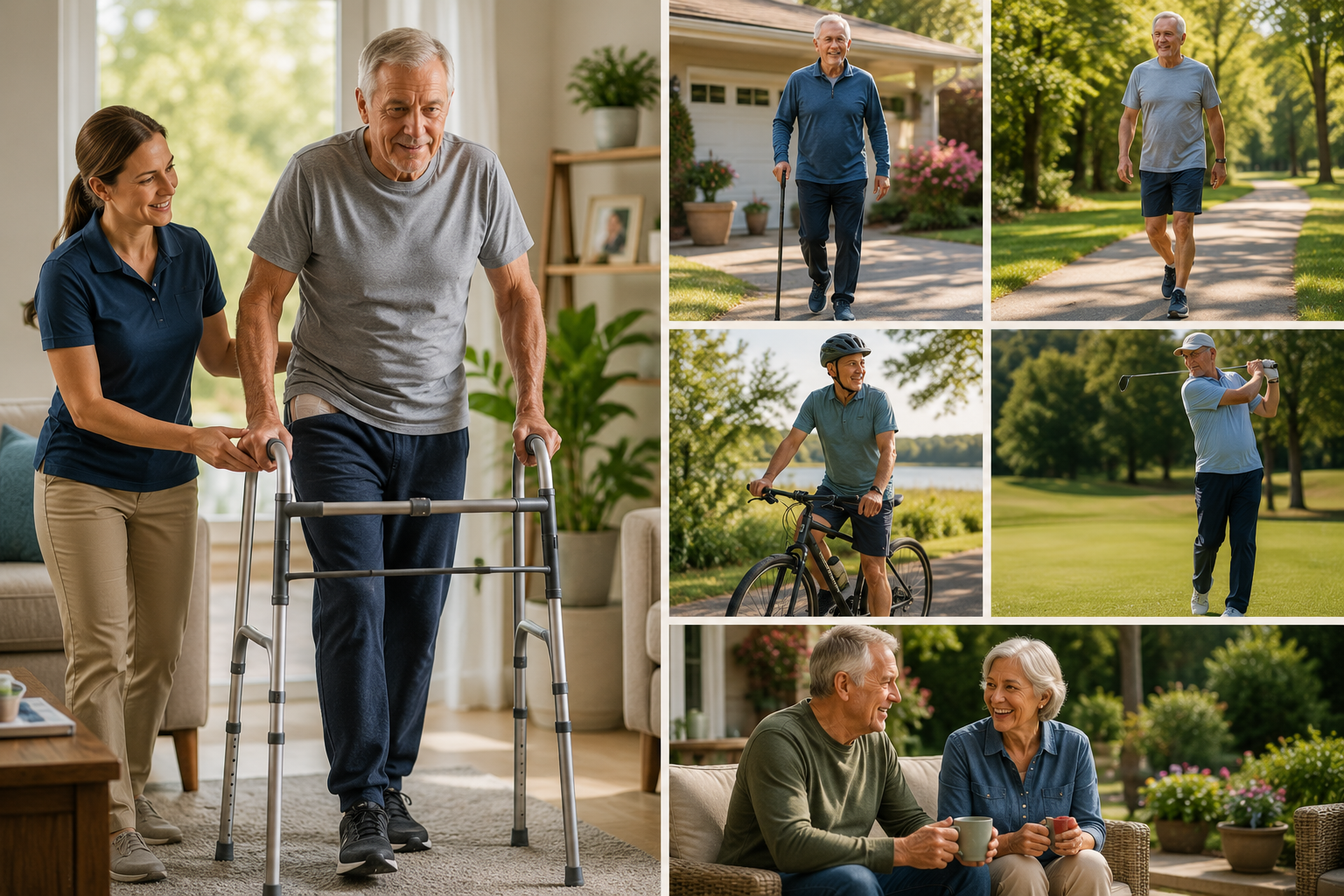
Walk around the neighbourhood with confidence
Travel without worrying about mobility
Return to gardening or golfing
Carry groceries comfortably
Play with grandchildren
Attend community events
Stay active without fear of falling
Reaching these personal goals often requires continued exercise, progressive strength training, and ongoing movement support after physical therapy has ended.

Why Continuing Exercise Matters After Hip Replacement
The muscles surrounding your hip play an important role in supporting balance, walking, and everyday movement.
Even after the joint has healed, weakness can remain in the:
Gluteal muscles
Hip stabilizers
Core muscles
Quadriceps
Hamstrings
Without progressive strengthening, these muscles may not fully regain the endurance needed for daily activities.
Continuing an exercise program can help support:
Improved walking endurance
Better balance
Increased lower-body strength
Greater confidence during movement
Safer navigation of stairs and uneven surfaces
A return to hobbies and recreational activities
Regular physical activity also supports overall healthy aging, helping older adults maintain independence and continue participating in the activities they enjoy.
Common Signs You May Benefit From Continued Exercise Support
Completing physical therapy doesn't mean you should stop paying attention to your recovery.
You may benefit from ongoing exercise guidance if you:
Feel unsteady walking outdoors
Still rely heavily on railings when using stairs
Tire easily after short walks
Avoid activities because you're worried about falling
Notice weakness when standing from a chair
Want to become more active but aren't sure where to start
Have stopped doing your home exercises
These experiences are common and don't necessarily indicate a problem with your hip replacement. Instead, they may suggest that your body could benefit from continued strengthening and mobility training.
How HomeStretch Helps Bridge the Recovery Gap
At HomeStretch Active Living, we understand that recovery doesn't stop when formal rehabilitation ends.
Our Pre & Post-Operative Rehabilitation Program is designed to support older adults as they continue rebuilding strength, mobility, balance, and confidence in the comfort of their own home.
Unlike traditional rehabilitation, our focus is on helping seniors apply movement skills to everyday life through evidence-informed exercise programs delivered by registered kinesiologists.
Our programs may include:
Progressive strength training
Balance-focused exercise
Walking and mobility training
Functional movement practice
Flexibility and mobility exercises
Personalized home exercise progression
Education that helps build confidence in daily movement
Rather than replacing your healthcare team, HomeStretch complements the recovery process by providing ongoing exercise support after formal rehabilitation has ended.
Recovery Is About More Than Healing
Hip replacement surgery can relieve joint pain, but successful long-term recovery is about much more than the new joint itself.
It's about having the strength to:
Walk farther
Stay active
Maintain independence
Feel steady on your feet
Participate in the activities you love
That journey often continues well beyond the last physical therapy appointment.
With the right exercise program, many older adults continue improving their mobility, confidence, and overall quality of life for many months after surgery. Recovery doesn't have to end when physical therapy does.
If you or a loved one is recovering from hip replacement surgery and would like continued support building strength, balance, and confidence, HomeStretch Active Living is here to help.
Our in-home post-operative exercise programs are personalized to your goals and delivered by experienced registered kinesiologists who focus on helping older adults stay active and independent.
Frequently Asked Questions
-
While many people complete physical therapy within six to twelve weeks, improvements in strength, balance, endurance, and confidence can continue for six to twelve months or longer depending on the individual.
-
Yes. Many people continue rebuilding muscle strength after formal rehabilitation ends. Progressive exercise can help support continued improvements in function and mobility.
-
Yes. An appropriately designed exercise program can help older adults continue improving strength, balance, endurance, and confidence while supporting healthy aging.
-
Exercises typically focus on lower-body strength, balance, walking, flexibility, and functional movements. Programs should be individualized based on your recovery stage, mobility, and goals.
-
If you're feeling uncertain about returning to everyday activities, experiencing reduced confidence, or looking to continue improving strength and mobility after therapy, speaking with a qualified kinesiologist may be beneficial.
Related Posts
How to Create a Post-Operative Fitness Plan for Seniors: Safe Exercises and Recovery Strategies
How Personalized Home Physical Therapy Supports Independence and Faster Recovery
Author Bio - Melissa Gunstone, BSc, Kinesiologist
Melissa Gunstone is the founder of HomeStretch, a kinesiologist with years of experience supporting seniors across Canada. Her mission: to give older adults safe, effective, and individualized movement programs, from in-home training to community-based senior fitness classes and to build a nationwide movement that elevates the role of kinesiology in healthy aging.