Gentle Arthritis Exercise at Home for Seniors in Dundas, Ontario
September 28, 2026
On this page
⚡ Quick Answer
- Arthritis-friendly exercise means smooth, low-impact movement matched to the person: chair exercises, easy walking, gentle range-of-motion work, and light strengthening with careful form.
- If a movement sharply or repeatedly increases joint pain, change it. The goal is to feel looser and more capable, not worn down.
- Strength and balance deserve equal attention: chair stands, heel-to-toe walking, side leg raises, and supported single-leg stands protect independence.
- Dundas seniors can pair a local class (Dundas 55+, Senior Citizens Club tai chi, VON SMART) with kinesiologist-led sessions at home.
Joint pain can make everyday movement feel uncertain. For many older adults, the question is not whether exercise is helpful, it is how to move without making stiffness, swelling, or soreness worse.
That concern is understandable, especially when 38% of Canadians age 65 and older report osteoarthritis, as Canada's data on chronic disease in older adults shows.
Gentle, well-planned movement matters because it supports comfort, mobility, and day-to-day independence, not because anyone needs to "push through" pain.
The right kind of activity can help. Arthritis Society Canada explains that regular movement supports circulation in and around joints and can help reduce pain and stiffness over time.
Just as important, exercising at home removes many of the obstacles that stop people from being consistent: no commute, no unfamiliar equipment, and no pressure to keep up with a class, which is one reason arthritis-friendly activity guidance continues to emphasize movement that matches the person, not the other way around.
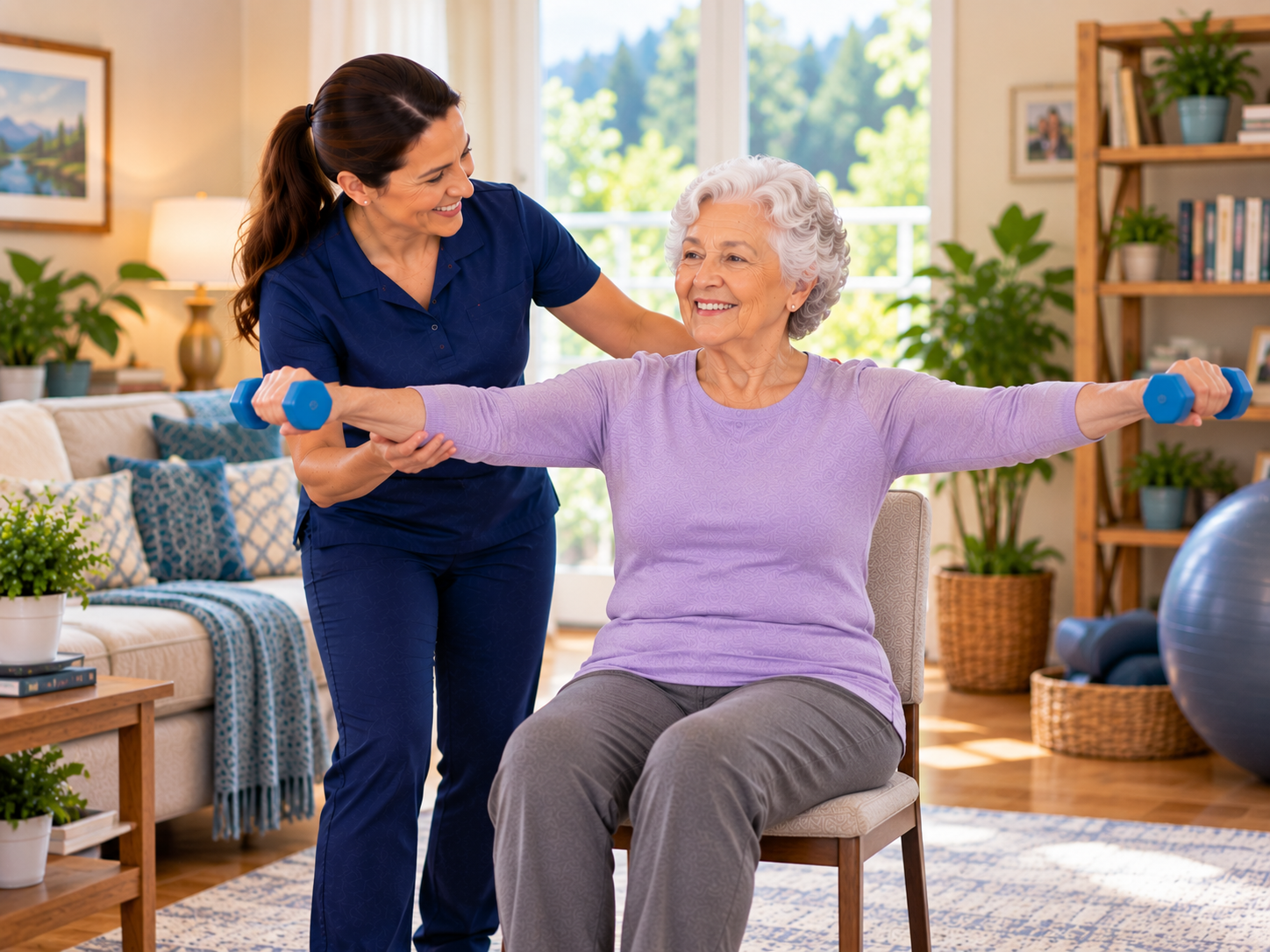
At HomeStretch, our kinesiologists deliver one-to-one in-home training to seniors across Dundas and Hamilton's west end, in the living rooms and hallways where daily life happens.
Why in-home workouts often work better for sore joints
Exercise can be tailored to the person, not the room
Arthritis affects everyone differently. One person may struggle with knee pain getting out of a chair, while another may feel stiffness in the hands, hips, or lower back first thing in the morning. A gentle in-home program makes it easier to adapt each movement to the senior's current mobility, energy, balance, and confidence.
That personalized approach is central to how we work at HomeStretch. Sessions are one on one, in the home, and built around the person's actual daily routines. We focus on older adults, and our team is kinesiologist-led. That matters when exercises need to be adjusted carefully for arthritis, fall concerns, or post-rehab rebuilding. We also provide a free consult, which gives families a clear starting point before committing to a plan.
Staying home supports confidence and routine
Comfort is not a small detail. It often determines whether a routine lasts. Many seniors are far more likely to follow through with exercise when it happens in their own living room, hallway, or kitchen, where they already move through the day. Home-based care also supports aging in place by reducing transportation stress and making healthy habits easier to repeat week after week.
This matters for safety as well. Falls are common among seniors in Canada, and most are preventable. Building strength and balance where a person actually lives can make exercise more relevant to real life, especially when working on transfers, walking paths, stairs, or getting up from a chair, as noted in national fall prevention guidance.
Gentle workouts that support arthritis relief
Low-impact movement helps joints stay active
For most people with arthritis, the goal is smooth, controlled movement. Low-impact exercise tends to be the best fit because it encourages motion without adding unnecessary stress to painful joints. That can include chair exercises, easy walking, gentle range-of-motion work, supported leg lifts, and light strengthening with careful form.
If a movement increases joint pain sharply or repeatedly, it should be changed. Arthritis-friendly exercise is meant to help a person feel looser and more capable, not worn down. Arthritis Society Canada recommends low- and no-impact activity and also notes that osteoarthritis often requires adapting exercise to symptom tolerance, which is why their physical activity advice is so useful for setting the right pace.
Strength and balance deserve equal attention
Pain relief is only part of the picture. Seniors with arthritis also need stronger muscles and steadier balance, because weak legs and poor stability can increase the risk of falls and make everyday tasks harder. Useful home exercises often include chair stands, heel-to-toe walking, side leg raises, supported single-leg stands, gentle marching, and weight shifts at a countertop.
The value of this work is clear. Strength, posture, stretching, and balance training are all part of an effective response to fall risk in older adults, according to the Canadian surveillance report on falls.
What a joint-friendly home program can look like
| Goal | Gentle exercise examples | Why it helps |
|---|---|---|
| Ease morning stiffness | Seated ankle pumps, shoulder rolls, easy trunk turns | Encourages circulation and loosens stiff joints |
| Build leg strength | Chair stands, sit-to-stand practice, side leg raises | Supports walking, stairs, and getting up safely |
| Improve balance | Weight shifts, heel-to-toe walking, supported single-leg stands | Helps reduce wobbling and fall risk |
| Increase confidence at home | Hallway walking, transfer practice, step work with support | Makes daily movement safer and more familiar |
In-home wellness services that support seniors across Canada
Personalized rehabilitation at home
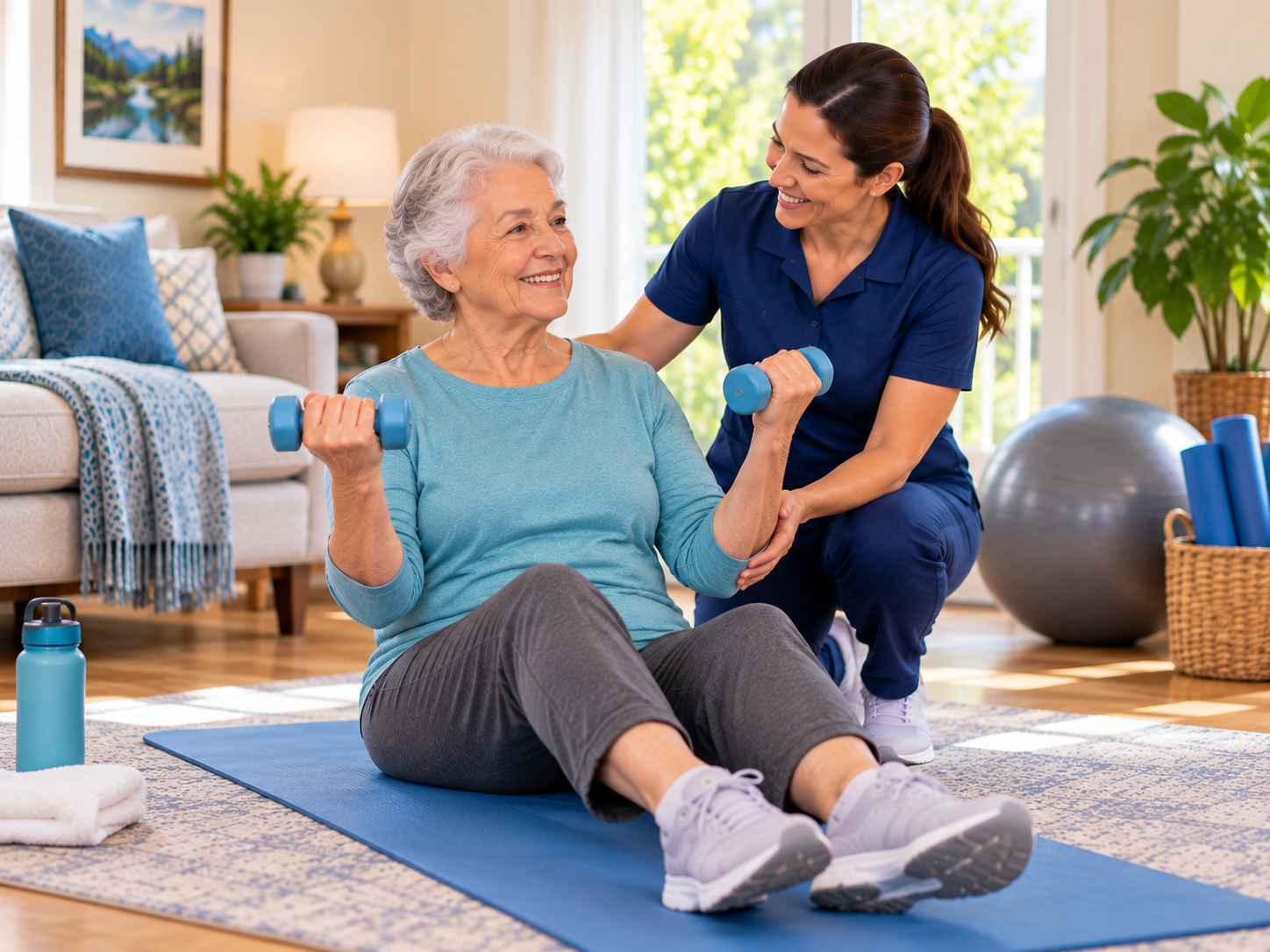
Many families begin looking for help after a fall, a hospital stay, worsening arthritis pain, or a noticeable drop in confidence. In-home wellness services can include physiotherapy, kinesiology, rehab assistant visits, post-surgical recovery support, and fall-prevention exercise. HomeStretch's in-home support is kinesiology-based. The common thread is personalization. A kinesiologist can see how someone actually moves through their space and adjust the plan around that reality.
Home-based strengthening and balance retraining can make a real difference for community-dwelling seniors. The Canadian Physiotherapy Association highlights that home-based physiotherapy can help decrease fall risk, which reinforces the value of targeted support delivered where daily life happens.
Group programs can also work in care homes
Some seniors benefit from one-on-one visits, while others thrive in a shared setting. For retirement residences and care homes, hosted mobility and balance programs can be a practical way to support more residents at once. Group exercise models in Canada have shown that strength, balance, and mobility work can be delivered effectively in community and residential settings.
At the same time, group programming is not always enough for arthritis flare-ups, fall fear, or more limited mobility. In those situations, a private in-home plan often allows for closer supervision, gentler progression, and more meaningful adaptation to the person's needs, while care-home and outreach fall prevention programs show how broader residence-based support can complement individual care.
Arthritis-friendly options around Dundas
Dundas seniors have local choices for gentle, joint-friendly movement, and the best plan usually combines a class for routine and company with in-home support for the movements that are hardest at home:
- Dundas 55+ programs – Hamilton Recreation runs three ten-week sessions of classes each year at the Dundas Community Centre for adults 55+, listed on the Dundas 55+ site and the City of Hamilton Older Adult 55+ page
- Dundas Senior Citizens Club – a community centre for older adults with programs that include tai chi, a gentle option for joint mobility and balance, listed on HNHB Healthline
- VON Hamilton SMART classes – gentle group exercise and fall prevention classes for adults 55+ regardless of physical ability, listed in the Red Book by Hamilton Public Library
- HomeStretch in Dundas – kinesiologist-led sessions in your own home, plus Brain and Balance workshops for seniors' groups, Legions, and libraries across Hamilton's west end; see our Dundas page
You can also read From Fear of Falling to Feeling Confident: A Fall Prevention Program for Hamilton Seniors for how kinesiology-led programs rebuild balance and trust in Hamilton-area homes.
Why our model fits seniors with arthritis especially well
Consistency builds trust
A senior with arthritis usually does better when exercise feels familiar. Seeing the same kinesiologist each session helps create that stability. It also means the person leading the workout already understands which joints are most sensitive, what cues work best, and how energy levels tend to vary from week to week.
We also bring equipment into the home, so there is no need to buy machines or travel to a gym. That keeps the process simple and lowers the barriers to getting started.
One-on-one support offers more precision than a general class
Group programs have value, especially in residences where shared activity can encourage participation. Still, a one-on-one home visit offers something different. It allows us to adjust chair height, walking distance, pace, rest breaks, and exercise selection in real time. For seniors dealing with arthritis pain, mobility limits, recent rehab, or fear of falling, that precision can be the difference between avoiding movement and building confidence again.
Getting started with more comfort and confidence
Gentle exercise should help life feel easier. The aim is to stand up with less effort, walk more steadily, and move through the day with less stiffness and more control. That starts with a clear understanding of the person's pain points, current mobility, and goals.
Book a free consult in Dundas
A good first step is to book a free consult with HomeStretch. From there, we can identify the safest starting exercises, create a plan that fits the home environment, and build strength and balance gradually. We serve Dundas, Ancaster, Flamborough, Waterdown, and the rest of Hamilton and area; see all service areas. With the right support, movement becomes less intimidating and more empowering.
Frequently Asked Questions
What exercises are best for joint pain?
Low-impact exercises are usually the best place to start. Chair-based movement, gentle stretching, walking, controlled strength exercises, and other smooth, low-stress activities tend to be easier on sore joints while still improving mobility.
How can in-home services improve balance?
Home-based sessions allow exercises to be matched to the senior's exact mobility level and physical environment. That makes it easier to practice safe walking, transfers, and balance strategies that apply directly to daily life.
Are group programs available for seniors at home or in care facilities?
Yes. Group balance, mobility, and strength programs can be hosted in residences and care settings. For seniors who need more individualized support, one-on-one in-home exercise remains the better fit.
Author Bio - Melissa Gunstone, BSc, Kinesiologist
Melissa Gunstone is the founder of HomeStretch, a kinesiologist with years of experience supporting seniors across Canada. Her mission: to give older adults safe, effective, and individualized movement programs, from in-home training to community-based senior fitness classes and to build a nationwide movement that elevates the role of kinesiology in healthy aging.