Strength Training for Seniors: The Strength Training Sweet Spot for a Longer Life
August 11, 2026

On this page
⚡ Quick Answer
- Research links about 90 to 120 minutes of strength training per week to lower risk of death from any cause, cardiovascular disease, and neurological disease.
- Strength training builds reserve for illness, improves fall resilience, and supports bone, joint, and metabolic health.
- Walking alone isn't a complete strength program. Combining aerobic activity with resistance training produces greater benefits than either alone.
- Speak with a healthcare professional first if you've had a recent surgery, fracture, repeated falls, or an unstable medical condition.
What if strength training could help you stay independent longer?
As we get older, it is easy to assume that slowing down, resting more, and avoiding challenging activities are simply part of aging.
But there is an important distinction between resting when your body needs it and becoming less active because you are afraid of getting hurt.
For older adults, too little movement can contribute to muscle loss, reduced strength, poorer balance, and greater difficulty with everyday activities. Things that once felt automatic, such as getting out of a chair, climbing stairs, carrying groceries, or getting up from the floor, can gradually become harder.
That is where strength training can make a meaningful difference.
Walking is an excellent form of exercise, but it does not provide every type of physical challenge your body needs to remain capable. Strength training gives your muscles a reason to adapt and helps you maintain the physical capacity required for everyday life.
I’m Melissa Gunstone, a Registered Kinesiologist and the founder of HomeStretch Active Living. I’m fascinated by the science of aging- especially the difference between simply living longer and having the physical capacity to enjoy those extra years. That fascination has kept me busy researching the leading studies on resistance training, longevity and age-related muscle loss, then translating the findings into this simple, readable article for you.
The questions I’ll answer
Why do I call strength one of the most modifiable threats to independence?
How does strength training support a longer, more independent life?
What is sarcopenia, and can age-related muscle loss be slowed?
How often- and for how long- should seniors strength train?
Is strength training more important than walking?
What four dumbbell exercises do I recommend?
How can an older adult begin safely?
Why do I call strength one of the most modifiable threats to independence?
Many parts of aging are outside our control, but muscular strength can respond to training- even later in life. Strength affects whether you can rise from a chair, climb stairs, carry groceries, recover from a stumble and tolerate the physical stress of illness or surgery. Because it is both highly consequential and trainable, it is one of the clearest places where older adults can influence their future independence.
This is why I think our cultural obsession with weight loss has distracted older adults from a more important target. After 65, the bathroom scale is often a less meaningful fitness measure than how confidently you can stand from a chair.
How Does Strength Training Support Healthy Aging?
Strength training can contribute to healthy aging in several important ways.
1. It builds reserve for illness and setbacks
Independence is not tested only on good days. A stronger person has more physical reserve after the flu, surgery, a hospital stay or several inactive weeks- and more room before a setback pushes them below the level needed to manage daily tasks.
2. It improves fall resilience
Balance is important, but balance without force has limits. Leg and hip strength help you take a quick recovery step, control your body during a stumble and get up from the floor afterward. We cannot promise that every fall is preventable, but we can strengthen the systems that influence whether a loss of balance becomes a lasting loss of independence.
3. It supports metabolic health
Muscle is active tissue. Resistance training can support insulin sensitivity, blood-sugar regulation, blood pressure and body composition- important contributors to cardiovascular health and longevity.
4. It supports bones and joints
Appropriate loading can support bone health and improve the muscular control around joints. Osteoporosis, arthritis and joint replacements may change the exercise, range or resistance, but they do not automatically mean strength training should be avoided.
5. It protects choices
Strength preserves the choice to live at home, travel, garden, play with grandchildren and carry your own belongings. Longevity without capacity is not the goal. The goal is more years with agency.
This is also how our HomeStretch Kinesiologists approach strength training: we train for the real demands of a person’s life rather than handing every senior the same generic workout.
What is sarcopenia, and is muscle loss inevitable?
Strength preserves the choice to live at home, travel, garden, play with grandchildren and carry your own belongings. Longevity without capacity is not the goal. The goal is more years with agency.
This is also how our HomeStretch Kinesiologists approach strength training: we train for the real demands of a person’s life rather than handing every senior the same generic workout.
Sarcopenia is the age-related decline in muscle mass, strength and physical performance. Inactivity, inadequate nutrition, chronic illness, hospitalization and prolonged bed rest can accelerate it.
Some change with age is normal, but severe weakness should not be dismissed as “just getting old.” A review in the Journal of Sport and Health Science concluded that resistance exercise offers important healthy-aging benefits and that even relatively small amounts can help. The precise ideal dose varies, but the consistent message is simple: giving muscle an appropriate reason to adapt is far better than doing nothing. (Review on resistance exercise, healthy aging and longevity)
Rest is sometimes medically necessary. But when rest becomes the default response to aging, it can reinforce the very decline we are trying to prevent.
How often and how long should seniors strength train?
The number that caught my attention is about 90 to 120 minutes per week.
A 2026 study followed 147,374 adults across three large cohorts for up to 30 years. Compared with no resistance training, 90 to 119 minutes per week was associated with a:
13% lower risk of death from any cause;
19% lower risk of cardiovascular death; and
27% lower risk of death from neurological disease.
The mortality benefit appeared to plateau at around 120 minutes per week. This does not mean minute 121 is harmful or useless, and the observational study cannot prove that strength training directly caused longer lives. It does suggest that meaningful benefits were associated with a realistic amount- not endless hours in a gym. (Original study)
For many seniors, that could mean two 45- to 60-minute full-body sessions or three shorter sessions each week. A properly designed HomeStretch session follows the same research-aligned principles: train the major movements, use an appropriate challenge, recover, and progress gradually.
Is strength training more important than walking?
Walking supports cardiovascular health, endurance, mood and social connection, but it is not a complete strength program. A comfortable walk may not challenge the muscles enough to preserve the force needed to rise from a low chair, climb steep stairs, carry a load or arrest a stumble.
The research points to a combined approach: aerobic activity and resistance training produced greater longevity benefits together than either one alone. Do not stop walking- add the missing ingredient. That leads to four simple movements I often use as a starting point.
Melissa’s Top Four Dumbbell Strengthening Exercises for Seniors
These exercises were also highlighted in a trainer-led guide for rebuilding strength after 65 because each one relates to daily function. (Four dumbbell exercises for adults over 65)
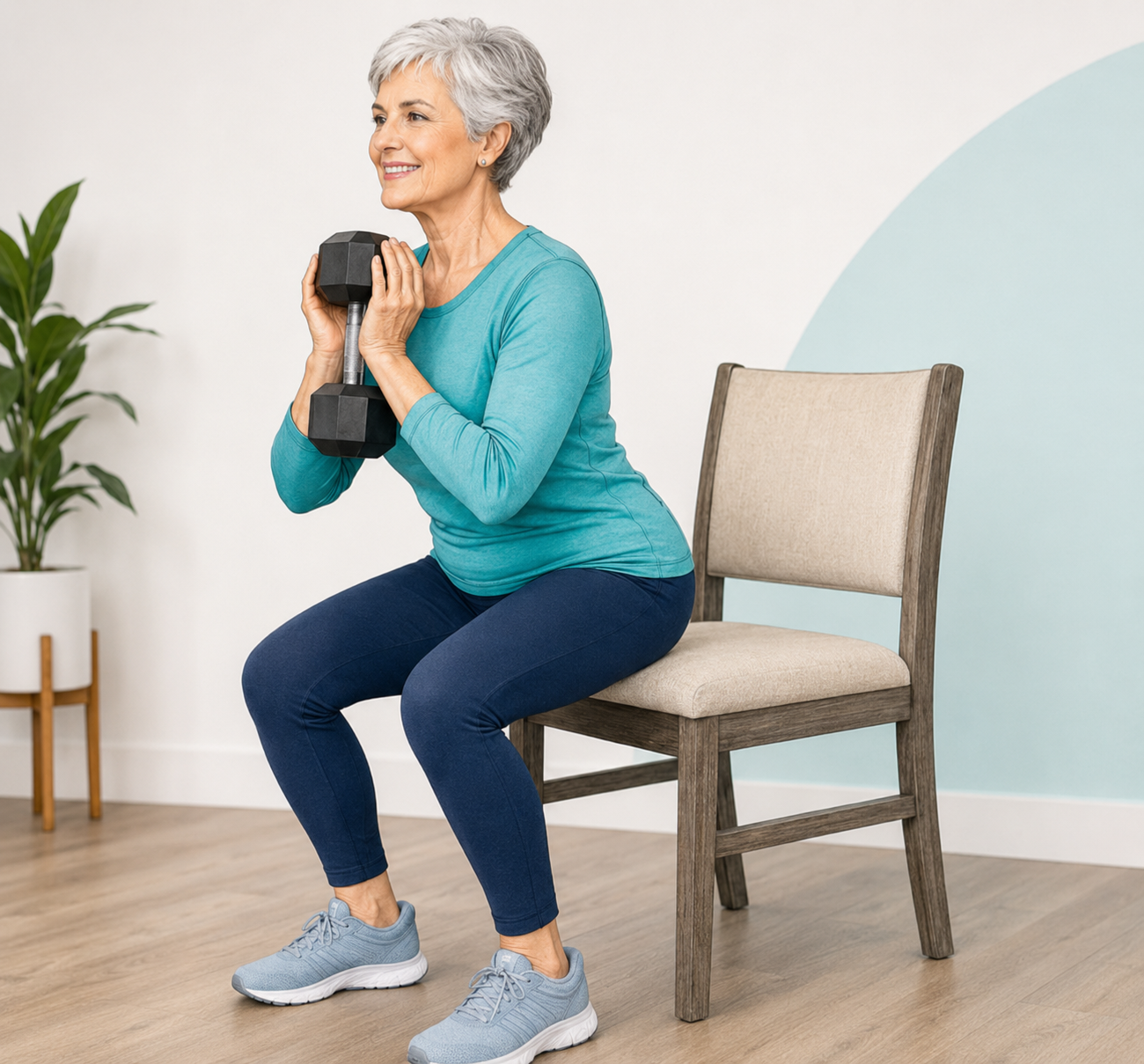
Goblet squat to a chair
Hold one dumbbell close to your chest, sit back toward a sturdy chair and stand again. This trains the leg and hip strength used to rise from chairs, couches and toilets. Beginners can start without weight or use the armrests as needed.
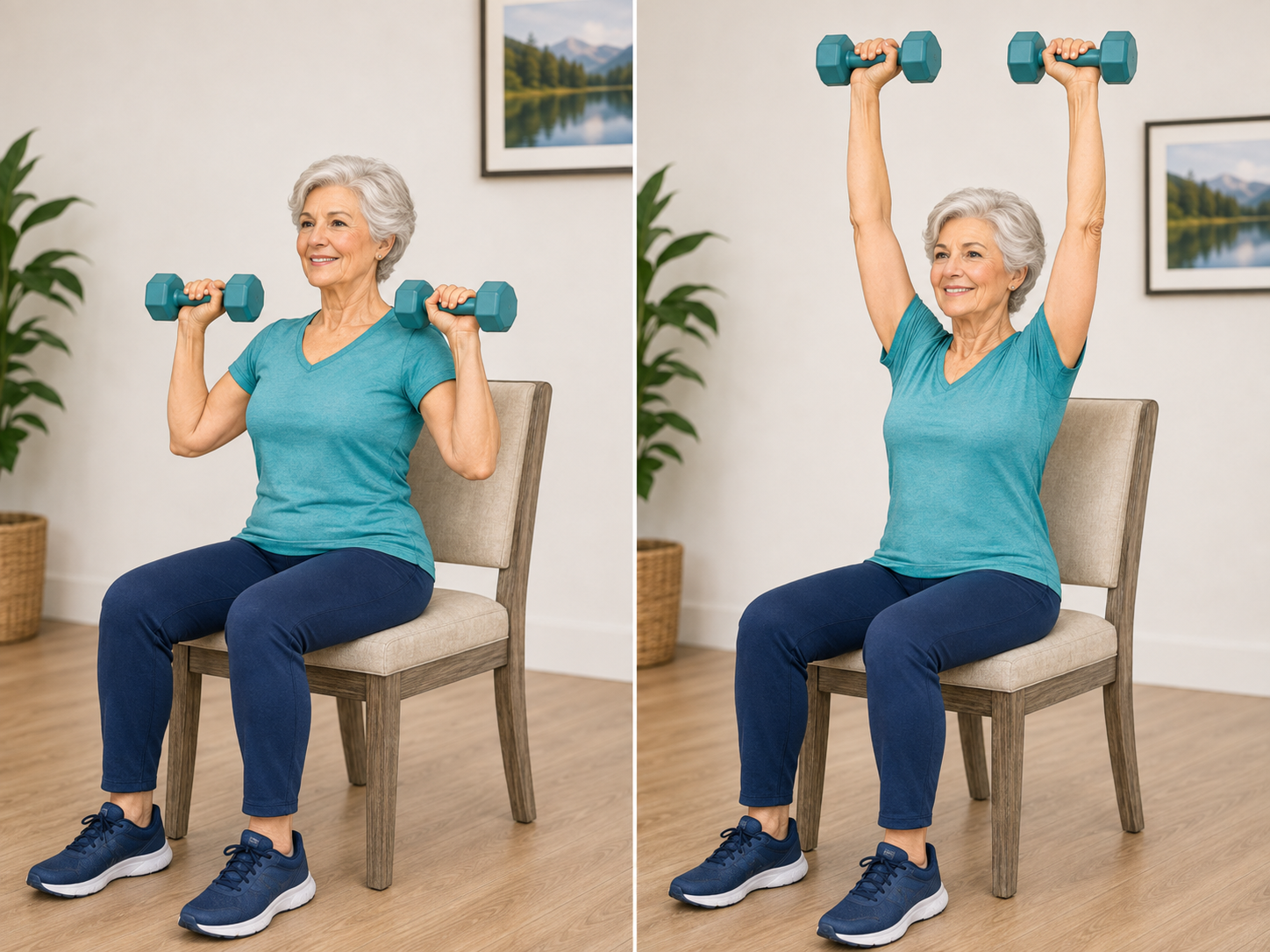
2. Seated dumbbell shoulder press
From a sturdy chair, press light dumbbells upward through a comfortable range. This supports reaching, dressing and placing items on shelves. Avoid or modify overhead work if it causes pain or is medically restricted.
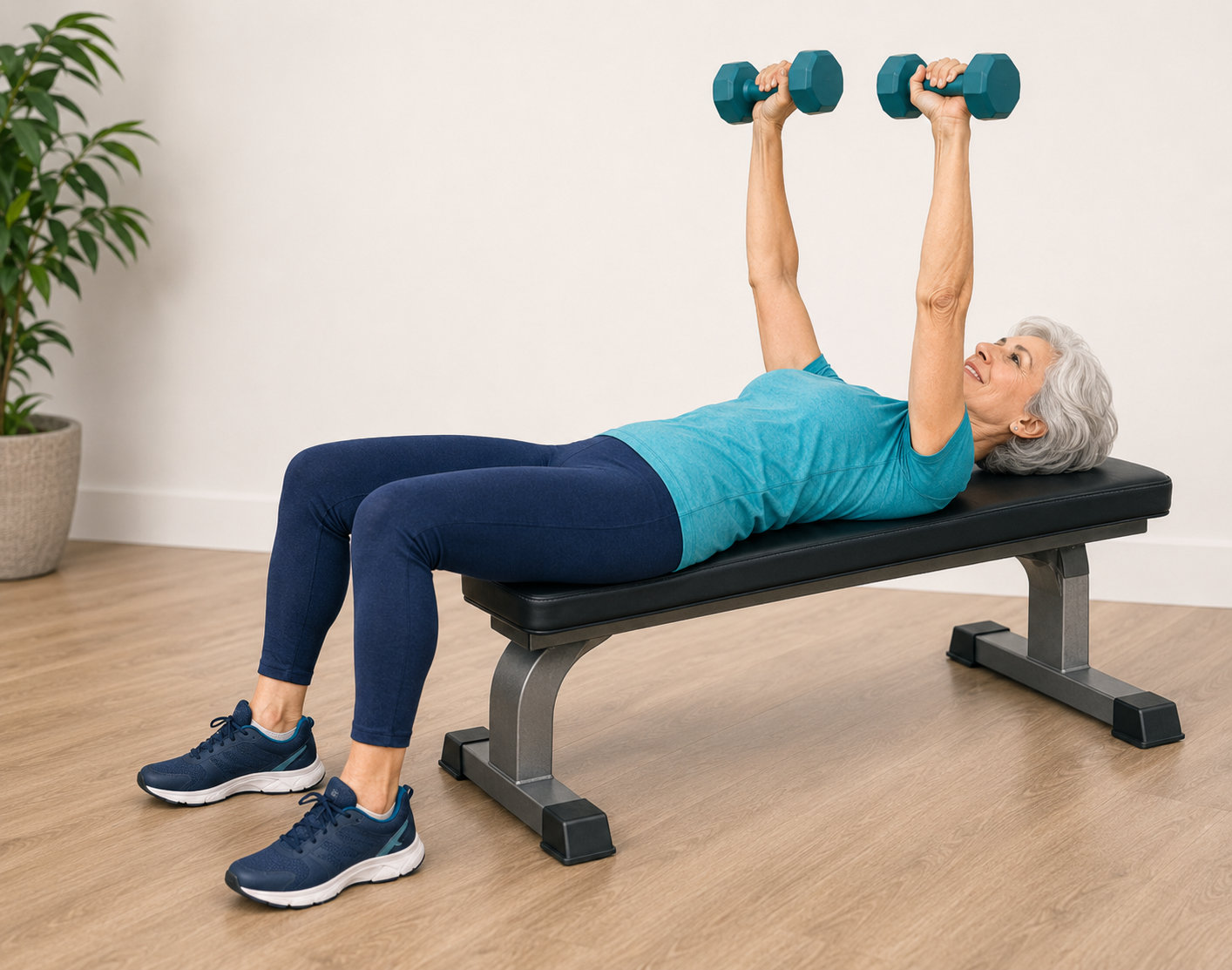
3. Dumbbell chest press
Press the dumbbells away from your chest from a safe, supported position. This develops pushing strength for doors, transfers and pushing up from a surface. A wall or countertop push-up is often an easier starting option.
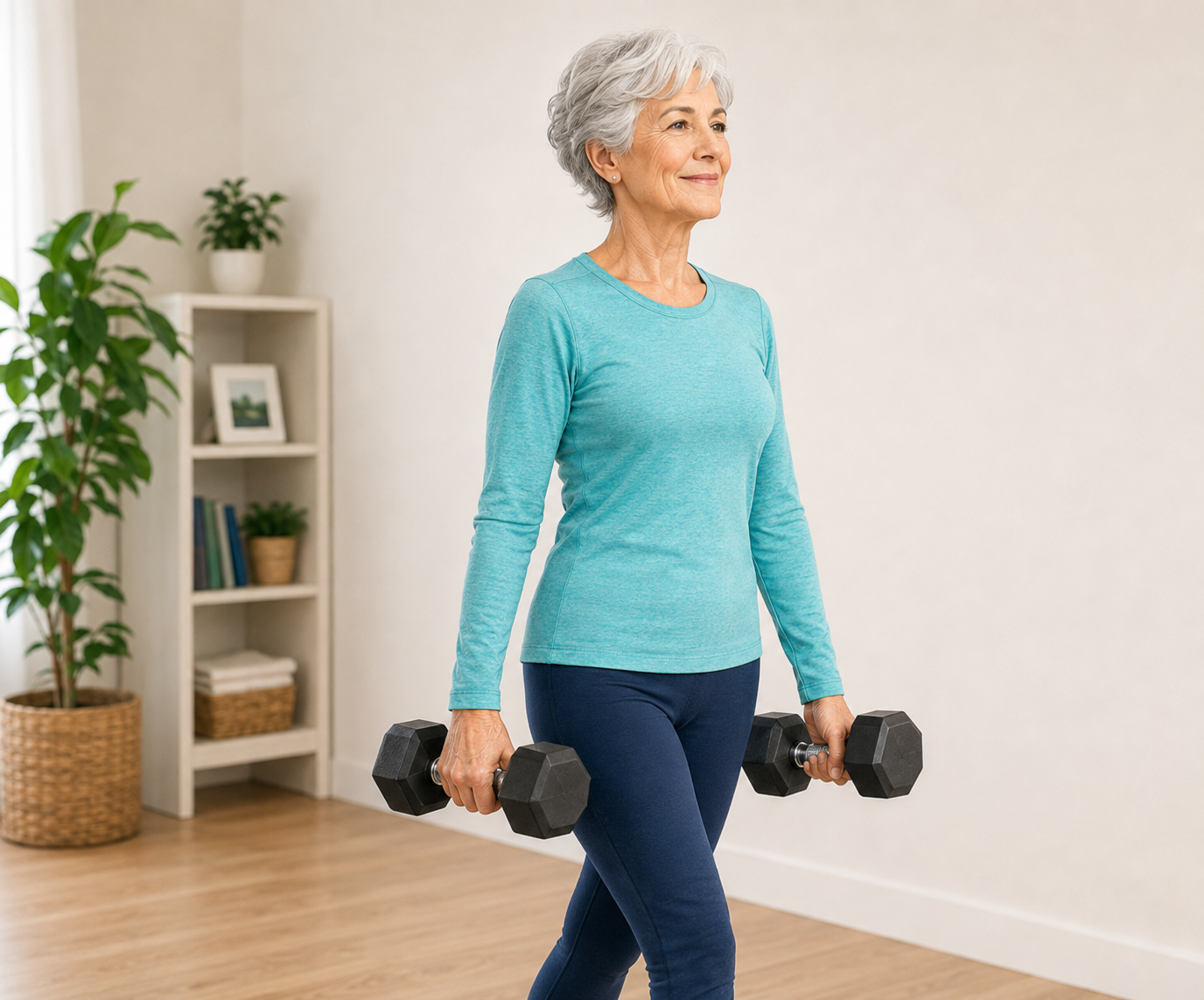
4. Farmer’s carry
Hold one or two dumbbells, stand tall and walk through a clear space. This develops grip, posture, trunk stability and the strength to carry groceries. Use stable support or supervision if balance is uncertain.
One to three sets of roughly 6 to 12 controlled repetitions can be a reasonable starting range, but the right exercise, load and volume depend on the individual. HomeStretch offers guided in-home training as well as customized “do-it-yourself” home exercise plans for older adults who want professional direction and a program they can continue independently. You can also read Dual-Task Exercises: Training Your Brain and Balance at the Same Time
How Hard Should Strength Training Feel?
If every repetition feels easy forever, it may be movement- but it is no longer strength training.
The last few repetitions should feel challenging while your technique and breathing remain controlled. Over time, progress might mean adding a little weight, completing another repetition, improving the range of motion or relying less on arm support. The goal is not exhaustion; it is a gradual reason for the body to adapt.
What should seniors avoid when beginning strength training?
Do not copy a generic online workout without considering your medical history, pain, balance, medications and current ability. Avoid holding your breath, rushing repetitions, using unstable furniture for support, increasing weight too quickly or pushing through sharp pain, dizziness, chest pressure or unusual shortness of breath.
If you have had a recent surgery, fracture, hospitalization, repeated falls, new neurological symptoms or an unstable medical condition, speak with an appropriate healthcare professional before starting.
At a HomeStretch initial assessment, a Kinesiologist gets to know you, your health history, your home and the movements that matter most to your life. We then create a customized program, teach you how to perform it safely and, when appropriate, give you the tools to continue on your own. This combination of professional guidance and independent practice is often the best way to begin when strength training is unfamiliar.
Where can Seniors Strength Train in Mississauga or Vaughan?
If one-on-one, in-home strength training is not the right fit, community programming can be an accessible place to begin:
The Mississauga Seniors’ Centre offers registered and drop-in recreation for adults aged 55 and older.
The Active Adult Centre of Mississauga offers fitness, toning, chair exercise and other programs for adults 50 and older.
The City of Vaughan shares programs and opportunities for residents aged 55 and older, including links to its older-adult recreation information.
Before registering, ask whether the program includes progressive resistance training and whether exercises can be modified for your health and mobility needs.
The research answer to the strength-training sweet spot is approximately 90 to 120 minutes per week. My practical answer is the smallest sustainable dose that is challenging enough to create change and consistent enough to continue.
You do not need to become a bodybuilder. You do need to give your body a reason to remain capable.
Aging will change your body. Strength training lets you influence how much function you carry forward.
Ready to Build Strength Safely?
HomeStretch Active Living helps older adults in Mississauga, Vaughan, across Ontario and throughout Metro Vancouver build strength, improve balance and stay independent. Choose one-on-one in-home kinesiology or a customized home exercise plan you can follow independently.
Call 519-427-4522 or visit HomeStretch4Seniors.ca to learn more.
Frequently Asked Questions
-
For many older adults, two to three strength-training sessions per week can be a practical starting point. Recent research has found meaningful associations between approximately 90 to 120 minutes of resistance training per week and lower mortality risk, although the ideal amount varies by individual.
-
The best exercises depend on the individual, but functional movements such as squats, presses, rows, carries, and supported exercises can help develop strength used in everyday activities. A Kinesiologist can help determine which exercises are appropriate for your current abilities.
-
Yes. Older adults can continue to adapt to resistance exercise. The rate and amount of improvement varies, but age alone does not mean strength training stops being effective.
-
Walking is excellent exercise, but it does not replace resistance training. Walking supports aerobic fitness, while strength training specifically challenges the muscles needed for activities such as standing, carrying, climbing stairs, and pushing.
Related Posts
Spring Safety Tips for Seniors Safe Outdoor Activities and Fall Prevention
Spring Gardening for Seniors: Stay Active, Safe, and Prevent Falls
Exercises for Seniors: Routines to Improve Balance, Strength, and Mobility
Author Bio - Melissa Gunstone, BSc, Kinesiologist
Melissa Gunstone is the founder of HomeStretch, a kinesiologist with years of experience supporting seniors across Canada. Her mission: to give older adults safe, effective, and individualized movement programs, from in-home training to community-based senior fitness classes and to build a nationwide movement that elevates the role of kinesiology in healthy aging.