What Are Effective Fall Prevention Programs for Older Adults in Ontario?
August 14, 2026

On this page
⚡ Quick Answer
- An effective fall prevention program includes a fall-risk assessment, strength and balance training, a home safety review, and ongoing supervision.
- Kinesiologist-led programs adjust to movement quality, strength, coordination, and the person's actual home environment.
- Consistency matters more than intensity, there's no single ideal frequency for every older adult.
- HomeStretch delivers in-home fall prevention programming across Hamilton, Niagara, and the GTA.
What Are Effective Fall Prevention Programs for Older Adults in Ontario?
A fall can change how an older adult feels about everyday activities. A simple walk to the kitchen, getting out of a chair, taking the stairs, or going outside can suddenly feel less certain.
For families, that uncertainty can be concerning. You may notice that your parent or loved one is holding onto furniture, avoiding stairs, becoming less active, or simply moving more cautiously than they used to.
The good news is that fall prevention does not have to begin after a fall.
An effective fall prevention program for older adults takes a proactive approach. Instead of focusing only on one exercise or telling someone to "be careful," it looks at the individual as a whole: their strength, balance, mobility, movement patterns, home environment, confidence, and ability to safely perform everyday activities.
Ontario recognizes exercise and falls prevention programs as an important resource for older adults. Provincial guidance highlights strength, balance, mobility, physical activity, and creating safer home environments as important parts of fall prevention.
But what should you actually look for when choosing a fall prevention program?
What Is a Fall Prevention Program?
A fall prevention program is a structured exercise and safety program designed to help older adults improve the physical skills and environmental conditions that can affect their risk of falling.
A strong program should go beyond generic exercise classes.
It should consider questions such as:
How steady is the person when standing and walking?
How well can they get up from a chair?
Are there strength or coordination limitations?
Do they have difficulty changing direction or navigating stairs?
Are they avoiding activities because they are afraid of falling?
Are there hazards in their home?
Is the exercise program appropriate for their current abilities?
Does someone monitor progress and adjust the program over time?
The goal is not to promise that someone will never fall. Rather, fall prevention-focused exercise and safety strategies can help older adults build the strength, balance, mobility, and confidence needed to move more safely and remain active.
What Should an Effective Fall Prevention Program Include?
Not every program is designed the same way.
When comparing fall prevention programs for older adults in Ontario, look for these four core components:
A fall-risk assessment
Strength and balance training
A home safety review
Ongoing professional supervision and progression
Together, these components create a more personalized approach than simply handing someone a list of exercises.
1. A Personalized Fall-Risk Assessment
The first step should be understanding the person's current abilities and potential areas of concern.
A qualified professional can look at movement, mobility, balance, strength, coordination, gait, and stability to identify areas that may benefit from targeted training.
For example, someone may have difficulty maintaining their balance when turning, while another person may struggle more with lower-body strength when standing from a chair.
Those two people may need different exercise strategies.
HomeStretch's fall prevention program includes an in-home physical fall-risk assessment that looks at mobility and balance, as well as strength and coordination.
Why does a fall-risk assessment matter?
Because a personalized program starts with the individual rather than assuming every older adult has the same needs.
An assessment can help establish a starting point and provide clearer direction for the exercises and strategies that follow.
It can also give families a better understanding of where support may be helpful.
2. Strength and Balance Training
Balance is not just about standing on one foot.
Everyday balance involves the ability to control your body while walking, turning, reaching, stepping over objects, getting up from a chair, climbing stairs, and responding to changes in your environment.
That is why effective fall prevention exercise programs should include a combination of strength, balance, mobility, coordination, and functional movement.
Ontario's guidance specifically identifies exercise as an important part of maintaining strength, balance, and mobility for older adults.
What exercises are used in fall prevention programs?
Depending on the individual's abilities and goals, training may include exercises such as:
Sit-to-stand movements
Supported balance exercises
Leg strengthening exercises
Walking and gait activities
Step and weight-shifting exercises
Coordination activities
Mobility exercises
Functional movements related to everyday tasks
The important point is not simply which exercises are included.
It is how those exercises are selected, progressed, and supervised.
Someone who is already strong and mobile may need a different challenge than someone who has recently become less active or has difficulty standing independently.
HomeStretch's program uses customized exercise prescriptions that can be adapted to an older adult's comfort level, mobility, and existing health considerations.
3. A Home Safety Review
Physical ability is only one part of fall prevention.
The environment matters too.
Ontario recommends reducing common home hazards such as loose rugs, cords, objects blocking stairs, and poor lighting. It also recommends considering appropriate safety equipment and modifications where needed.
A good fall prevention program should therefore consider the environment where an older adult actually lives.
What should a home safety review look for?
Depending on the home, this may include looking at:
Loose rugs or floor coverings
Clutter and objects in walking paths
Poor lighting
Stairway safety
Bathroom hazards
Furniture placement
Frequently used pathways
Footwear
The need for appropriate support equipment
HomeStretch provides in-home fall-risk assessments that include reviewing the home environment for potential hazards such as poor lighting, clutter, loose rugs, and furniture placement. The team can then provide practical recommendations for creating a safer and more supportive environment.
This in-home approach can be especially valuable because fall prevention strategies can be connected directly to the places and activities where an older adult spends their day. Fall prevention is also closely connected to the ability to remain safely and independently at home. If you're exploring options for supporting an older adult at home, read Aging in Place, Home Care, and Fall Prevention: What Seniors and Families in Ontario Need to Know.
4. Ongoing Professional Supervision
One of the biggest differences between a structured fall prevention program and a generic exercise handout is what happens after the first session.
Older adults change.
Strength can improve. Mobility can change. Confidence can increase. New challenges can also appear.
An exercise program should be able to adapt.
Ongoing supervision allows a professional to observe movement, adjust exercises, increase or decrease difficulty, and provide guidance as the person's abilities change.
This is particularly important for older adults who may have mobility concerns or other considerations that make a one-size-fits-all program inappropriate.
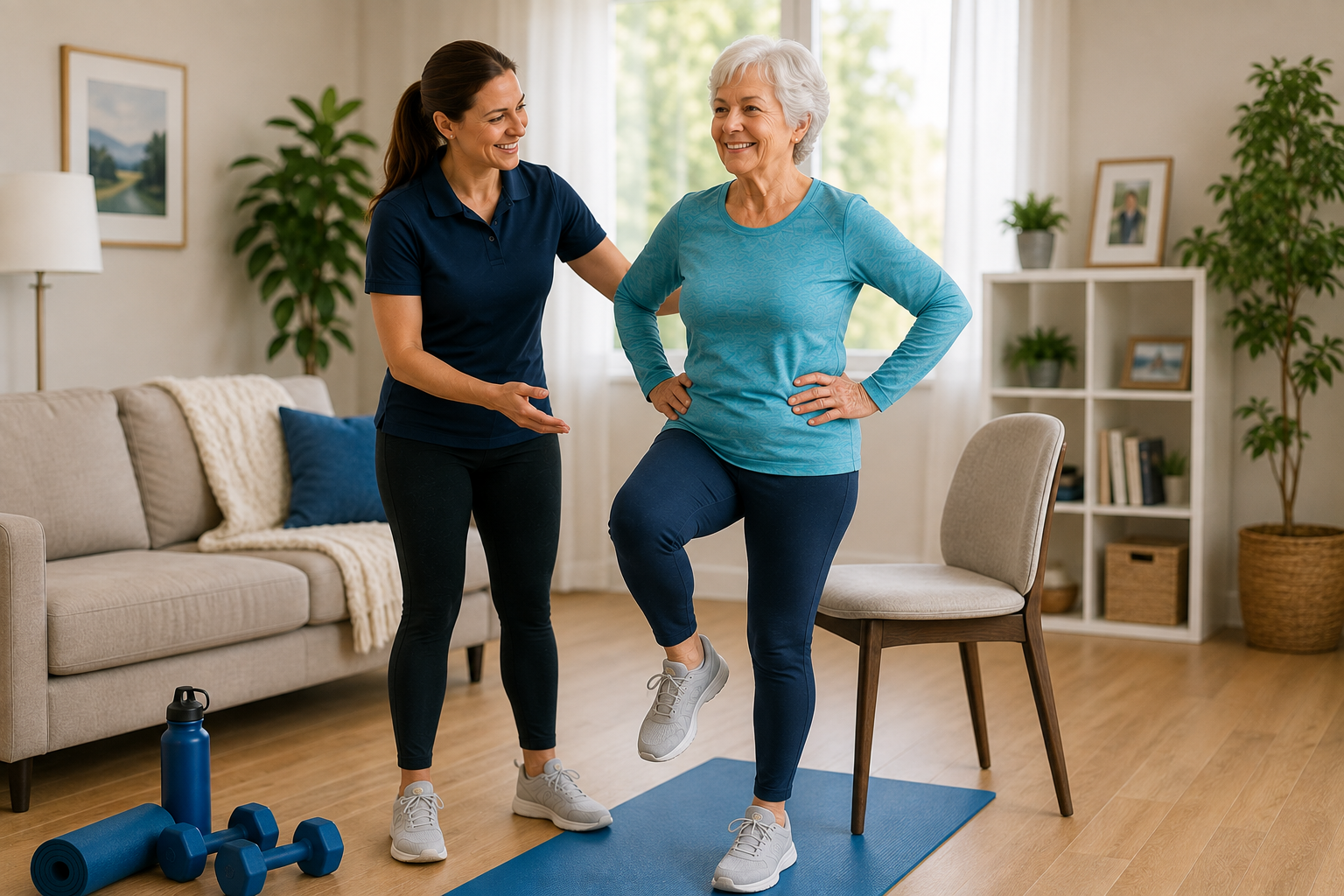
HomeStretch's fall prevention programs are kinesiologist-led, with exercises and training adapted to the individual's needs and supervised by professionals who specialize in senior fitness and fall prevention.
What Makes Kinesiologist-Led Fall Prevention Different?
If you're comparing senior exercise programs, you may wonder why professional supervision matters.
Kinesiology focuses on human movement and exercise. A kinesiologist can use movement assessment and exercise programming to help create a program appropriate for an individual's current abilities and goals.
For fall prevention, that can mean looking beyond simply asking someone to "work on their balance."
The program may consider:
Movement quality
Strength and stability
Coordination
Mobility
Functional movement
Balance challenges
Exercise tolerance
Individual goals
The person's home environment
The result is a program built around the person rather than a generic routine.
How Often Should Older Adults Do Fall Prevention Exercises?
There is no single schedule that is appropriate for every older adult.
The right frequency depends on the person's current fitness level, mobility, goals, exercise experience, and other individual considerations.
Consistency is generally more useful than doing an occasional intensive workout.
A structured program can help establish an appropriate routine while allowing exercises to progress as strength, balance, and confidence improve.
For older adults who are currently inactive or have significant mobility concerns, starting with professional guidance can be a helpful way to determine what level of activity is appropriate.
Why In-Home Fall Prevention Can Be Helpful
For some older adults, getting to a gym or community centre can be a barrier.
Transportation, mobility limitations, unfamiliar environments, or simply feeling uncomfortable exercising around other people can make it harder to get started.
An in-home program brings the training environment directly to the older adult.
That creates another important advantage: the professional can see the person's actual home environment.
Instead of discussing a hypothetical hallway, staircase, bathroom, or living room, the assessment can take place where everyday movement happens.
This allows exercise and safety recommendations to be connected to real-life routines.
Choosing a Fall Prevention Program in Ontario
Ontario has a range of resources for older adults, including community-based exercise and falls prevention programs. The province notes that these programs may focus on maintaining or improving strength, balance, and mobility, as well as creating safer environments for seniors at home.
When you're evaluating a program, ask these questions:
Does the program assess the individual first?
A personalized assessment is preferable to automatically assigning everyone the same exercises.
Does it include both strength and balance?
Balance training is important, but functional strength and mobility are also key parts of moving confidently.
Does someone look at the home environment?
Because many falls occur in or around the home, environmental safety should not be overlooked.
Are exercises supervised and adjusted?
A program should have a way to progress or modify exercises as the person's abilities change.
Is the program designed specifically for older adults?
Older adults can have very different abilities and goals. A senior-focused program should account for those differences.
Can the program happen where the older adult actually lives?
For people who have difficulty travelling, in-home support can remove an important barrier to participation.
Fall Prevention Programs in Hamilton, Niagara, and the GTA
For families searching for fall prevention programs for older adults in Ontario, location matters. HomeStretch Active Living provides kinesiologist-led fall prevention and balance programs across several communities in Southern Ontario.
HomeStretch's current program combines in-home fall-risk assessment, personalized home safety recommendations, balance and mobility training, strength and stability exercise, and kinesiologist-led guidance.
What Should Families Look for in a Senior Fall Prevention Program?
The best program is not necessarily the one with the most exercises.
Look for a program that understands the older adult as an individual.
A strong approach should include:
Assessment → Personalized Exercise → Home Safety → Supervision → Progression
That combination can provide a more complete approach to supporting safe movement and active aging.
Most importantly, fall prevention should not be framed around fear.
The goal is to help older adults continue doing the things that matter to them: walking around their neighbourhood, getting out of a chair, visiting family, shopping, participating in their community, and remaining as independent as possible.
Frequently Asked Questions
-
The most useful fall prevention exercises are those that address an individual's needs and may include strength, balance, mobility, coordination, and functional movement exercises. Examples include sit-to-stand exercises, supported balance activities, leg strengthening, walking activities, and step or weight-shifting exercises. A professional can help determine which exercises are appropriate.
-
The appropriate frequency depends on the individual's abilities, goals, and overall activity level. Consistent, appropriately challenging exercise is generally more useful than occasional workouts. Older adults who have mobility concerns should consider professional guidance when starting or changing an exercise program.
-
An effective fall prevention program should ideally include an individual assessment, personalized strength and balance training, home safety considerations, and ongoing professional supervision. The program should be adjusted as the person's abilities and goals change.
-
Yes. Many strength, balance, mobility, and functional exercises can be performed at home when they are appropriate for the individual and carried out safely. An in-home program can also allow a professional to consider the person's actual living environment when developing recommendations.
Related Posts
Strength Training for Seniors: The Strength Training Sweet Spot for a Longer Life
Does Exercise Really Reduce Falls? What the Research Actually Shows
Exercises for Seniors: Routines to Improve Balance, Strength, and Mobility
Author Bio - Melissa Gunstone, BSc, Kinesiologist
Melissa Gunstone is the founder of HomeStretch, a kinesiologist with years of experience supporting seniors across Canada. Her mission: to give older adults safe, effective, and individualized movement programs, from in-home training to community-based senior fitness classes and to build a nationwide movement that elevates the role of kinesiology in healthy aging.