Guide to Exercises, Custom Plans, and Health Benefits for Older Adults
March 30, 2026
On this page
⚡ Quick Answer
- A kinesiologist designs a program around your fitness level, goals, and health conditions.
- Personalized strength and balance training significantly reduces fall risk for older adults.
- In-home training brings professional guidance to the space where you actually live and move.
- Most seniors benefit from two to three training sessions per week.
Personal training is one of the most effective ways to improve health, mobility, and confidenceespecially for older adults.
Instead of following a generic workout routine, a personal trainer designs a program tailored to an individual’s goals, physical condition, and lifestyle.
For seniors, this personalized approach is particularly valuable. Aging naturally brings changes such as reduced muscle strength, decreased balance, and slower reaction times.
With the right guidance, however, these changes can be managed and even improved through targeted exercise.
In this guide, you’ll learn what personal training is, how it improves both physical and mental health, how to choose the right program, which exercises are ideal for older adults, and why in-home personal training is becoming a preferred option for many seniors and their families.
What Is Personal Training and How Can It Improve Your Health?
Personal training involves working with a qualified fitness professional who designs and supervises an exercise program tailored to your specific goals and abilities.
A skilled trainer does much more than simply demonstrate exercises. They assess your current mobility, strength, balance, and health conditions to build a structured plan that helps you progress safely.
For older adults, this guidance is especially important because exercises must be adapted to protect joints, manage chronic conditions, and support daily movement patterns.
Regular sessions with a trainer can help:
Improve muscle strength
Enhance balance and coordination
Increase mobility and flexibility
Reduce the risk of falls
Support better mental well-being
Working with a professional also provides accountability and encouragement, making it easier to stay consistent.
The Role of a Professional Personal Trainer
A professional personal trainer or kinesiologist helps clients achieve their health goals through structured exercise and education.
Their responsibilities often include:
Conducting movement and fitness assessments
Designing customized training plans
Supervising workouts to ensure correct technique
Adjusting exercises to prevent injury
Providing lifestyle and wellness guidance
For seniors, trainers often focus on functional movement, meaning exercises that directly improve everyday tasks such as standing from a chair, climbing stairs, or walking safely.
This approach builds strength where it matters most in daily life.
Key Health Benefits of Personal Training
Working with a personal trainer offers several important benefits beyond basic exercise.
Improved Physical Fitness - Customized programs help increase strength, endurance, balance, and flexibility in a structured way.
Injury Prevention - Proper supervision ensures exercises are performed safely, reducing the risk of injury.
Motivation and Support - Having a coach provides encouragement and accountability, helping individuals stay consistent.
Greater Confidence - As strength and balance improve, many seniors regain confidence in their ability to move safely.
These benefits contribute to better long-term health and improved quality of life.
How to Choose a Personalized Training Plan
Choosing the right training program is essential for achieving sustainable results.
A good program should consider several factors.
Current Fitness Level
Understanding your starting point helps trainers design safe and realistic progressions.
Personal Goals
Goals might include improving balance, recovering after surgery, managing chronic pain, or simply staying active.
Medical Conditions
Health issues such as arthritis, osteoporosis, or joint pain must be considered when designing exercises.
Lifestyle and Preferences
Programs should fit comfortably into a person’s daily routine to encourage long-term adherence.
When these factors are considered together, exercise becomes both safe and enjoyable.
How Trainers Adapt Exercises for Age and Physical Ability
Exercise programs should evolve with a person’s needs.
For younger clients, workouts may emphasize high intensity or athletic performance. For older adults, trainers often focus on:
Balance training
Functional strength
Mobility and flexibility
Posture and coordination
Progression is gradual, allowing seniors to build strength safely without unnecessary strain.
This approach protects joints while still encouraging meaningful improvement.
Best Strength and Mobility Exercises for Seniors
Regular physical activity is essential for maintaining independence later in life. Strength, balance, and flexibility exercises all play a role in supporting safe movement.
Below are some examples commonly used in senior training programs.
Balance and Flexibility Exercises
These exercises help reduce fall risk by improving stability and coordination.
Examples include:
Tai Chi
Gentle movements that enhance balance and body awareness
Helps improve coordination and stability
Gentle Stretching
Improves joint mobility
Reduces stiffness and muscle tightness
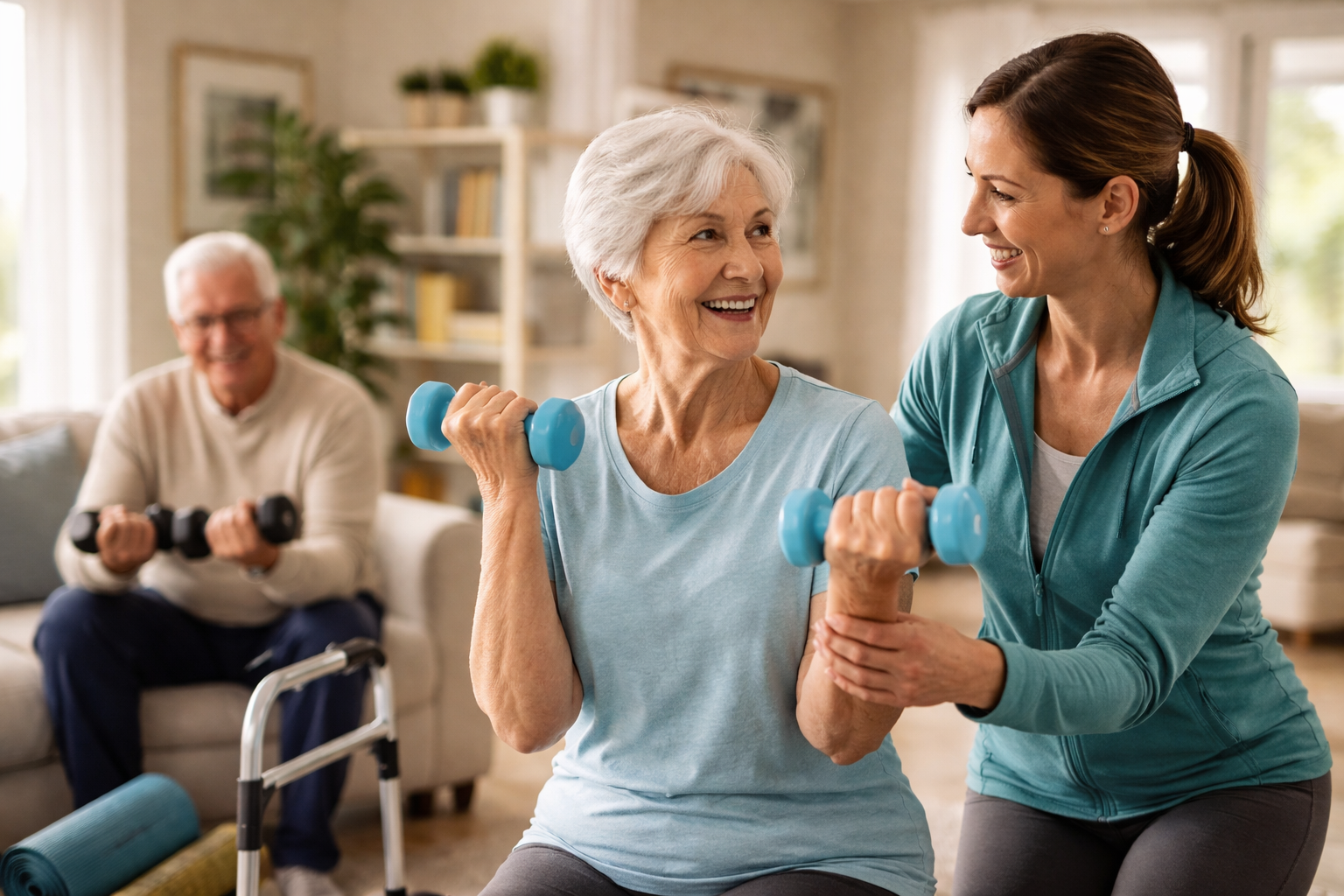
Light Resistance Exercises
Using small weights or resistance bands
Helps preserve muscle mass and strength
Functional Training for Injury Prevention
Functional training focuses on movements used in everyday life.
Examples include:
Sit-to-Stand Movements
Strengthens legs and core muscles
Improves the ability to stand safely from chairs
Step-Ups or Stair Training
Builds leg strength and balance
Helps seniors navigate stairs safely
These exercises improve the ability to perform daily activities confidently.
How In-Home Personal Training Works
In-home training is becoming increasingly popular, particularly among older adults.
Instead of traveling to a gym or clinic, the trainer visits the client’s home and conducts the session in a familiar environment.
Sessions are adapted to the available space and may use simple equipment such as resistance bands, small weights, or stability tools.
This flexible approach allows training to become part of everyday life rather than a separate task.
Benefits of In-Home Personal Training for Seniors
For many seniors, training at home offers unique advantages.
Convenience
No need for transportation or travel to fitness facilities.
Personalized Attention
Sessions focus entirely on the individual’s needs.
Real-Life Movement Practice
Exercises can be practiced in the exact environment where daily movement occurs.
Flexible Scheduling
Sessions can be scheduled around personal routines.
These factors make it easier to stay consistent and committed.
In fact, research has shown that home-based progressive strength training programs can significantly improve symptoms and physical function in older adults with knee osteoarthritis.
Mental Health Benefits of Personal Training
Exercise benefits the mind as much as the body.
Regular physical activity has been shown to:
Reduce symptoms of anxiety and depression
Improve mood and emotional well-being
Enhance cognitive function
Increase confidence and independence
Social interaction during training sessions also plays a role. For many seniors, having regular contact with a trainer provides motivation, encouragement, and connection.
This combination of physical and social engagement contributes to healthier aging.
The mission of organizations like HomeStretch Active Living reflects this philosophy supporting seniors not only through exercise, but also through confidence, education, and connection.
Research on the Effectiveness of Personalized Exercise
Studies consistently show that personalized exercise programs improve adherence and health outcomes.
Research suggests that individuals who train with professional guidance are significantly more likely to achieve their health goals and maintain long-term exercise habits.
Some reports indicate that around 70% of clients experience measurable improvements in physical and mental well-being within the first 12 weeks of personalized training.
Additional research also shows that structured exercise programs can:
Reduce the risk of chronic diseases
Improve cardiovascular health
Enhance longevity and overall quality of life
These findings highlight the importance of individualized exercise prescriptions.
Personal training offers a powerful and practical way to improve both physical and mental health. By creating customized exercise plans, trainers help individuals build strength, improve mobility, and reduce injury risk.
For older adults, personalized programs can support independence, enhance confidence, and make everyday activities easier and safer.
In-home training makes this process even more accessible by bringing professional guidance directly into the comfort of a familiar environment.
If you or a loved one are looking to stay strong, steady, and active as you age, working with a qualified trainer may be the first step toward better health and greater independence.
Frequently Asked Questions
-
A qualified personal trainer should have recognized certifications in fitness or kinesiology, along with training in anatomy, exercise science, and injury prevention. Many professionals also receive additional training in senior fitness.
-
Most seniors benefit from training sessions two to three times per week, depending on their goals and physical condition. A trainer can recommend the safest schedule.
-
Personal training focuses on one individual and provides customized exercises and supervision. Group classes follow a general routine designed for multiple participants.
Related Posts
Aging in Place, Homecare and Fall Prevention: What Seniors and Families in Ontario Need to Know
Guide to Supporting Seniors: Practical Support Services and Care Options
In-Home Personal Training for Seniors in Toronto: Why Local Kinesiology Matters
Author Bio - Melissa Gunstone, BSc, Kinesiologist
Melissa Gunstone is the founder of HomeStretch, a kinesiologist with years of experience supporting seniors across Canada. Her mission: to give older adults safe, effective, and individualized movement programs, from in-home training to community-based senior fitness classes and to build a nationwide movement that elevates the role of kinesiology in healthy aging.
The 3 Biggest Barriers to Aging in Place - Niagara - St. Catharines, Hamilton, Dundas, Burlington, Toronto - Fall Prevention | Strength & Mobility | Caregiver Resources