Top 5 Practical Strategies We Use to Prevent Falls for Seniors at Home
April 02, 2026

Falls are one of the leading causes of injury and loss of independence among older adults.
Many falls occur at home during simple activities such as walking to the bathroom, getting out of a chair, or climbing stairs.
The good news is that most falls are preventable.
At HomeStretch Active Living, our approach focuses on practical, evidence-based strategies that help seniors stay strong, steady, and confident in their own homes.
By combining exercise, environmental safety improvements, professional assessments, mobility support, and personalized care, older adults can significantly reduce their risk of falling.
In this guide, we’ll explore five effective strategies that help seniors stay safe, mobile, and independent at home.
Exercise Programs That Improve Balance and Strength
Exercise is one of the most powerful tools for fall prevention. Programs that focus on balance, leg strength, and flexibility help seniors move more confidently and safely during everyday activities.
Regular movement improves:
Muscle strength needed for standing and walking
Balance and coordination
Joint mobility and flexibility
Reaction time when losing balance
Balance Training for Fall Prevention
Balance training improves the body’s ability to stay stable and react to sudden shifts in movement. These exercises strengthen stabilizing muscles and enhance proprioception, the body’s awareness of position and movement.
Simple balance exercises seniors can practice include:
Standing on one leg (with support nearby)
Heel-to-toe walking
Slow side stepping
Weight shifting exercises
Low-impact activities like Tai Chi have also been shown to improve balance, coordination, and overall stability in older adults.
Strength Training for Stability
Strong legs are essential for preventing falls. Strength training focuses on muscles used during everyday movements such as standing up, climbing stairs, and walking.
Examples include:
Chair stands
Step-ups
Wall squats
Resistance band exercises
When performed regularly, these exercises help seniors feel stronger and more confident moving around their homes.
Home Safety Modifications That Reduce Fall Risk
Many falls occur because of hazards in the home environment. Small adjustments to the living space can significantly reduce risks.
Targeted home safety improvements remove common trip hazards and create a safer environment for daily activities.
Research consistently shows that home modifications are one of the most effective strategies for reducing falls among older adults.
Key Home Safety Features
Some of the most important home safety modifications include:
Grab Bars
Installing grab bars in bathrooms and near steps provides stable support when standing, sitting, or changing direction.
Improved Lighting
Bright lighting in hallways, staircases, and entrances helps seniors see obstacles clearly.
Non-Slip Flooring
Slip-resistant mats and flooring reduce the risk of slipping in wet areas like bathrooms and kitchens.
Clear Walking Paths
Removing loose rugs, cords, and clutter creates safe walking routes throughout the home.
Many of these improvements are inexpensive but can dramatically reduce fall risks.
Fall Risk Assessments to Identify Problems Early
A fall rarely happens without warning. Changes in balance, muscle strength, confidence, or walking ability often appear before a fall occurs.
A fall risk assessment helps identify these warning signs early.
Healthcare professionals evaluate multiple factors that may increase fall risk, including:
Medical history
Medication side effects
Walking and balance ability
Muscle strength
Home environment hazards
These assessments allow professionals to create personalized prevention plans tailored to each senior’s needs.
When Seniors Should Have a Fall Risk Assessment
Experts generally recommend screening in the following situations:
At age 65 and older as part of routine health care
After any fall, even if no injury occurred
Once per year to monitor changes in mobility or health
Early detection allows families and professionals to implement preventative strategies before a serious injury occurs.
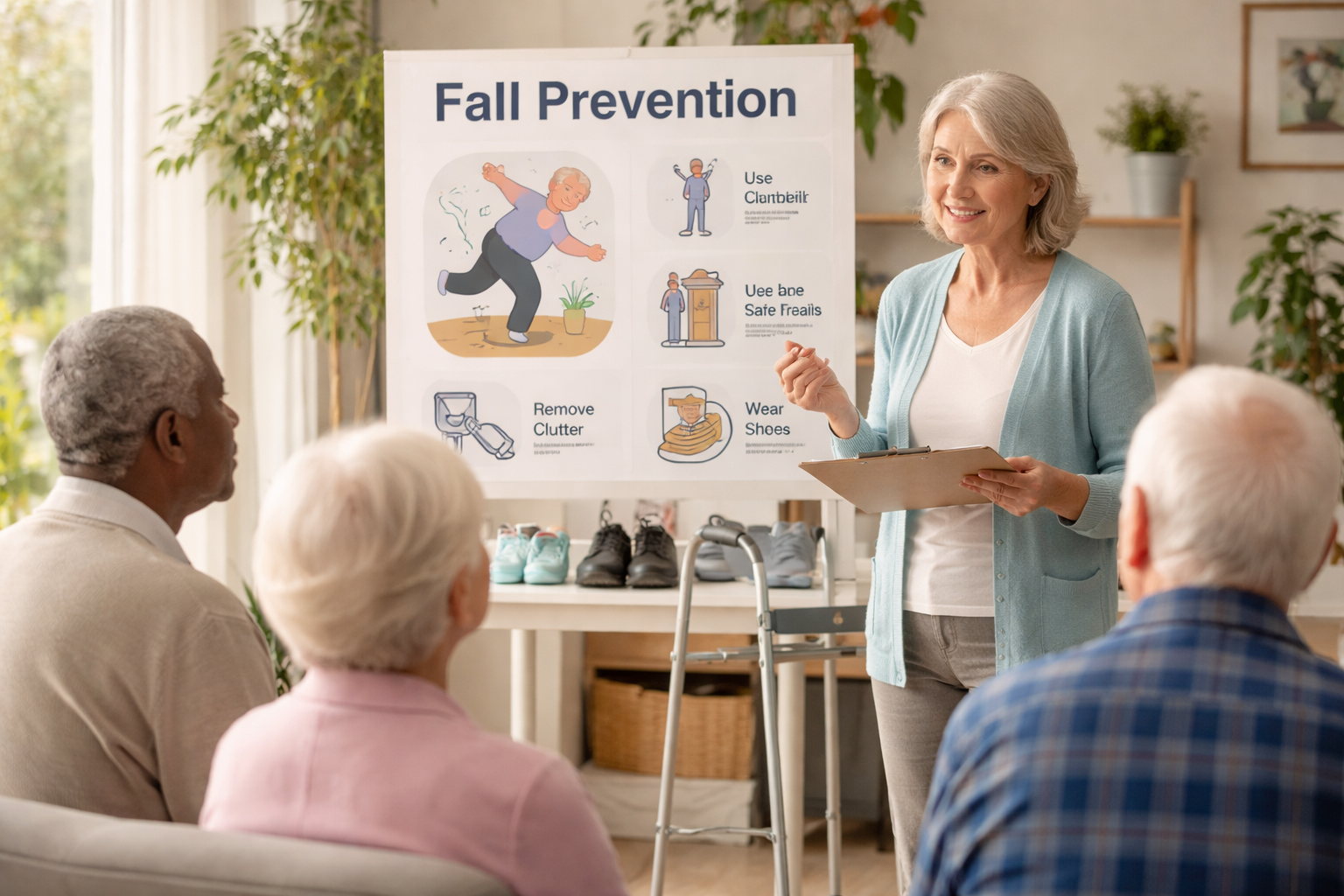
Mobility Support and Proper Use of Walking Aids
Mobility aids such as canes and walkers can significantly reduce fall risk when used correctly.
These tools provide additional stability and support for seniors who experience balance challenges or muscle weakness.
However, the key is proper selection and training.
A mobility device should:
Be properly fitted to the individual
Match the person’s walking ability
Be used with correct technique
When seniors receive professional guidance on how to use mobility aids safely, they often gain greater confidence in daily movement.
In-Home Senior Care and Support
In-home care services provide an additional layer of protection for seniors who may need assistance with daily tasks or mobility.
Caregivers help monitor health changes, assist with safe transfers, and ensure that the home environment remains safe.
This daily support helps prevent situations that often lead to falls.
How Caregivers Help Reduce Fall Risk
Trained caregivers assist seniors by:
Helping with safe transfers from bed or chair
Supervising walking or movement when needed
Monitoring for changes in strength or balance
Identifying new hazards in the home
Because caregivers see seniors regularly, they can identify early warning signs and help address issues before a fall occurs.
The Power of Combining Multiple Fall Prevention Strategies
The most effective fall-prevention programs combine several approaches rather than relying on a single solution.
Successful programs typically include:
Strength and balance exercises
Safe home environments
Regular fall risk assessments
Proper mobility support
Personalized in-home assistance
Together, these strategies create a comprehensive safety plan that helps seniors maintain independence and confidence.
The goal isn’t simply preventing injuries, it’s helping older adults continue living safely and comfortably in their own homes.
Falls are a serious concern for many seniors, but they are often preventable with the right strategies.
By focusing on strength and balance exercises, improving home safety, conducting regular fall risk assessments, using mobility aids correctly, and providing supportive in-home care, families can dramatically reduce fall risk.
With the right approach, older adults can continue living independently while feeling stronger, safer, and more confident in their everyday movements.
Frequently Asked Questions
-
The most effective strategy combines strength, balance, and real-life movement training with consistent engagement. Programs that include reaction time and coordination training are more effective than traditional exercise alone.
-
Seniors should perform balance and mobility exercises at least 2–3 times per week, with additional daily movement practice to improve consistency and reduce fall risk.
-
Most programs fail due to lack of adherence. They are often repetitive, not engaging, and not connected to real-life movement, making it difficult for seniors to stay consistent.
-
Fall resiliency focuses on improving a senior’s ability to react, recover, and move confidently. Instead of only preventing falls, it prepares the body and brain to handle unexpected situations safely.
-
Yes. In-home training improves consistency and allows seniors to practice movements in their actual environment, making it more practical and effective for preventing falls.
Related Posts
Better Sleep for Older Adults, Practical Strategies for Restful Nights
Kinesiology for Seniors: In-Home Personal Training, Rehabilitation & Fall Prevention in Toronto
In-Home Personal Training for Seniors in Toronto: Why Local Kinesiology Matters
Author Bio - Melissa Gunstone, BSc, Kinesiologist
Melissa Gunstone is the founder of HomeStretch, a kinesiologist with years of experience supporting seniors across Canada. Her mission: to give older adults safe, effective, and individualized movement programs, from in-home training to community-based senior fitness classes and to build a nationwide movement that elevates the role of kinesiology in healthy aging.
The 3 Biggest Barriers to Aging in Place - Niagara - St. Catharines, Hamilton, Dundas, Burlington, Toronto - Fall Prevention | Strength & Mobility | Caregiver Resources