November 19, 2026
On this page
⚡ Quick Answer
- Seven common signs your parent's mobility is declining: slower or shuffling steps, trouble rising from a chair, reaching for furniture, near-misses, avoiding stairs or outings, skipping chores or self-care, and a new fear of falling.
- None of these is a diagnosis. Each is a reason to watch a little more closely and start a caring conversation.
- Simple checks at home, like watching a chair stand or a walk down the hall, help you spot patterns to share with their doctor.
- Our kinesiologists offer in-home strength and balance programs across Thunder Bay. Start with a free consult.
Maybe Dad now rests a hand on the kitchen counter as he walks past. Maybe Mom takes a few extra seconds to get out of her favourite chair.
Changes like these are easy to brush off as ordinary aging. They often show up well before a serious fall, though, and that early window is when support can do the most good.
You're not alone in noticing. About 1 in 5 Canadians aged 65 and older reported a mobility limitation in 2012, according to Statistics Canada figures shared by Canadian Longitudinal Study on Aging researchers in 2025.
The encouraging part is that noticing early gives your family time to act calmly, with a plan.
Below are seven signs your parent's mobility is declining, simple ways to check at home, and how our in-home personal training kinesiologists can help across Thunder Bay, at home or in a care home.
What are the warning signs your parent's mobility is declining?
None of these signs is a diagnosis. Each one is a reason to pay closer attention and start a caring conversation.
Movement and balance changes
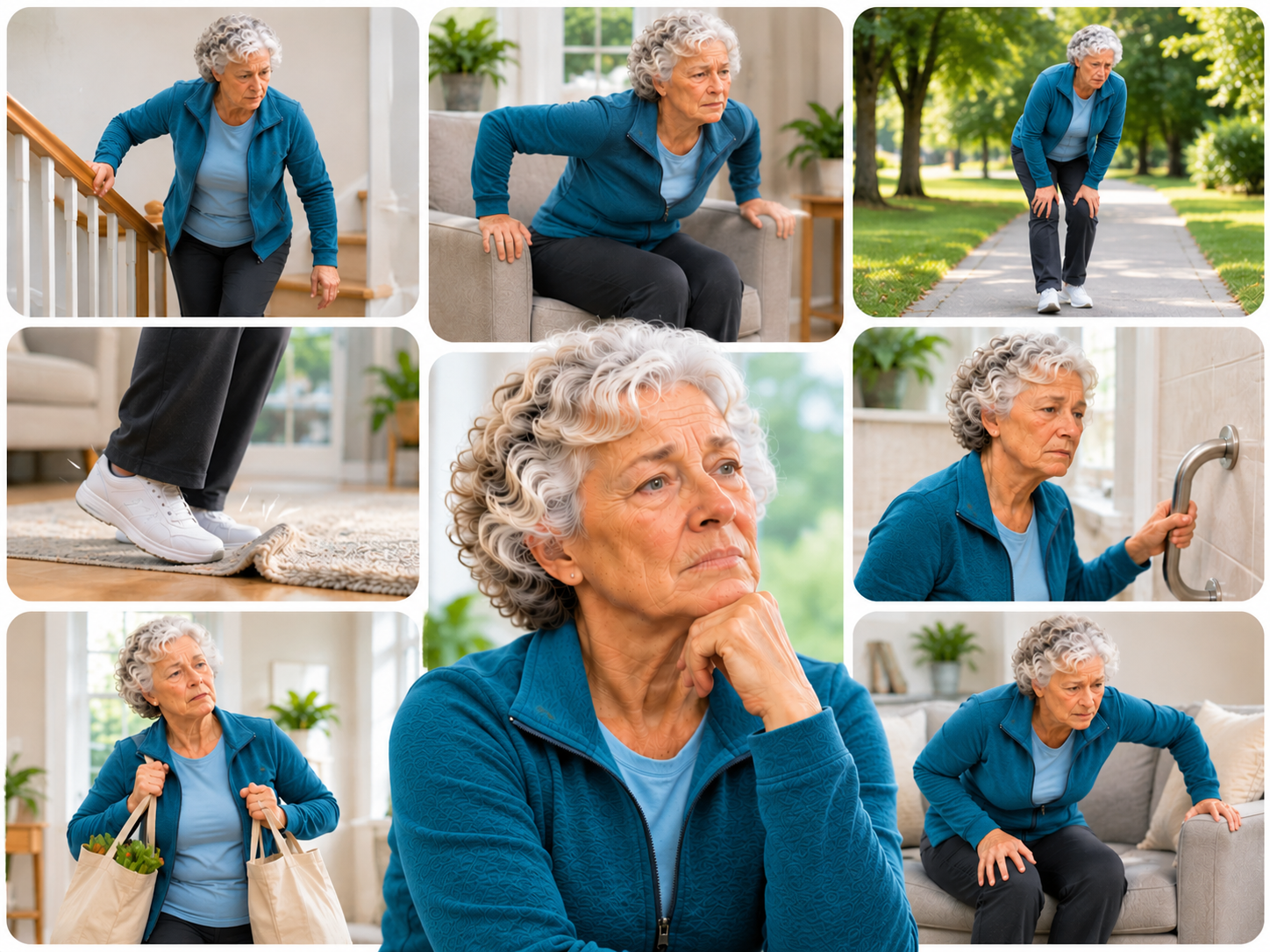
1. Slower or shuffling steps. If your parent's stride has shortened, or their feet barely leave the floor, they may have lost some leg strength or feel less sure of their balance. The World Guidelines for Falls Prevention, led from Western University, note that falls usually come from several things together, such as strength, balance, vision, cognition, and home layout.
2. Trouble rising from a chair. Standing up takes both lower-body strength and balance. If your parent rocks several times, pushes hard on the armrests, or avoids low seats, their leg strength may be dropping.
3. Reaching for walls or furniture. Some people call this "furniture walking." It often means your parent is making up for unsteadiness without even noticing. Clearer walkways and better lighting help, and simple home changes pair well with balance training.
4. Near-misses or unreported falls. A bruise nobody can explain or a casual "I just tripped a little" is worth paying attention to. Ontario Health's guide for people at risk of falls lists having fallen or almost fallen before as one of the signs someone may be at risk. Smaller stumbles often go unmentioned, so ask your parent directly and kindly.
Daily life and confidence
5. Avoiding stairs or outings. When a parent stops going to church, the grocery store, or the basement laundry room, fear may be starting to shape their routine. Less activity can lead to weaker muscles, and weaker muscles make the next outing harder.
6. Skipping chores or self-care. Unwashed dishes or fewer showers can mean those tasks now feel tiring or unsafe. Researchers with the Canadian Longitudinal Study on Aging describe mobility as a key part of healthy aging that directly shapes independence, so this sign matters.
7. A new fear of falling. Your parent may say they're "just being careful." Ontario Health's guide lists being worried about falling as a sign of fall risk in its own right, and worry often leads people to move less. It doesn't mean your parent has lost their abilities. It means they may benefit from support that rebuilds trust in their own body.
| Sign | What it may mean | A good first step |
|---|---|---|
| Shuffling steps | Reduced strength or balance | Watch them walk on different surfaces |
| Trouble standing up | Lower-body weakness | Note how many tries it takes |
| Furniture walking | Compensating for unsteadiness | Clear pathways, add lighting |
| Near-misses | A fall risk worth checking | Ask gently and directly |
| Avoiding outings | Fear changing behaviour | Offer company on short trips |
| Skipping self-care | Tasks feel unsafe | Check bathroom safety |
| Fear of falling | Lower confidence | Talk about it without judgment |
How can you check your parent's mobility at home?
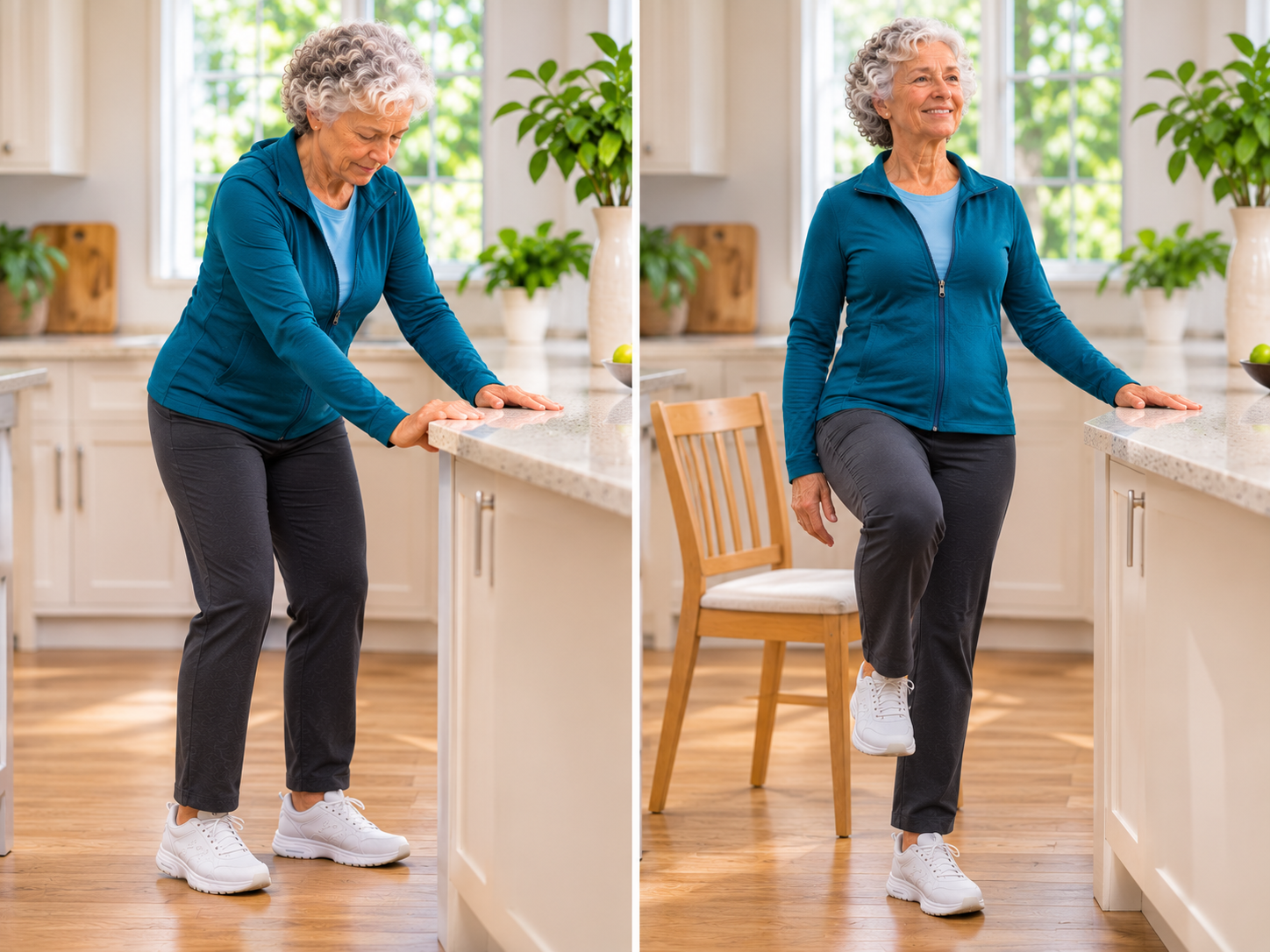
You don't need special equipment to notice how your parent is moving. Try these simple checks during an ordinary visit, and stay close by while you do.
- Watch a chair stand. As your parent gets up from a dining chair, note how many tries it takes and whether they push hard on the armrests.
- Walk and turn together. Walk down a hallway and back. Notice their step length, whether their feet clear the floor, and whether turning around makes them pause or reach for a wall.
- Notice the stairs. Do they grip the railing with both hands, take one step at a time, or avoid the basement altogether?
- Ask two simple questions. "Have you fallen or nearly fallen in the past year?" and "Do you ever worry about falling?" The World Guidelines suggest questions like these as a first step in spotting who may benefit from support.
- Try our self-check. Our fall risk self-check walks you through a few more questions you can answer together.
These checks are for noticing patterns, not for diagnosing. Keep a counter or sturdy chair within reach, stop if anything feels unsafe, and share what you notice with your parent's doctor.
How can a kinesiologist help your parent in Thunder Bay?
Ontario Health's falls guidance recommends an exercise program focused on strength and balance that starts at a comfortable level and becomes more challenging over time, with many older adults benefiting from exercise 2 to 3 times a week. Our services are built on that principle.
In-home kinesiology support
Our kinesiologists come to your parent's home, from Current River and Port Arthur to Westfort and the South Side, so they don't have to drive, deal with parking, or sit in a waiting room. We first look at how your parent actually moves through their own space. Then we build a program around their abilities and goals.
Sessions usually include sit-to-stand practice, heel-to-toe walking, and supported balance holds at the counter. We increase the difficulty step by step as strength and confidence grow. Because we work in the home, we can also spot hazards such as loose rugs, dim hallways, or a tub that's hard to step into. Home-based exercise is well established in Ontario: Western University's Centre for Activity and Aging developed the Home Support Exercise Program, an evidence-based set of 10 progressive exercises for older adults at home. We track progress over time with a Movement Score Report, so your family can see changes such as standing up more easily or walking more steadily.
If your parent's mobility is already limited, you can also read Expert Help for Aging Parents to Avoid Falls at Home in Ontario for who to call and in what order.
Group programs for care homes
We also run on-site balance, mobility, and healthy living classes for retirement residences and long-term care homes in Thunder Bay and across Ontario. Our classes are led by kinesiologists who adjust each exercise to every resident, whether they're seated, standing with support, or walking on their own. Ontario Health's guidance supports exercise that is progressive and fitted to each person's fall risk, goals, and abilities. Learn more about our community and care-home programs.
We visit homes across Thunder Bay and nearby Shuniah, Oliver Paipoonge, and Neebing. Between sessions, the City of Thunder Bay's 55 Plus Centre is a good local place to find activity programs for older adults. See all of our service areas.
When is the right time to get support?
You don't have to wait for a fall to take your parent's mobility seriously. If you notice one or more of these signs, now is a good time to start. Book a free consultation with one of our kinesiologists, or ask about bringing our fall prevention and balance programs to your parent's home or care home in Thunder Bay.
Frequently Asked Questions
What expert support helps prevent falls at home in Thunder Bay?
Kinesiologists offer in-home assessments and strength and balance programs built around each person. We bring this care to your parent's home in Thunder Bay and include guidance on making the home safer.
What are the best fall-prevention exercises for seniors?
Sit-to-stand, heel-to-toe walking, and supported single-leg stands all challenge balance and strength. They work best when a professional guides them and adjusts them as your parent improves.
Who runs balance programs in Thunder Bay care homes?
Our kinesiologists lead on-site balance, mobility, and healthy living group classes for retirement residences and long-term care homes in Thunder Bay and across Ontario, with every exercise adjusted to each resident's abilities.
Is slower walking just a normal part of aging?
Some change is common with age, but it isn't something your parent simply has to accept. Strength and balance can often improve with regular, guided exercise, so a slower pace is a good reason to check in.
Author Bio - Melissa Gunstone, BSc, Kinesiologist
Melissa Gunstone is the founder of HomeStretch, a kinesiologist with years of experience supporting seniors across Canada. Her mission: to give older adults safe, effective, and individualized movement programs, from in-home training to community-based senior fitness classes and to build a nationwide movement that elevates the role of kinesiology in healthy aging.