November 02, 2026

On this page
⚡ Quick Answer
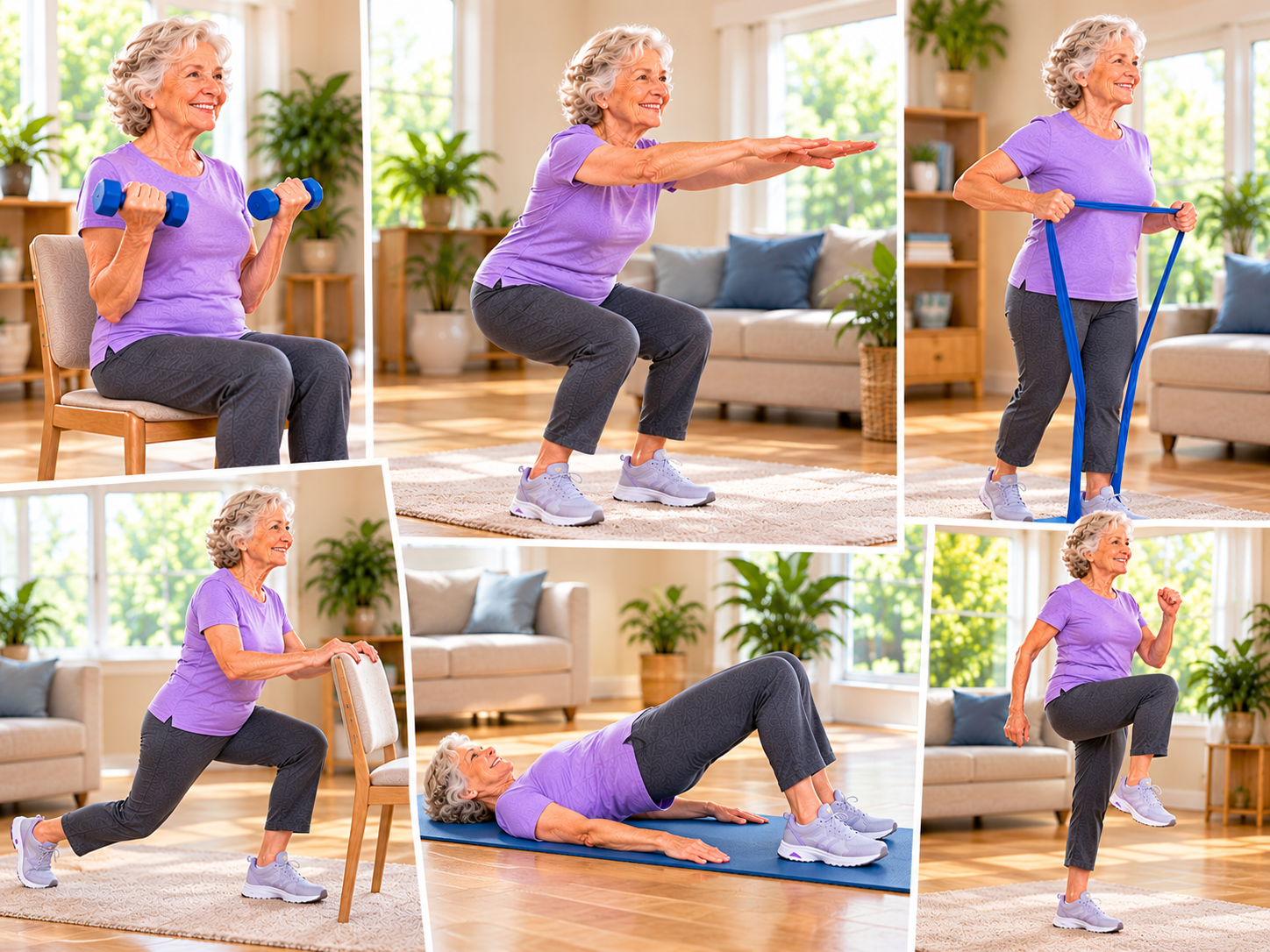
- The best home exercises to prevent muscle loss after 60 copy daily life: chair sit-to-stands, wall push-ups, and seated leg lifts, starting with 5 to 10 reps.
- Do strength work two or three days a week on non-consecutive days, and add counter-side balance moves like heel raises and heel-to-toe standing.
- November is Fall Prevention Month in Canada, a good time to start one strength move a day and check your home for trip hazards.
- Our kinesiologists offer in-home fall-risk assessments and strength plans across St. Catharines and Niagara. Start with a free consult.
Many St. Catharines residents over 60 notice the change slowly. The grocery bags feel heavier, climbing the stairs takes more work than it used to, and getting up from a low couch needs a push from the armrest.
Muscle loss with age, called sarcopenia, is common, but it doesn't have to decide how you live.
November is Fall Prevention Month in Canada, and it's a good time to remember that 20 to 30 per cent of older adults fall each year, according to Parachute. Regular strength and balance work is one of the most effective ways to change that.
A handful of simple moves done at home can help protect your strength, balance, and independence.
This guide covers home exercises to prevent muscle loss after 60 that you can start today. It also explains when it makes sense to bring in one of our kinesiologists for personal, in-home support.
Our fall prevention and balance programs bring that support to homes and retirement residences across St. Catharines and the Niagara region.
Why does muscle strength matter more after 60?
Muscle is what lets you rise from a chair, carry laundry, step into the tub, and catch yourself when you trip. When it weakens, everyday tasks get harder and falls become more likely. That's why Canada's 24-Hour Movement Guidelines for adults 65 and older recommend muscle-strengthening activities at least twice a week, along with activities that challenge balance.
Whether you live in Port Dalhousie, Merritton, Grantham, or downtown St. Catharines, that strength shows up in ordinary moments: the steps up to a front porch, a walk on the Merritt Trail, a Saturday trip to the St. Catharines Farmers Market, or getting in and out of the car without reaching for the door frame.
What are the best home exercises to prevent muscle loss after 60?
Strength Moves for Daily Life
The best exercises at this stage are the ones that copy real life. Each of these three works muscles you use dozens of times a day.
| Exercise | How to Do It | What It Helps With |
|---|---|---|
| Chair sit-to-stand | Sit near the front of a sturdy chair, feet hip-width apart. Stand slowly, then sit back down with control. Start with 5 to 10. | Getting off the couch, toilet, or car seat |
| Wall push-up | Stand an arm's length from a wall, hands at chest height. Bend your elbows, then push back. Start with 5 to 10. | Pushing doors, carrying, reaching shelves |
| Seated leg lift | Sit tall, straighten one leg, hold briefly, and lower slowly. Start with 8 to 10 per leg. | Walking, climbing stairs, knee support |
Set yourself up safely before you begin. Use a chair that won't slide, ideally pushed against a wall, and clear rugs and clutter from the space around you. Stop right away if you feel sharp pain, dizziness, or unusual shortness of breath.
Once these feel easy, add a light resistance band or small hand weights. Aim for two or three sessions a week on non-consecutive days, which fits the twice-a-week strength guideline above, and work the legs, hips, back, abdomen, chest, shoulders, and arms over the week. Check with your doctor before starting, and only move forward when your body feels ready.
Fall-Prevention Balance Exercises
Strength and balance work best together. Do each of these beside a kitchen counter, starting with light fingertip support:
- Heel-to-toe standing: Place one foot directly in front of the other and hold for 10 to 30 seconds.
- Supported single-leg stand: Lift one foot and hold for 5 to 15 seconds, then switch.
- Heel raises: Rise slowly onto your toes, then lower with control.
- Side steps: Step sideways along the counter, keeping your knees soft.
International experts recommend balance and functional exercises such as sit-to-stands and stepping, done three or more times a week for people at higher risk. Building strength and balance together also eases the fear of falling, and that confidence shows up in how you walk down the hallway, step out of the bath, and get around your own home.
If worry about falling is holding you back, read Afraid of Falling? How Seniors Can Improve Balance, Strength & Confidence at Home to learn how our kinesiologists help rebuild that confidence.
How can you take part in Fall Prevention Month at home?
Every November, Canada marks Fall Prevention Month, a national campaign led by Parachute that encourages communities to share practical, evidence-based ways to prevent falls. Muscle strength sits at the centre of it. Stronger legs make it easier to recover your footing on a curb, a wet step, or the first icy morning of the season.
Here are three simple ways to take part this month:
- Do one strength move a day: pick a move from the table above and tie it to something you already do, like five sit-to-stands before each meal.
- Walk your own routes: look for loose rugs, cords, and dim lighting on the paths you use most, especially the route to the bathroom at night.
- Get ready for winter walking: Niagara winters bring slush and freeze-thaw ice, so check your boots for good tread and practise heel raises and side steps now, before the sidewalks turn slick.
Our Fall Prevention and Balance Program in St. Catharines
Muscle strength is one piece of fall prevention. Our kinesiologist-led fall prevention and balance programs bring the other pieces together in your own St. Catharines home:
- In-home fall-risk assessment: we review your home for hazards like poor lighting, clutter, loose rugs, or furniture in the way, then give you a step-by-step checklist of practical changes.
- Home modification options: simple, budget-friendly upgrades, from grab bars to anti-slip mats.
- Physical fall-risk assessment: a gentle check of your posture, walking, stability, strength, and coordination, with clear recommendations you can act on.
- Customized exercise prescription: balance, coordination, and strength training built around your comfort level, mobility, and any health conditions, including moves like the ones in this guide.
Fall Prevention Month is a good time to book that first assessment. Share what you're doing this month with #FallPreventionMonthCA.
How can a kinesiologist help St. Catharines seniors build strength at home?
In-Home Kinesiology and Rehab
Exercise sheets can't see how you move. Our kinesiologists can. During one-on-one sessions in your home, we assess your strength, balance, and mobility, then build a plan around your actual stairs, furniture, and daily routines. As you improve, we adjust the plan so progress stays safe.
This matters most after surgery or injury. Home exercise programs are a normal part of recovering from a hip replacement, and the activity should build up gradually. Doing it with guidance gives you a clear advantage:
- Safety: your form is checked and corrected in real time, where on your own it's easy to push too hard or slip into poor form.
- Motivation: scheduled visits build accountability, where solo sessions often get skipped.
- Progress: your progress is tracked and adjusted to your recovery stage, where on your own it's hard to measure.
We visit homes across St. Catharines and the Niagara region, as well as Hamilton, Burlington, and the Greater Toronto Area. See all of our service areas.
Group Programs for St. Catharines Care Homes
We also bring on-site group exercise and wellness programs to retirement residences and long-term care homes across St. Catharines and the Niagara region. Professional guidance supports offering balance and strength exercise in either group or individual formats to reduce falls.
Administrators can expect structured sessions with seated and standing options, so residents of different mobility levels can join the same class. Families can expect something just as important: loved ones moving more safely, gaining confidence, and enjoying the social connection that comes with exercising alongside friends.
You can also read Chair Exercises for Fall Prevention: A HomeStretch Pilot Program in St. Catharines to see how one of our weekly classes at a St. Catharines retirement home worked.
How can St. Catharines seniors stay strong and independent after 60?
You don't need a gym to slow muscle loss. Regular, safe strength and balance work at home can help you stay steady, capable, and independent for years to come. If you'd like a plan built for your body and your home, book a free consultation with HomeStretch. We'll start with an assessment and help you or your loved one move forward with confidence.
Frequently Asked Questions
How often should seniors do strength exercises at home?
Many older adults do well with strength exercises two to three days a week, with rest days in between. Balance practice can happen on most days.
Are in-home exercise programs safe after surgery?
Yes, when a qualified professional guides them. Our kinesiologists work within your care plan to choose gentle, gradual exercises that support your recovery at home.
Does HomeStretch offer group programs for care homes in St. Catharines?
Yes. We run on-site group exercise and wellness programs for retirement residences and long-term care homes in St. Catharines and across the Niagara region, and we tailor each one to residents' abilities and goals.
When is Fall Prevention Month in Canada?
Fall Prevention Month runs every November across Canada. It's a national campaign, led by Parachute, that encourages communities to share practical ways to prevent falls, and it's a good time to start a home strength and balance routine.
Author Bio - Melissa Gunstone, BSc, Kinesiologist
Melissa Gunstone is the founder of HomeStretch, a kinesiologist with years of experience supporting seniors across Canada. Her mission: to give older adults safe, effective, and individualized movement programs, from in-home training to community-based senior fitness classes and to build a nationwide movement that elevates the role of kinesiology in healthy aging.