Chair Exercises for Fall Prevention: A HomeStretch Pilot Program in St. Catharines
November 07, 2025
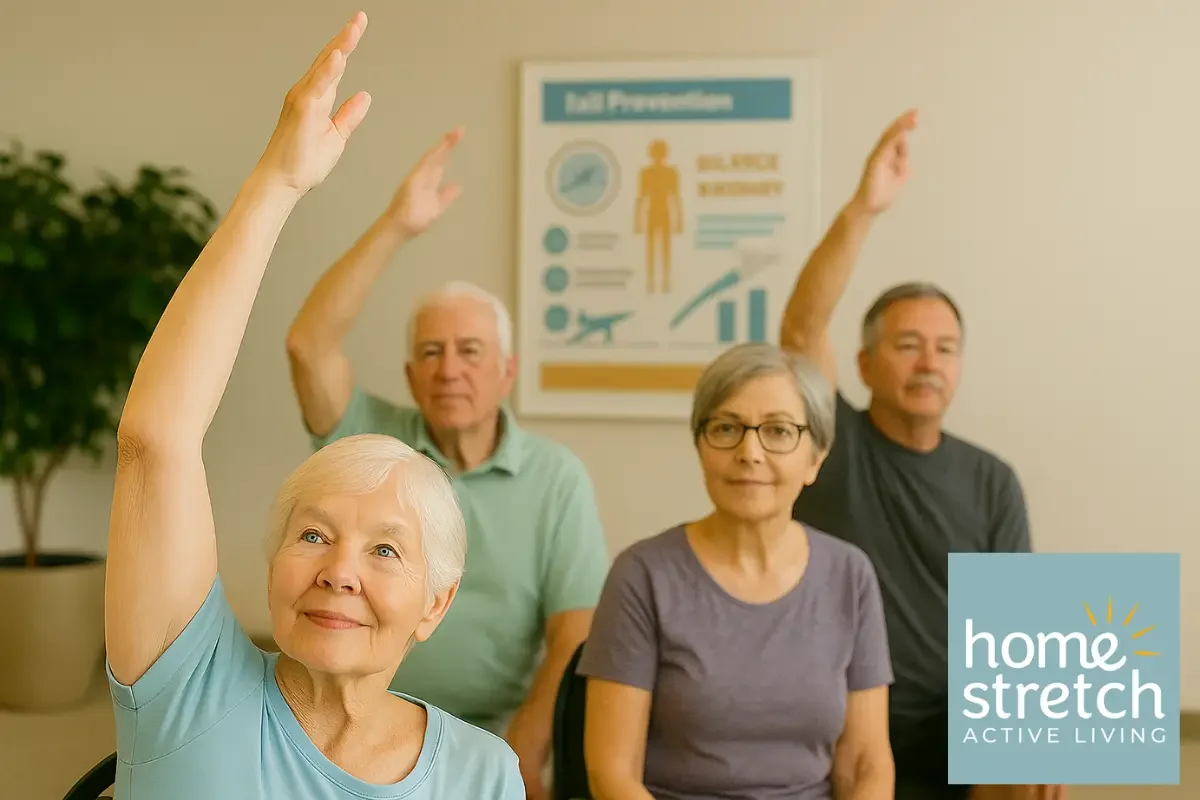
This past spring, I began a weekly chair-exercise class for seniors at a retirement home in the heart of the Niagara Region in St. Catharines. My aim was simple: bring safe, effective, in-home personal training for seniors right into a comfortable space, build strength and balance, and reduce fall risk all while fostering social connection and fun.
Week by week the room filled. A friendly chat followed every session. The aim wasn’t just to move, but to pause, reflect on what the body was telling us, and feel ‘in’ our movement rather than just doing it.
Here’s how the class unfolded and what two of the participants noticed after 6 and 12 weeks.
How the Class Worked
We met once a week, 45-60 minutes, at a retirement community in St. Catharines.
Every session began with seated warm-ups: gentle arm circles, ankle rolls, posture checks.
Then we used a stable chair (no wheels) for key movements:
Sit-to-stand (slowly, controlled)
Seated knee lifts & marching in place while holding the chair back for support
Seated “heel-to-toe” taps and seated trunk rotations
Standing behind the chair (with hand-support) for single-leg standing (10-15 seconds)
After each movement we paused: I invited the group to feel their muscles, notice their balance, ask themselves “how did that feel?”
We ended with cool-down and a round of conversation: how are you moving at home, what challenged you this week, what did you notice?
As weeks went on, attendance grew. Seniors urged their neighbours to “come and try this” because it felt safe, social, and meaningful.
Success Story 1: June to Mid-July (~6 Weeks)
Meet “Mary” (name changed). At 78 years old, Mary had felt less stable getting out of her favourite recliner and avoided using the stairs in her home for fear of losing her balance.
After 6 weeks of the chair-exercise class:
She told me: “I realised I can stand from my recliner without using my hands now.”
She felt more confident when reaching for items on the shelves in her kitchen.
She said the class helped her “wake up” her legs again the seated knee lifts had surprised her with how they strengthened her thighs.
What I noticed: Mary’s posture improved; she was sitting more upright, moving into and out of the chair with less hesitation. Her gait when walking to the lounge was steadier.
Success Story 2: June to Late August (~12 Weeks)
Meet “George” (name changed). At 83, George used to skip the group shuffleboard sessions because he felt weak in his legs and worried about losing his balance when he bent over or pivoted.
After 12 weeks of attending the class:
He reported: “I went out for a light walk in my neighborhood and came back without stopping to rest I hadn’t done that in months.”
He noticed he could stand on one leg behind the chair (with support) for 20 seconds something he never thought he could safely try.
He shared that the social side of the class had made a big difference: “chatting, laughing, doing this together” made him look forward to the sessions.
What I noticed: George’s cadence on his weekly walk increased slightly; he took bigger steps. Also, his reaction when someone bumped into him in the lounge was more confident he adjusted and steadied himself quickly instead of freezing.
Why Chair Exercises Matter for Fall Prevention
For many older adults, full standing or dynamic exercises feel intimidating or unsafe at home. A chair exercise class offers:
Support and stability: The chair becomes a safe tool rather than a limitation.
Accessibility: Participants don’t need to get on the floor, or use complicated equipment.
Progression: We start seated, then move to supported standing, then to more challenging balance drills all in one class.
Pause-and-reflect moments: By inviting pauses after each exercise and asking “how does your body feel?”, we build body-awareness, which is key to preventing falls for seniors (because you recognise imbalance, fatigue, or weakness early).
And in a social setting like a weekly class in a St. Catharines retirement home you get community and motivation, which keep people coming back.
What You Can Do If You Missed the Class
If you weren’t able to join the class, here are some simple chair-based moves you can do at home in the Niagara region setting:
Sit-to-stand from a sturdy chair, without using your hands for support if safe. Repeat 8-10 times.
Seated marching: Lift knees high one at a time, 10 lifts each leg.
Seated trunk rotation: Hands across chest, gently rotate to the right, then to the left. 8-10 times each side.
Supported standing behind a chair: Hold the back of the chair, lift one leg slightly off the ground, hold for 10-15 seconds, then switch legs. 2-3 times each leg.
Focus on how you feel during and after the movement. Is your breathing deeper? Do you feel a steady sensation in your legs? Are you noticing less wobble when standing? These are good signs.
Want to Join a Weekly Chair-Exercise Class Near You?
If you live in the Niagara region and want in home personal training for seniors whether in a retirement home, community centre or your own home we’re here to help. Our kinesiologist-led programs focus on fall prevention, strength, balance and safe movement.
Book your free consultation today and we’ll help you get started with a plan you actually enjoy.
Frequently Asked Questions About Fall Prevention & Mobility
-
Chair exercises improve strength, balance, and body awareness in a safe, supported way. By using a sturdy chair for stability, participants can practice controlled movements like sit-to-stands and single-leg balance without fear of falling. This builds confidence and reduces fall risk over time.
-
Even one or two sessions per week can make a noticeable difference. In our St. Catharines pilot program, participants saw improved leg strength, posture, and balance within 6–12 weeks. Consistency matters more than intensity gentle, regular movement leads to lasting results.
-
No special gear is needed just a stable chair without wheels, comfortable clothing, and supportive footwear. Optional items like light hand weights or resistance bands can be added later as confidence grows.
-
Yes! Chair exercise programs are designed for all ability levels. Movements can be adapted for seated-only participation, and instructors guide each person to move safely within their range. The focus is always on safe progress, not perfection.
Related Posts
The Future of Fall Prevention: Why Micro-Dosing Movement Builds True Resiliency
From Floor to Standing: Why Learning to Get Up Safely Is a Lifesaving Skill
Aging Feels a Lot Like High School - But With New Knees Instead of New Cars
Author Bio - Melissa Gunstone, BSc, Kinesiologist
Founder of HomeStretch Ontario Helping Ontario seniors stay strong, safe, and independent — one step at a time.
The 3 Biggest Barriers to Aging in Place - Niagara - St. Catharines, Hamilton, Dundas, Burlington, Toronto - Fall Prevention | Strength & Mobility | Caregiver Resources