

What Helps Older Adults Stay Safer and Steadier at Home
September 11, 2026
On this page
⚡ Quick Answer
- Most falls come from several small factors at once, so the fix is layered: an assessment, a safer home setup, and a short daily exercise routine.
- Half of falls that lead to hospitalization happen at home; bathrooms, stairs, and the night-time route to the toilet are the first places to fix.
- Grab bars and poles must be anchored into wall studs; towel racks and soap dishes are not supports.
- An in-home kinesiologist checks strength, balance, footwear, and the house together, then builds a plan the person can actually keep up.
Staying safe at home is about more than preventing injuries. It is about protecting confidence, routine, and independence.
For many families, the first warning signs are subtle: a parent starts holding furniture while walking, avoids the stairs, or seems less sure stepping into the tub.
Home safety for seniors matters because falls are common and serious. A national surveillance report found that 5.8% of adults aged 65 and older living in private homes reported a fall-related injury in the previous year, and half of the falls that lead to hospitalization happen at home, according to the Public Health Agency of Canada.
The good news is that the biggest risks are usually fixable.
Families who combine professional guidance, a safer home setup, and steady daily habits for strength and balance see the biggest difference.
At HomeStretch, our kinesiologists bring fall prevention and balance programs into seniors' homes across Ontario, so the plan fits the actual house, not a clinic.
Why Does Expert Guidance Make Such a Difference?
A fall rarely has one single cause. More often, it comes from several smaller factors piling up at once: weaker leg strength, poor lighting, medications that cause dizziness, arthritis, reduced vision, or fear of falling after a previous slip.
A professional assessment can catch what families miss
Canadian public health guidance points to both personal and environmental risks, including chronic disease, mobility problems, medication use, and a history of earlier falls, as described in its profile of aging and chronic disease. A trained professional connects those details to practical changes:
- Safer transfer techniques – how to get up from a chair, bed, or toilet with control
- Mobility aid check – the right cane or walker, set to the right height
- Footwear advice – supportive shoes instead of slippers or socks on hard floors
- Bathroom modifications – where grab bars and seats will actually help
- A simple exercise plan – matched to the person's real abilities, not a generic routine
This is where in-home support is most useful. In a familiar setting, it is easier to see the real obstacles: the steep front step, the loose rug near the bed, the narrow path to the bathroom at night, or the chair that is too low to stand up from comfortably. Our fall-risk self-check is a good place for families to start before booking a full assessment.
Movement support should be practical, not overwhelming
Physical activity is one of the clearest protective factors against falls. Canada's Safe Living Guide explains that staying active supports muscles, joints, energy, sleep, and mood, all of which affect steadiness. For older adults, that usually means targeted work on leg strength, balance, posture, flexibility, and confidence during everyday tasks like standing up, turning, reaching, and walking across uneven surfaces.
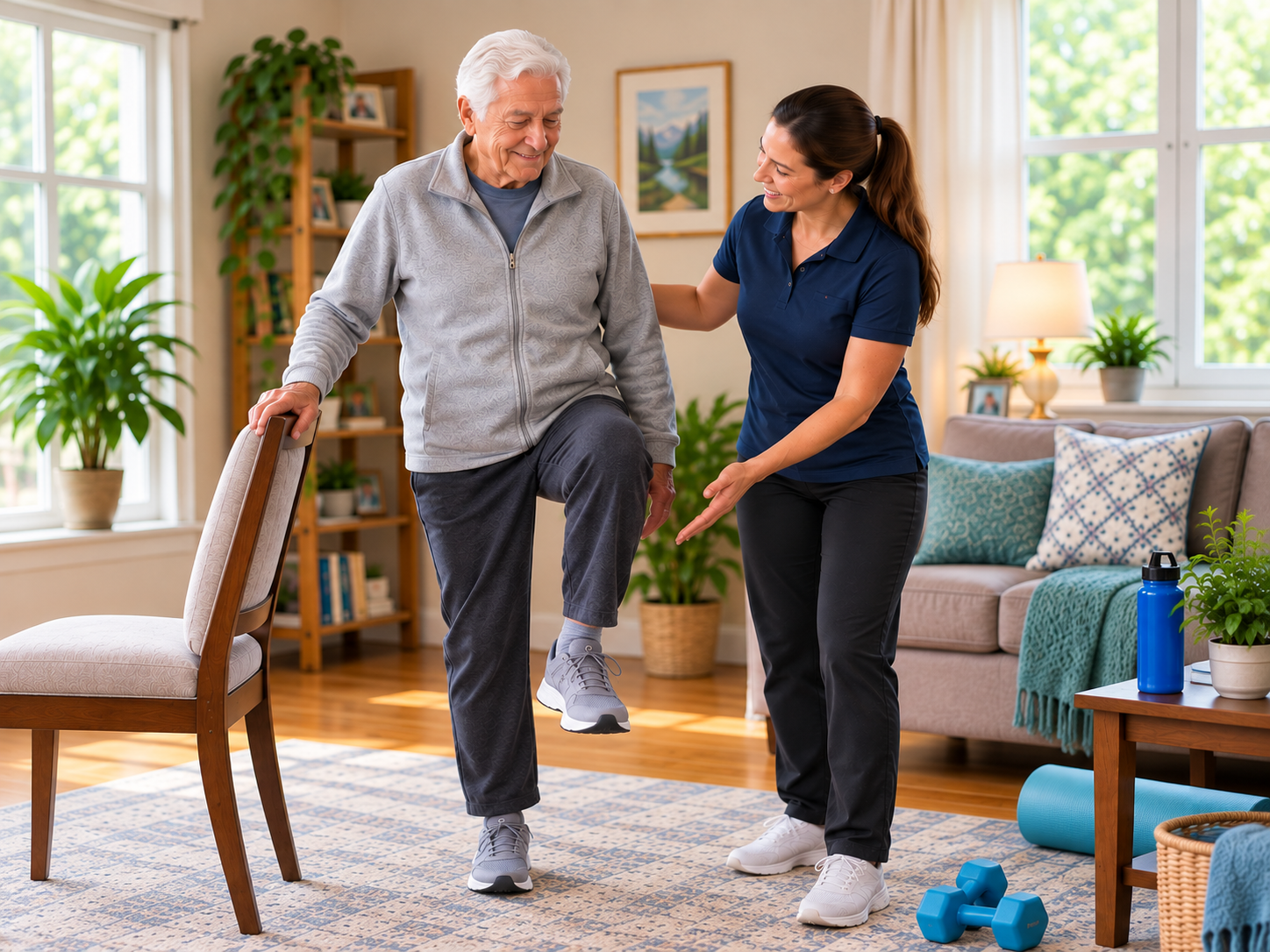
Kinesiology-led exercise is especially valuable because it focuses on how the body moves in daily life. Instead of generic workouts, the goal is safer function: getting in and out of bed more easily, climbing steps with better control, and walking with less hesitation.
How Should the Home Itself Support Safe Movement?
Even a strong, active older adult can be put at risk by poor home setup. Small hazards matter because many falls happen during ordinary routines, especially in bathrooms, bedrooms, entryways, and on stairs.
Start with the most common hazards
A safer home usually begins with a careful walk-through. Look for loose rugs, slippery floors, electrical cords in walking paths, clutter on stairs, uneven thresholds, and dim lighting in hallways and bathrooms. Night-time safety deserves special attention, because many falls happen during urgent trips to the bathroom when a person is tired and rushing.
Here is a simple way to prioritize changes:
| Area of the home | Common risk | Helpful improvement |
|---|---|---|
| Bathroom | Slippery surfaces, stepping into the tub | Non-slip mats, grab bars, bath seat |
| Stairs | Missed steps, poor balance | Secure handrails on both sides, brighter lighting |
| Bedroom | Getting up at night, cluttered path | Clear path, bedside lamp, stable footwear within reach |
| Entryway | Uneven step, snow and wet floors in winter | Railings, non-slip surface, a mat that stays put |
| Living room | Loose rugs, low furniture | Remove tripping hazards, raise seat height if needed |
Focus on the upgrades that add real stability
Some modifications matter more because they provide direct physical support. Canada's home safety guidance recommends non-slip bathroom surfaces, rubber-backed bath mats, bath seats, hand-held shower heads, raised toilet seats, and grab bars or poles installed securely into wall studs. It also specifically warns older adults not to use towel racks or soap dishes for support.
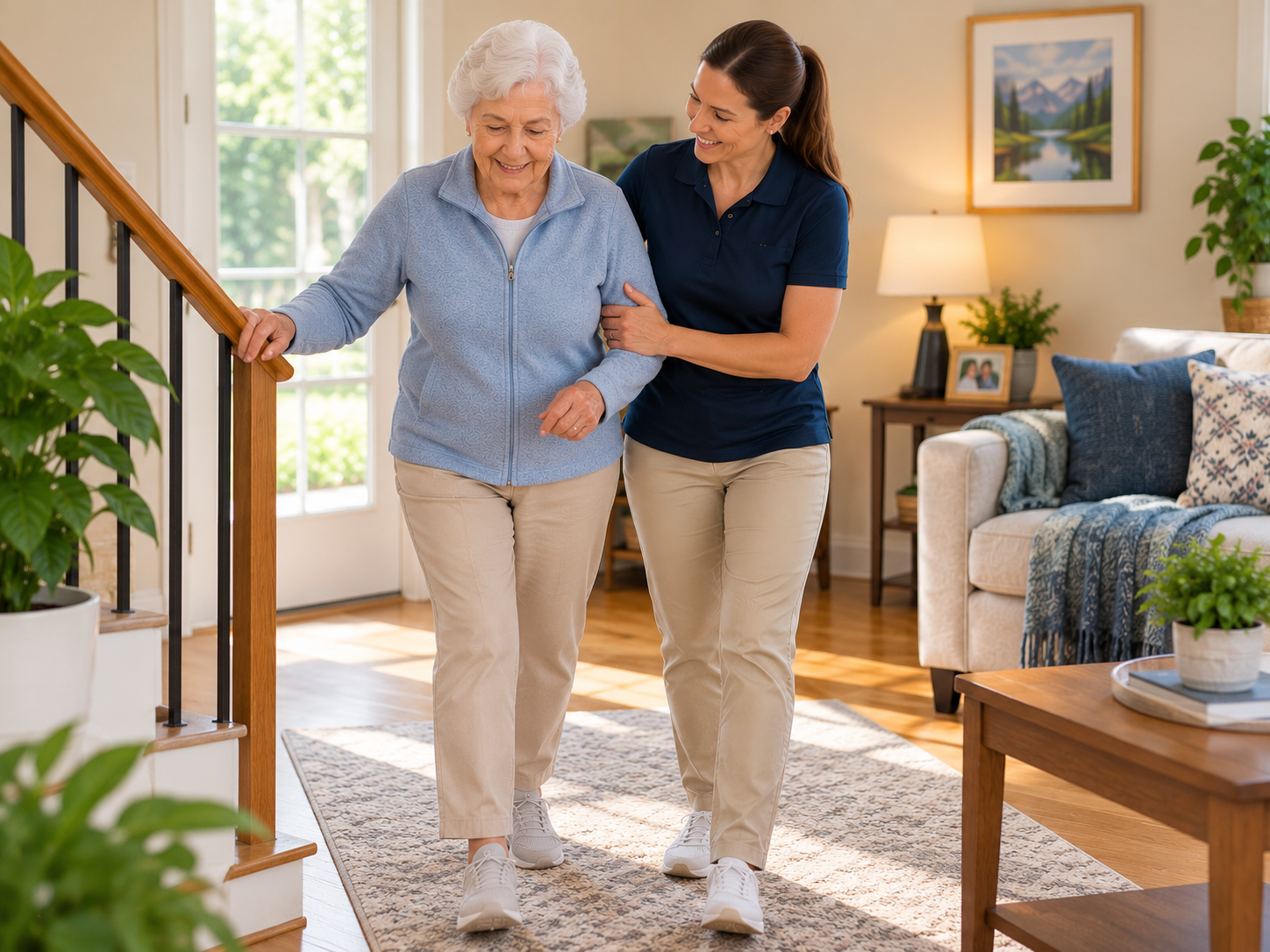
For people who are becoming less steady, railings on both sides of stairs, safer outdoor walkways, and ramps where needed reduce the effort and risk involved in daily movement. Public health guidance recognizes environment modification as a core fall-prevention strategy, alongside exercise and education, in its You CAN Prevent Falls resource.
What Everyday Supports Keep Seniors Steadier?
A safer home is not only about equipment. It also depends on habits, health, and access to the right programs.
Community programs can reinforce strength and routine
People stay steadier when they keep moving, eat well, stay hydrated, and keep regular routines. In Ontario, the province funds Seniors Active Living Centres that offer social, learning, and recreational programming for older adults, and federal guidance lists physical activity, nutrition support, and social participation among the core community supports that help people age in place.
Those programs work best alongside a plan at home. A weekly class builds strength; a kinesiologist visiting the house makes sure that strength carries over to the stairs, the tub, and the front step.
Healthy living in care settings should still be individualized
When an older adult lives in a retirement residence or supportive setting, structured wellness programs help maintain mobility and function. Exercise, nutrition, and recreation are common parts of healthy living for seniors, but public health guidance is clear that fall-prevention exercise should be tailored to the person's abilities and health status, especially in residential care.
That same principle applies at home. The best plan is rarely the most complicated one. It is the one a person can do consistently and safely.
What Should Families Do First?
Families do not need to solve everything at once. Three steps cover most of the risk:
- Fix the highest-risk rooms first. Bathroom, stairs, and the night-time route to the toilet. Grab bars, lighting, and clear floors before anything else.
- Book a fall-risk assessment. A kinesiologist checks strength, balance, gait, footwear, and the home in one visit, then builds a short plan around what they find.
- Start a small, consistent exercise routine. Ten to twenty minutes of sit-to-stands, supported balance work, and walking practice, most days, does more than an occasional long session.
If your parent has had a recent fall, feels dizzy, shuffles, avoids certain rooms, or grabs furniture while walking, move on all three now rather than waiting for the next slip.
Why Do Ontario Families Choose HomeStretch?
We meet seniors where the risk actually lives: in their own home. Our kinesiologists assess the person and the house together, then deliver one-to-one in-home training that builds the leg strength, balance, and confidence daily life demands. We serve families across the Niagara Region, Hamilton and area, Burlington, Oakville, Mississauga, the Greater Toronto Area, and Thunder Bay. See all service areas.
Older adults stay safer and steadier at home when support is layered thoughtfully: an assessment to find hidden problems, targeted exercise to improve balance and strength, home changes that remove hazards and add stability, and community programs that keep those gains over time. That practical, respectful approach is what helps many older adults remain independent longer.
Start With a Fall-Risk Assessment at Home
If safety at home is becoming a concern for a parent or loved one, we can help you see clearly what needs to change and build a plan they can keep up with. Reach out to talk through your situation and book a consultation.
Frequently Asked Questions
How can my parent avoid falls at home?
The strongest approach combines a professional assessment, simple home changes, and a tailored exercise routine. If your parent has had a recent fall, feels dizzy, shuffles, avoids certain rooms, or grabs furniture while walking, look closely at both health factors and home setup now.
What does an in-home fall-risk assessment include?
A kinesiologist checks leg strength, balance, walking pattern, footwear, and mobility aids, then walks through the home to spot hazards like loose rugs, poor lighting, and low seating. You leave with a short, prioritized plan for exercise and home changes.
Are there wellness programs for seniors in Ontario?
Yes. Ontario funds Seniors Active Living Centres with social, learning, and recreational programming, and many communities offer exercise and nutrition programs for older adults. HomeStretch adds in-home kinesiology so those gains carry over to daily life at home.
What role do care homes play in healthy living?
Retirement residences and care homes often provide structured exercise, wellness, and nutrition programming. The most effective programs are adapted to each resident's mobility, health conditions, and goals rather than using a one-size-fits-all approach.
Author Bio - Melissa Gunstone, BSc, Kinesiologist
Melissa Gunstone is the founder of HomeStretch, a kinesiologist with years of experience supporting seniors across Canada. Her mission: to give older adults safe, effective, and individualized movement programs, from in-home training to community-based senior fitness classes and to build a nationwide movement that elevates the role of kinesiology in healthy aging.
