November 09, 2026

On this page
⚡ Quick Answer
- Simple grip strength exercises for seniors include a ball squeeze, finger pinch, rubber band spreads, a towel wring, and a suitcase hold.
- A 10-minute routine three days a week, with rest days in between, is a sensible start using things you already have at home.
- Stay at each level for 2 to 3 weeks, move up only when it feels easy and causes no pain, and pair grip work with leg strength and balance.
- Our kinesiologists can adapt this routine in your home across Mississauga and Peel Region. Start with a free consult.
You use your grip when you open a jar of pasta sauce, carry a bag of groceries in from the car, or hold the stair railing on the way down to the laundry room. Many of us only notice it once these jobs start to feel harder.
Building grip doesn't take a gym. These simple grip strength exercises for seniors take about 10 minutes, three days a week, with things you already have at home.
November is Fall Prevention Month in Canada, a good moment to know that 20 to 30 per cent of older adults fall each year, according to Parachute. The good news is that falls can be prevented, and exercise for strength and balance is part of how.
A few minutes of regular practice can help you stay steady and confident.
If you'd like a plan built around you, our in-home personal training brings a kinesiologist to your door across Mississauga and Peel Region.
What is grip strength, and why does it matter?
Grip strength is how much force your hand and forearm can produce when you squeeze, pinch, or hold something. Clinicians often use it as a quick sign of overall strength and function in older adults, and Statistics Canada research notes that reduced strength at older ages is associated with impaired mobility and risk of falls.
Think about how often your hands lead the way in a normal day. You turn a key, twist a tap, button a cardigan, pull open a heavy door, and lift the kettle. When your grip feels reliable, those small jobs stay small.
Where You'll Notice It in Mississauga
Grip looks a little different depending on where you live. In a Port Credit condo, it might be a heavy lobby door or bags carried up from underground parking. In an older Streetsville home, it's the railing on a staircase you take twice a day. In Clarkson, Lorne Park, or Erin Mills, it might be wheeling the bins down the driveway, pulling on winter boots, or holding a walking pole along the Waterfront Trail.
How do you prepare safely for grip exercises?
A Simple Safety Checklist
If you've had hand, wrist, shoulder, or joint replacement surgery, or if you live with arthritis, talk with your doctor, physiotherapist, or kinesiologist before you begin. A kinesiologist is a regulated health professional who builds exercise around how your body works. The Arthritis Society's surgery guidance also recommends getting your healthcare team's approval before you exercise after surgery.
Once you're cleared:
- Sit in a sturdy chair with armrests, or stand at a kitchen counter you can hold.
- Warm up your hands for a minute in warm water, or open and close your fingers slowly.
- Stop if you feel sharp pain, numbness, tingling, or dizziness.
Everyday Tools You Need
You probably already own everything on this list: a soft ball or rolled-up sock, a hand towel, a rubber band, a few clothespins, and two light items such as water bottles or soup cans. Arthritis Research Canada's at-home exercise guide also suggests using cans and water bottles instead of buying equipment.
It's also worth making your space safer before you start. Clear the walkways, add brighter lighting, and check that the railings are tight.
You can also read Gentle Arthritis Exercise at Home for Seniors in Dundas, Ontario for low-impact ways to keep moving when your joints feel stiff.
What are simple grip strength exercises for seniors at home?
Five Progressive Exercises
Do each exercise slowly, breathe steadily, and rest 30 to 60 seconds before moving to the next one.
| Exercise | How to Do It | Daily Task It Helps |
|---|---|---|
| 1. Ball squeeze | Squeeze a soft ball or sock, hold 2 to 3 seconds, release slowly. 8 to 10 per hand, 1 to 2 sets. | Jars, doorknobs, bag handles |
| 2. Finger pinch | Pinch and release a clothespin, or pinch a folded sock between thumb and fingers. 8 to 10 per hand. | Buttons, keys, small objects |
| 3. Rubber band spreads | Loop a band around your fingertips and open your hand against it. 8 to 10 per hand. | Balances squeezing muscles |
| 4. Towel wring | Twist a towel as if wringing out water, then twist the other way. 8 to 10 total. | Twist lids, dishes |
| 5. Suitcase hold | Hold a can or bottle at your side, seated or beside a counter. 10 to 20 seconds per side, 2 to 3 rounds. | Carrying items, holding railings |
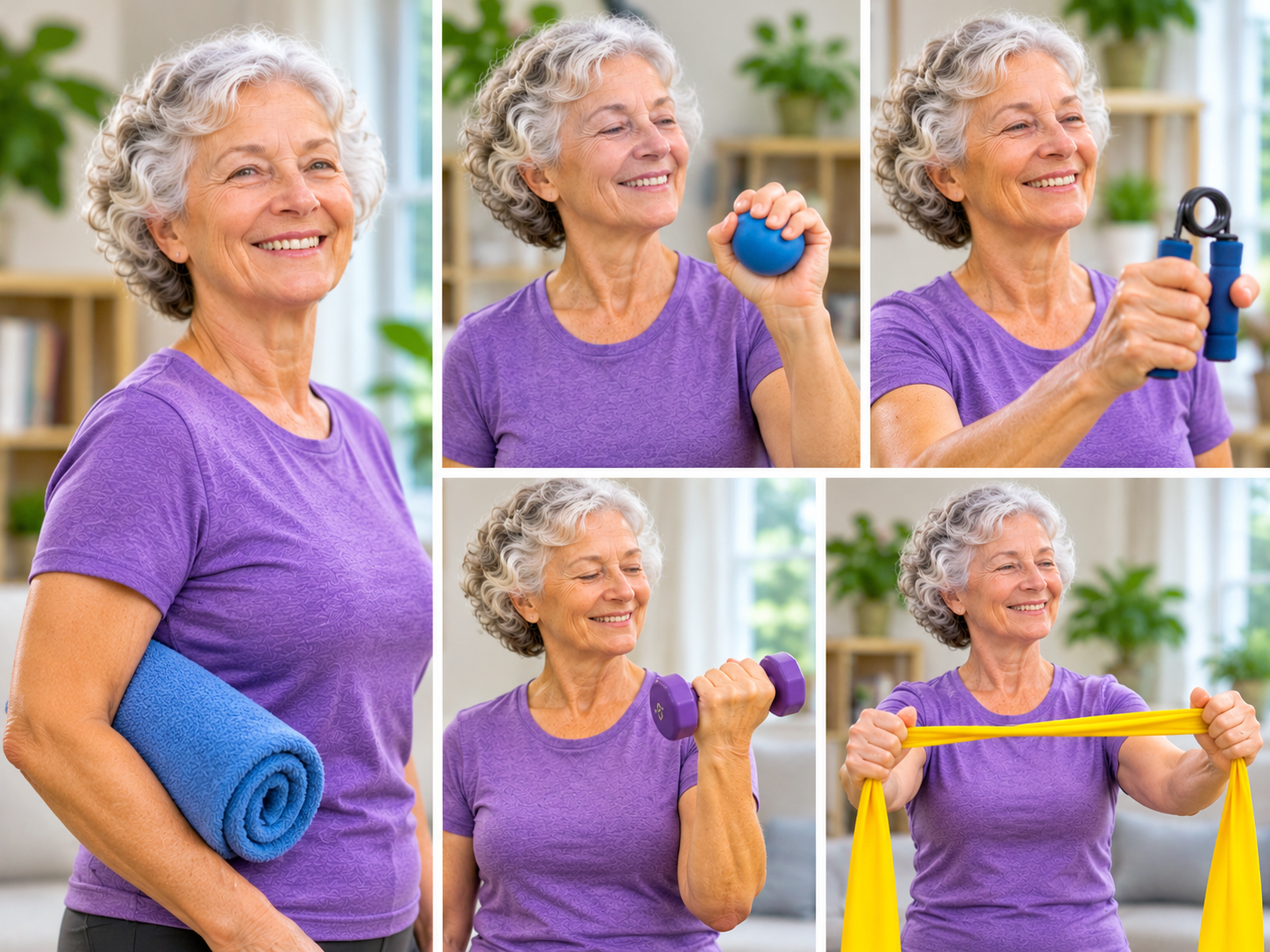
Keep the same level for 2 to 3 weeks. Move up only when the current level feels easy and causes no pain. Progress gently: hold a squeeze a little longer, use a slightly firmer ball or clothespin, roll a thicker towel, or add a few seconds to the suitcase hold before you try anything heavier. Over time these small changes can help you reach a high shelf, push up from a chair, and grip a railing with more confidence.
A Sample Week
Here is a 10-minute routine for Monday, Wednesday, and Friday:
- Ball squeeze, 1 minute
- Finger pinch, 1 minute
- Rubber band spreads, 1 minute
- Towel wring, 2 minutes
- Suitcase hold, 2 minutes
- Sit-to-stand from a chair beside the counter, 2 sets of 5
- Heel raises holding the counter, 2 sets of 8
We add the last two moves because grip on its own isn't enough. You need leg strength and balance too, and Canada's public fall-prevention guidance recommends exercise that improves both, plus removing tripping hazards at home.
Common Mistakes to Avoid
- Squeezing too hard. Aim for firm effort. Pain isn't the goal.
- Holding your breath. Breathe out as you squeeze.
- Skipping rest days. Hands recover just like legs do.
- Rushing progress. Two to three weeks per level is a sensible pace.
- Standing without support. Always keep a chair or counter within reach.
How can you build grip habits during Fall Prevention Month?
November is a natural time to begin. Fall Prevention Month, held across Canada every year, encourages people to take action, and a short grip routine is an easy first step. Here are three ideas to try this month:
- Tie it to your morning: on your routine days, run through the ball squeeze and finger pinch while the kettle boils.
- Check every railing: give each handrail a firm tug, inside and out, and have anything loose tightened before the first snowfall.
- Plan for winter carrying: with slush and ice on the way, split your bags into lighter loads so one hand stays free for a railing.
Want a wider plan? Our fall prevention and balance programs bring strength, balance, and a review of your home together.
How can a kinesiologist help Mississauga seniors build grip strength?
A routine on a page can't watch your hands. Our kinesiologists can. In one-on-one sessions at home, we start by listening to your health history and goals, then do a simple movement check with everyday actions like standing from a chair, reaching overhead, and walking.
From there, we build your plan around the space and equipment you already have, such as your kitchen counter or favourite chair. You'll work with the same kinesiologist each visit, and your Movement Score Report shows your top three priorities and your progress over time. As you get stronger, the plan changes with you.
That kind of guidance can be especially useful if you manage arthritis or osteoporosis, or if you're recovering from surgery, because each exercise is chosen around what your body can safely do today.
We visit homes across Mississauga and Peel Region, including Port Credit, Streetsville, Erin Mills, Clarkson, Meadowvale, Cooksville, and Malton. See all of our service areas.
How do small habits lead to steadier days?
Gentle grip exercises done a few times a week can help build real strength, and they work best as part of a wider plan that includes balance practice and a safer home. If you or a parent would like guidance, our HomeStretch kinesiologists can adapt this routine for one-on-one sessions at home, for recovery after surgery, or for group classes in retirement and care homes across Mississauga and Peel Region.
Frequently Asked Questions
Can grip exercises help prevent falls?
They can be one useful part of it. A stronger grip can make it easier to hold railings and carry items safely. It works best when you pair it with leg-strength and balance exercises like sit-to-stands and heel raises.
Are these exercises safe after surgery?
Often they are, but wait until your surgeon or rehab provider says it's okay. In-home rehab can help you start at the right level and support each step of your recovery.
Are there in-home or group programs in Mississauga?
Yes. We offer one-on-one in-home fitness and fall-prevention sessions across Mississauga and Peel Region, as well as group programs for retirement residences and long-term care homes. Both let older adults build strength in a familiar, comfortable setting.
How often should seniors do grip strength exercises?
Three days a week is a sensible start, such as Monday, Wednesday, and Friday, with rest days in between. Stay at each level for 2 to 3 weeks, and move up only when it feels easy and causes no pain.
Author Bio - Melissa Gunstone, BSc, Kinesiologist
Melissa Gunstone is the founder of HomeStretch, a kinesiologist with years of experience supporting seniors across Canada. Her mission: to give older adults safe, effective, and individualized movement programs, from in-home training to community-based senior fitness classes and to build a nationwide movement that elevates the role of kinesiology in healthy aging.