Practical Planning for Active, Independent Seniors in Southern Ontario
December 29, 2026
On this page
⚡ Quick Answer
- Home Stretch Goals are specific, measurable objectives, like standing from a chair without hands, not vague aims like "get fitter."
- SMART goals (Specific, Measurable, Achievable, Relevant, Time-bound) build the consistency that makes progress stick.
- Fall prevention combines targeted exercise, home safety changes, and monitoring health and medication factors.
- A personalized plan covers physical, cognitive, social, and environmental factors together, not just exercise alone.
Staying independent at home doesn’t happen by accident as we age, it requires thoughtful planning, realistic goals, and the right support.
For many older adults and families in Southern Ontario, the biggest challenge isn’t knowing that movement and safety matter, but knowing where to start and how to turn good intentions into consistent progress.
That’s where Home Stretch Goals come in.
Home Stretch Goals are clear, outcome-focused objectives designed to protect independence, reduce fall risk, and improve daily function for seniors living at home.
When paired with kinesiologist-led guidance, these goals turn everyday activities, standing from a chair, climbing stairs, walking outdoors, into measurable, achievable milestones.
This guide explains how to set effective Goals, how kinesiology supports progress, and how seniors and families across Southern Ontario can build practical, personalized plans for active aging.
What Are Home Stretch Goals and Why Do They Matter?
Home Stretch focus on the real activities seniors need to live safely at home.
Rather than vague fitness aims, they target meaningful tasks such as:
Walking confidently through the home
Getting up from a chair without assistance
Navigating stairs safely
Maintaining balance during daily routines
The strength lies in their measurability. Small improvements are tracked, adjusted, and built upon, reducing the likelihood of sudden decline, falls, or loss of independence.
By linking daily habits, progressive exercise, and home safety strategies, these goals help seniors maintain mobility, confidence, and engagement in their communities.
How Do Seniors Set Effective Goals?
The first step is identifying what matters most in daily life.
Seniors are encouraged to:
List everyday activities that feel difficult or uncertain
Rank them by importance and urgency
Break each priority into small, achievable steps
For example, instead of “improve balance,” a clearer goal would be:
Stand from a chair without using hands, five times in a row, within four weeks.
These micro-goals improve motivation and provide clear markers of success that guide safe progression. You can also read How Personalized Exercise Plans Improve Senior Independence to learn more.
Why Goal Planning Is Essential for Senior Independence
Written, tracked goals turn uncertainty into action. When progress is monitored regularly, early signs of decline are noticed sooner, allowing for timely adjustments before problems escalate.
Goal planning also:
Encourages consistency and routine
Supports early intervention
Provides clarity for families and caregivers
Improves long-term independence
Reassessment ensures goals remain realistic as health and circumstances change.
Using SMART Goals to Support Active Aging
SMART goals, Specific, Measurable, Achievable, Relevant, Time-bound , are especially effective for seniors.
Example:
Walk for 15 minutes, three times per week, for six weeks.
This structure provides clarity, accountability, and motivation while remaining adaptable to health conditions or recovery stages. Simple tools such as exercise logs or weekly check-ins help track progress and reinforce consistency.
How We Supports Goal Planning
HomeStretch Active Living follows a structured, supportive process:
Free consultation to discuss priorities and concerns
Kinesiologist-led assessment to identify risks and functional needs
Personalized plan aligned with your Goals
Ongoing follow-ups to track progress and adjust targets
This approach bridges the gap between intention and action, giving seniors and families a clear path forward.
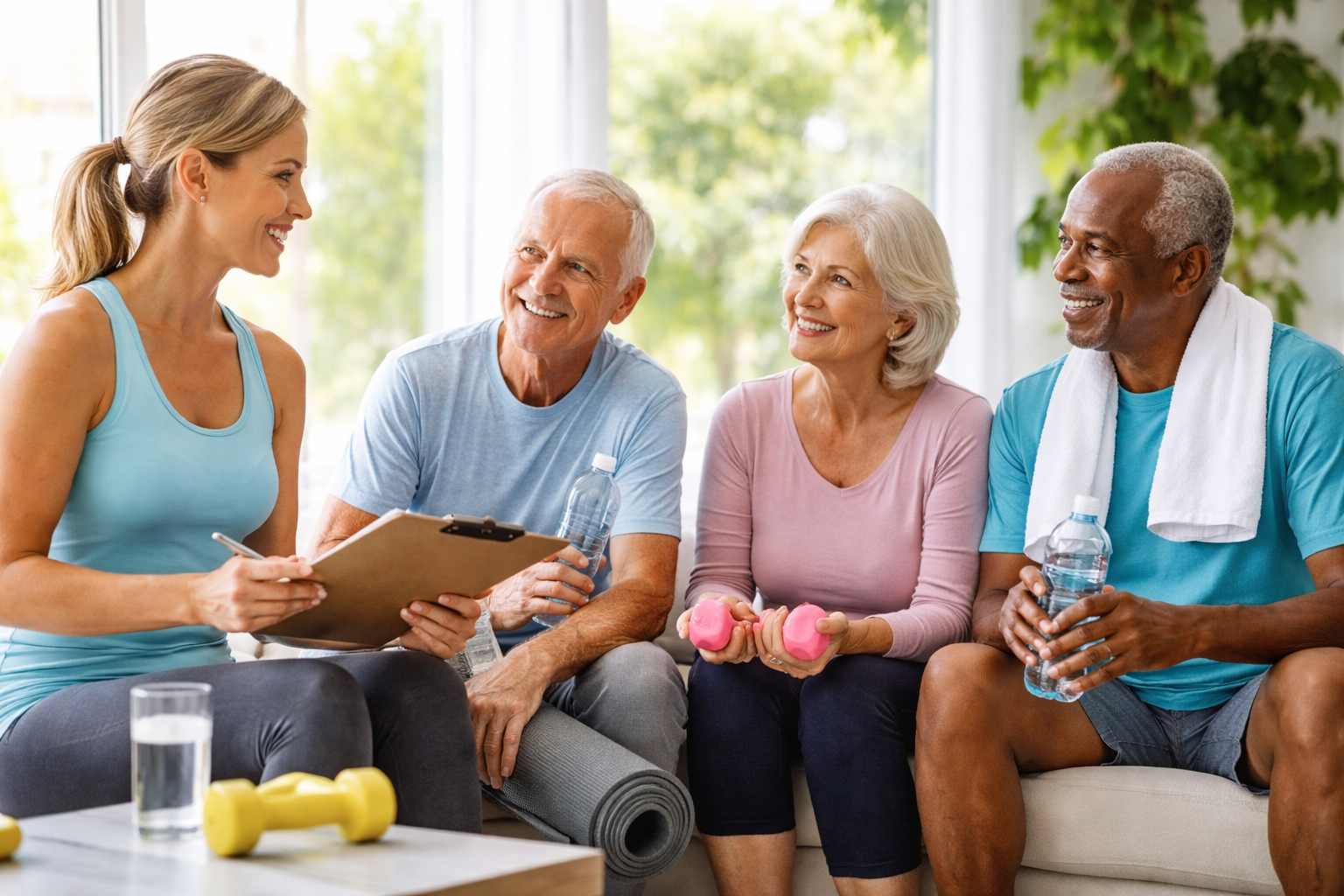
Why a Kinesiologist-Led Approach Makes a Difference
Kinesiologists apply movement science to improve strength, balance, and mobility safely. Unlike generic exercise programs, kinesiology-led plans are tailored to individual needs, health conditions, and home environments.
This results in:
Reduced injury risk
More efficient progress
Better transfer of gains to daily activities
Increased confidence and adherence
Fall Prevention: A Core Part of Home Stretch Goals
Falls remain one of the greatest threats to senior independence. Effective fall prevention combines:
Targeted balance and strength exercises
Home safety modifications
Monitoring of health and medication factors
Common Fall Risks in Southern Ontario Homes
Poor lighting
Loose rugs and clutter
Uneven thresholds
Bathroom hazards
Lower-limb weakness or balance changes
Kinesiologist-Led Exercises That Reduce Fall Risk
Sit-to-stand strength training
Heel raises and marching drills
Tandem stance and single-leg balance
Gait and walking pattern training
Short daily practice (10–20 minutes), combined with supervised sessions 2–3 times per week, produces measurable improvements.
Aging in Place Through Home Modifications
Environmental changes work hand-in-hand with exercise. High-impact improvements include:
| Risk Factor | Recommended Intervention | Timing |
|---|---|---|
| Poor lighting | Brighter bulbs, night lights | Immediate |
| Loose rugs | Remove or secure rugs | One-time + checks |
| Bathroom hazards | Grab bars, non-slip mats | Immediate |
| Weak strength | Progressive exercise | Ongoing |
Together, physical training and home modifications provide layered protection for long-term independence.
In-Home Fitness Programs for Active Aging
In-home senior fitness removes barriers like transportation and unfamiliar environments. Programs focus on:
Strength and power for daily tasks
Balance and fall prevention
Mobility and flexibility
Endurance for community participation
Training at home ensures improvements translate directly into real-world function.
Building a Personalized Senior Wellness Plan
A comprehensive wellness plan integrates physical, cognitive, social, and environmental elements:
| Plan Component | Intervention | Outcome |
|---|---|---|
| Physical | Strength & balance training | Improved function |
| Cognitive | Learning & mental tasks | Mental agility |
| Social | Community programs | Reduced isolation |
| Environmental | Home safety upgrades | Fewer hazards |
This holistic approach produces more sustainable results than addressing one area alone.
The Importance of Community and Caregiver Support
Social connection improves motivation, mental health, and adherence to wellness routines. HomeStretch offers Community Workshops and Presentations focused on fall prevention, goal-setting, and safe exercise for seniors and caregivers.
Families play a key role by:
Supporting realistic goal-setting
Encouraging daily routines
Assisting with home safety changes
Celebrating progress
Education and shared understanding reduce caregiver stress and improve outcomes.
Frequently Asked Questions
-
A successful goal is SMART, meaningful, and regularly reviewed. It focuses on daily function and includes measurable milestones.
-
Wearables, apps, and virtual check-ins help track activity, remind routines, and maintain connection with professionals and community resources.
-
Small wins, enjoyable activities, and regular check-ins build momentum. Support from professionals and peers improves consistency.
Related Posts
Strength Training for Seniors: The Strength Training Sweet Spot for a Longer Life
Does Exercise Really Reduce Falls? What the Research Actually Shows
Exercises for Seniors: Routines to Improve Balance, Strength, and Mobility
Author Bio - Melissa Gunstone, BSc, Kinesiologist
Melissa Gunstone is the founder of HomeStretch, a kinesiologist with years of experience supporting seniors across Canada. Her mission: to give older adults safe, effective, and individualized movement programs, from in-home training to community-based senior fitness classes and to build a nationwide movement that elevates the role of kinesiology in healthy aging.