What Happens in a Brain & Balance Workshop? A First-Timer's Guide
July 07, 2026
On this page
⚡ Quick Answer
- A Brain & Balance Workshop combines balance training, strength work, and cognitive challenges in one session.
- Sessions move through a warm-up, balance drills, dual-task brain challenges, and fall prevention education.
- Balance training two to three times a week delivers the best results for mobility and fall prevention.
- No prior falls or fitness experience needed, exercises are modified for every ability level.
If you've ever wondered what actually happens inside a brain and balance workshop for seniors, you're not alone.
Many older adults hear the words balance training and imagine standing on one foot while someone watches with a clipboard. Others assume it's only for people who have already experienced a fall.
The reality is very different.
A Brain & Balance Workshop is designed to help older adults stay steady, sharp, confident, and connected.
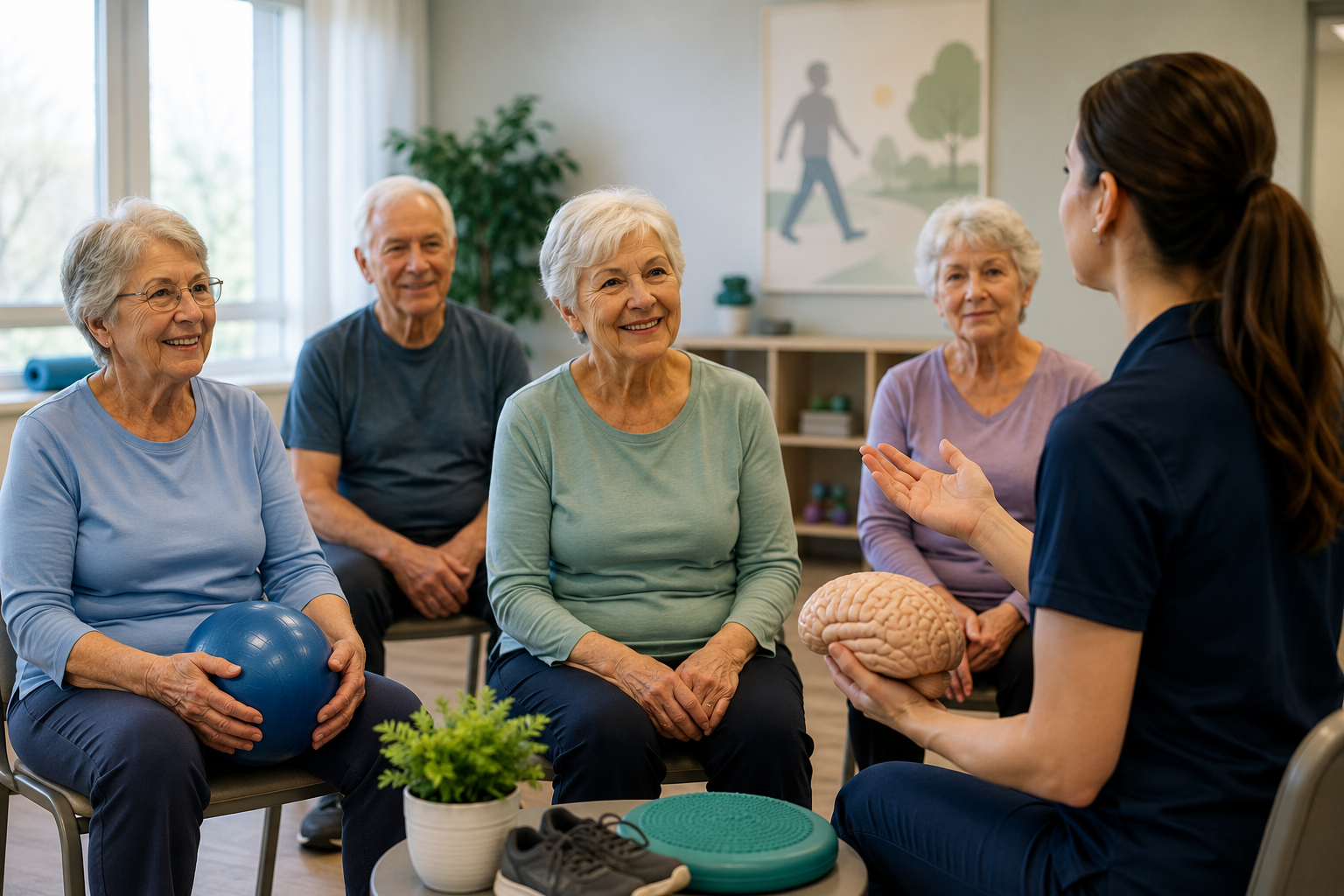
These sessions combine movement, cognitive exercises, education, and social interaction to train the body and brain to work together more effectively in everyday life.
At HomeStretch, these workshops were created to help seniors maintain independence while reducing fall risk in a welcoming and enjoyable environment.
Participants often leave surprised by how engaging, social, and practical the experience feels. Rather than focusing on limitations, the workshop focuses on what older adults can do to continue living actively and confidently.
In just one hour, participants can improve mobility, challenge their minds, and build meaningful social connections with others in their community.
What Is a Brain and Balance Workshop?
A brain and balance workshop for seniors is a group-based program that combines:
Balance exercises
Strength training
Coordination drills
Cognitive challenges
Reaction time exercises
Education about fall prevention
Social engagement opportunities
Unlike traditional exercise classes that focus only on physical fitness, these workshops train participants to move while thinking.
Why does that matter? Because real life rarely allows us to focus on one task at a time.
Think about everyday situations:
Walking while having a conversation
Carrying groceries while looking for your keys
Navigating a busy grocery store
Talking while stepping over a curb
Turning quickly when someone calls your name
These are known as dual-task activities, and they are often where falls occur in older adults. Research shows that training the brain and body together can improve balance, walking speed, and cognitive performance while reducing fall risk.
What Happens During the Workshop?
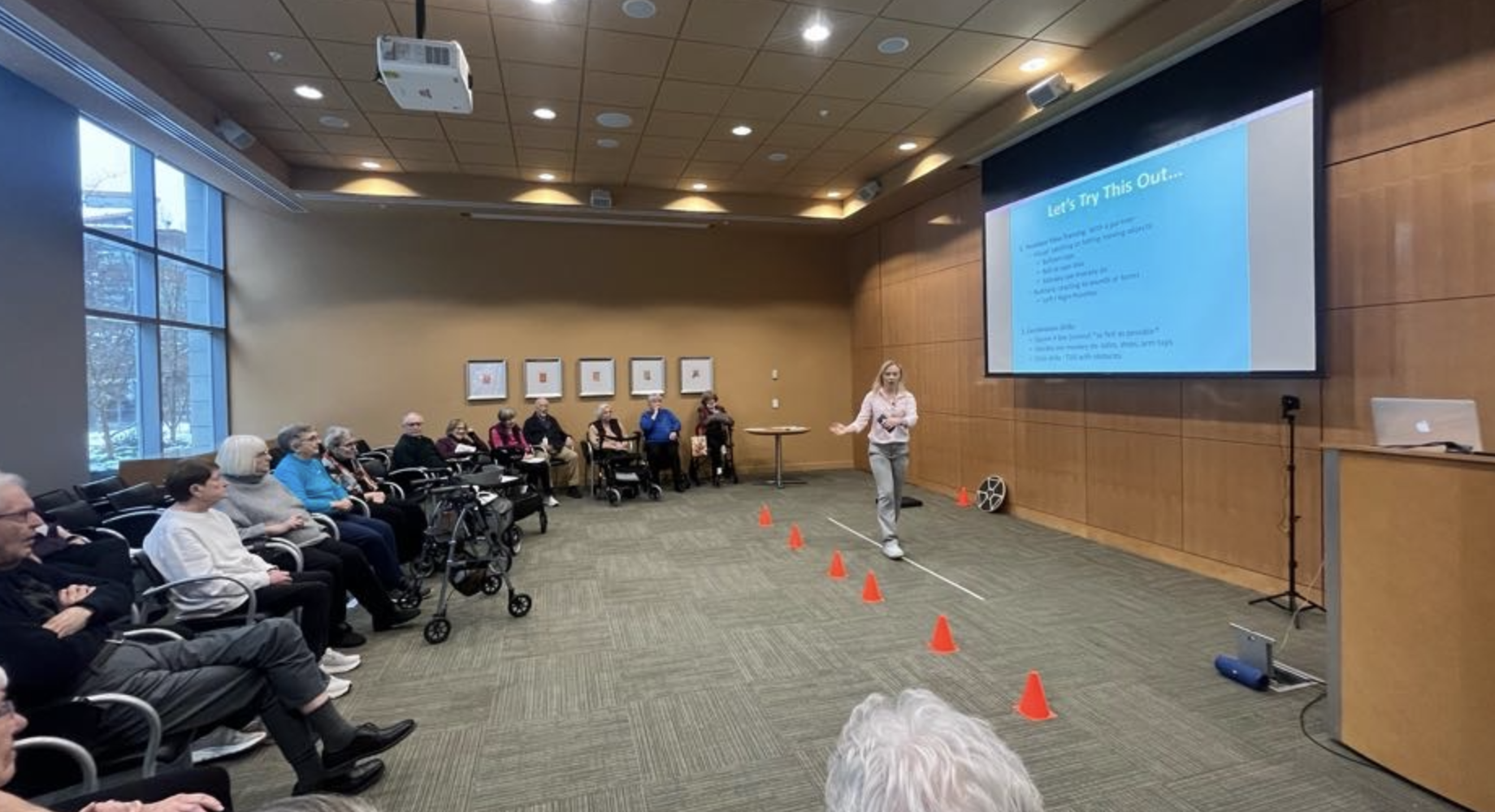
Every Brain & Balance Workshop is slightly different, but most sessions follow a familiar structure.
1. Welcome and Social Connection
The workshop begins with introductions and casual conversation.
This might seem simple, but social connection plays a major role in healthy aging.
Participants often:
Meet neighbours and friends
Share experiences
Encourage one another
Build confidence in group settings
Many attendees say this becomes one of their favourite parts of the program.
2. Gentle Warm-Up Movements
Next comes a series of safe, guided movements designed to prepare the body.
Exercises may include:
Shoulder rolls
Marching in place
Ankle mobility drills
Weight shifting
Posture exercises
Gentle stretching
The goal is to increase circulation and prepare muscles and joints for more challenging activities.
3. Balance Training for Older Adults
This is where participants begin practicing real-world movement skills.
Examples include:
Standing with feet in different positions
Stepping patterns
Side stepping
Turning exercises
Single-leg balance progressions
Dynamic walking activities
These exercises help improve:
Stability
Confidence walking outdoors
Ability to recover from trips or slips
Reaction time
Evidence-based balance training for older adults has consistently been shown to reduce fall risk and improve independence.
4. Brain Challenges During Movement
This is often the most enjoyable part of the workshop.
Participants might be asked to:
Count backward while walking
Name animals while stepping sideways
Recall grocery items during balance exercises
Follow movement patterns and memory sequences
React to verbal cues while changing direction
These activities train the brain and body to communicate more efficiently.
Researchers call this dual-task training, and studies continue to show meaningful improvements in balance and executive function among older adults who participate regularly.
5. Education and Fall Prevention Tips
Workshops also include practical education participants can use immediately at home.
Topics may include:
Hidden household fall hazards
Safe footwear choices
Improving reaction time
Managing fear of falling
Improving confidence outdoors
Building strength safely
HomeStretch programs place significant emphasis on helping older adults remain independent and safe in their own homes through proactive fall prevention strategies.
6. Questions and Discussion
Participants are encouraged to ask questions and share experiences.
Common discussions include:
Difficulty with stairs
Fear of falling outdoors
Challenges after surgery
Returning to favourite activities
Improving walking confidence
This creates a supportive environment where participants learn from both professionals and peers.
-
A Brain & Balance Workshop is a program that combines physical exercises with cognitive challenges to improve stability, confidence, reaction time, and fall prevention skills.
-
Most experts recommend balance training two to three times per week for best results and long-term improvements in mobility and fall prevention.
-
Yes. Workshops are designed for a wide range of abilities and exercises can be modified to suit individual needs.
-
Research suggests that dual-task training can improve attention, processing speed, executive function, and cognitive performance in older adults.
-
No. Prevention is always easier than recovery. Many participants attend specifically to stay active and reduce future risk.
Who Should Attend a Brain & Balance Workshop?
These workshops are ideal for older adults who:
Feel less steady than they used to
Want to prevent falls before they happen
Have experienced a previous fall
Notice changes in confidence while walking
Are recovering after illness or surgery
Want to stay physically and mentally active
Enjoy social group activities
Importantly, you do not need to be frail or experiencing major mobility issues to benefit.
The best time to begin balance training is before falls become a problem.
Are the Workshops Safe?
Absolutely.
HomeStretch workshops are designed and led by trained kinesiologists who understand how aging affects balance, mobility, and cognitive function.
Activities are modified based on participant abilities and may include:
Seated options
Standing support
Progressive difficulty levels
Individual adjustments
Safety and confidence always come first.
The HomeStretch team was founded specifically to bridge the gap between rehabilitation and long-term independence for older adults, helping seniors continue progressing rather than simply returning to baseline function.
What Should You Bring to Your First Workshop?
Most participants only need:
Comfortable clothing
Supportive shoes
Water bottle
Positive attitude
No special equipment or fitness experience is required.
Many first-time participants worry they won't be able to keep up.
Almost all leave saying:
"That was easier and more enjoyable than I expected."
Brain Training vs Traditional Exercise
| Traditional Exercise | Brain & Balance Workshop |
|---|---|
| Focuses mainly on muscles | Trains both brain and body |
| Improves strength | Improves strength and cognitive function |
| Limited real-life application | Mimics everyday activities |
| Usually individual exercise | Encourages social engagement |
| Physical focus only | Physical and mental challenge |
Why Brain and Balance Training Matters More Than Ever
Falls remain one of the leading causes of injury among older adults.
However, balance is only one piece of the puzzle.
Many falls happen because the brain is distracted while the body is moving.
For example:
Walking while talking
Carrying groceries
Looking for directions
Navigating busy environments
Modern balance programs train older adults to manage these situations more safely and confidently. Research increasingly supports cognitive-motor training as an effective way to improve both physical and mental performance in aging adults.
Where Can You Attend a HomeStretch Brain & Balance Workshop?
HomeStretch offers workshops in retirement communities, community centres, and senior living environments across multiple regions.
You can explore available HomeStretch Locations and areas we serve.
Community organizations interested in hosting a workshop can also learn more about HomeStretch Brain & Balance Community Program
Take the First Step Toward Better Balance
Staying independent isn't just about strength.
It's about being able to think clearly while moving confidently through daily life.
A Brain & Balance Workshop gives older adults the opportunity to train both at the same time while enjoying connection, learning, and movement in a supportive environment.
Whether you're hoping to prevent falls, improve confidence, or simply stay active, your first workshop may be the beginning of feeling stronger, steadier, and more capable than you thought possible.
Frequently Asked Questions
Related Posts
Afraid of Falling? How Seniors Can Improve Balance, Strength & Confidence at Home
Simple At-Home Balance Exercises for Seniors to Improve Stability and Reduce Fall Risk
Author Bio - Melissa Gunstone, BSc, Kinesiologist
Melissa Gunstone is the founder of HomeStretch, a kinesiologist with years of experience supporting seniors across Canada. Her mission: to give older adults safe, effective, and individualized movement programs, from in-home training to community-based senior fitness classes and to build a nationwide movement that elevates the role of kinesiology in healthy aging.