Why Balance Training is the Secret to Staying Independent
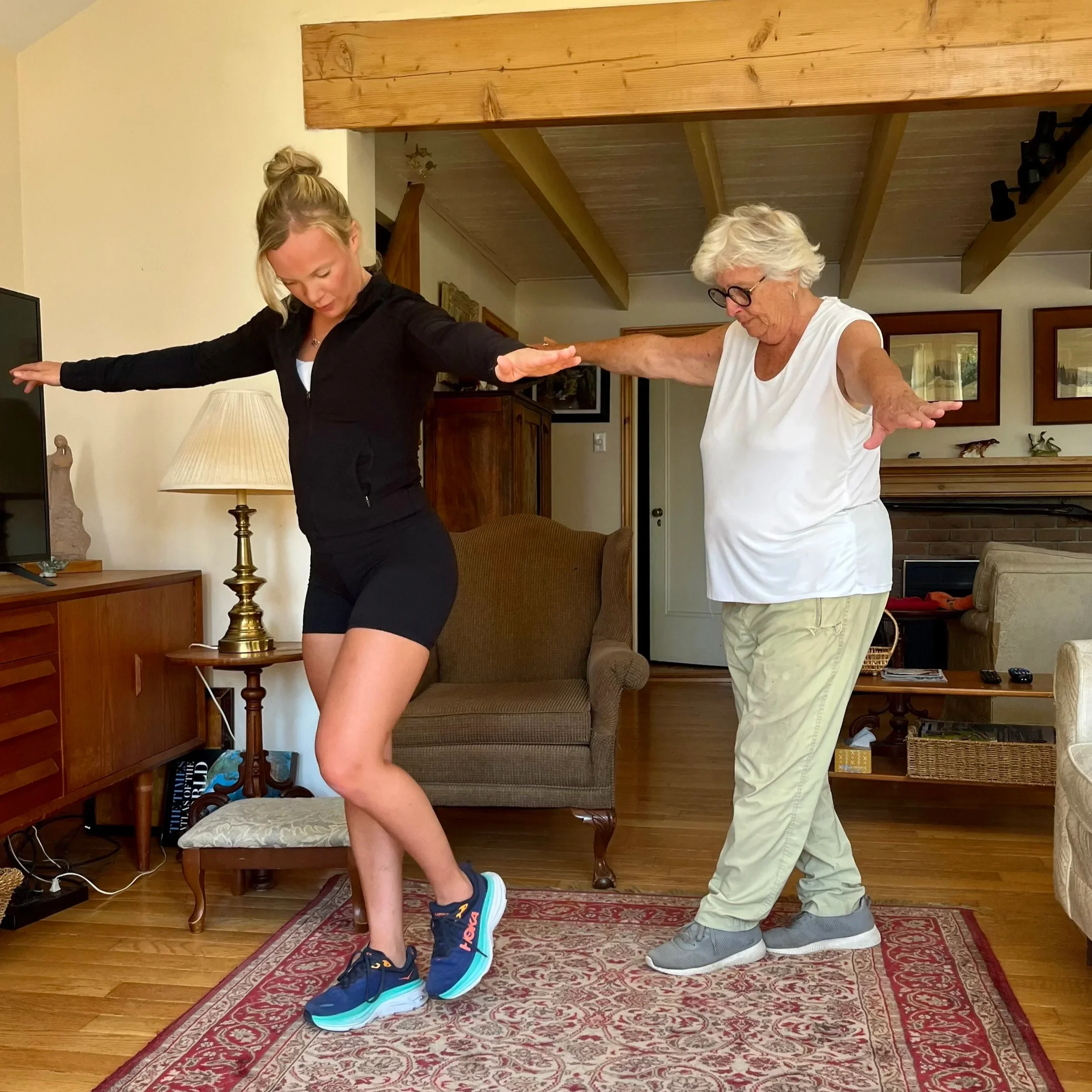
My Grandma’s Story
The other day, I called my 91-year-old grandma. She loves hearing about my work in retirement homes and with my fall prevention tools. After all, she used to be a physiotherapist in a geriatric ward of a Quebec hospital, so she understands just how important mobility and confidence are as we age.
I asked her, “Grandma, are you scared of falling?”
Her answer surprised me:
“No, not really. Your grandpa and I spent years hiking the backwoods, walking on uneven ground, stumbling over roots and moss—usually catching ourselves. I think it trained us to be more confident on our feet.”
Yeah, I know. My grandparents are awesome. I definitely got my hiking genes from them.
But here’s the thing: those years of practicing on uneven terrain gave them balance confidence. Every time they stumbled, shifted their weight, and corrected themselves, they were training both their body and brain to react.
That’s what inspired me to become The Fall Prevention Coach. I’ve seen too many older adults lose their independence not because of aging itself, but because their balance and resiliency weren’t trained. It’s what motivated me to build my business in Vancouver, and later move east to serve more seniors in Ontario — in Toronto, St. Catharines, and Dundas — where the need for this type of training is growing every day.
Why Balance Training Matters More Than You Think
When most people hear “balance training,” they think of not falling over. Standing steady on one leg, walking in a straight line, or practicing yoga poses. And yes, those things matter. But balance training does so much more than just keeping you upright.
Balance training is brain training.
Every time you practice standing on one leg, shifting your weight, or using a balance ball, your brain has to work overtime. It takes in information from your feet, your muscles, your eyes, and even your inner ear. It processes it all instantly to keep you steady.
This constant feedback loop strengthens not just your muscles but also your focus, concentration, and reaction time. You’re teaching your body and brain to respond faster, more confidently, and more effectively in real-life situations.
The Connection Between Balance and Independence
Here’s what I’ve seen in my work:
Seniors who practice balance consistently are more confident walking outside, climbing stairs, or navigating crowded spaces.
They recover faster when they stumble. Instead of panicking, they adjust and move on.
They often notice improvements in concentration, decision-making, and even mood.
That’s because balance is both physical and cognitive. Your body becomes steadier, and your brain stays sharper.
And when you combine that with fall resiliency — the ability to get back up if a fall happens — you create true independence.
A Simple Test You Can Try at Home
Want to know where your balance stands right now? Here’s a quick test I give my clients:
Sit down on the floor.
Try to stand up — without grabbing furniture for support.
If you can’t, that’s a wake-up call. If you can, practice it often, because this skill fades quickly if you don’t maintain it.
This single test reveals more about independence than any grab bar or safety device. It shows whether your body and brain can work together when it matters most.
Balance Training in Practice
In our in-home personal training for seniors in Toronto, St. Catharines, Hamilton and Dundas, we focus on practical balance exercises that seniors can use in daily life:
Standing balance drills (to mimic real-world uneven terrain)
Core and leg strengthening (to make floor recovery easier)
Grip and reaction exercises (to stabilize quickly if you stumble)
Guided practice in getting down to and up from the floor safely
This isn’t about “working out.” It’s about training confidence. It’s about recreating the same resilience my grandparents built on those Quebec trails — right in your own living room.
Why I’m Committed to This Work
My grandma’s story reminds me every day why balance training matters. It’s not just about reducing the risk of falls. It’s about building the confidence to keep living life fully.
That’s why I’ve built HomeStretch Active Living — to give seniors across Ontario the same chance at independence my grandparents enjoyed.
Because the truth is: aging doesn’t have to mean fragility. With the right training, it can mean strength, clarity, and confidence.
Final Thoughts
If you want to stay independent, sharp, and steady, don’t just think about “fall prevention.” Think about balance training and fall resiliency.
The earlier you start, the stronger you’ll stay.
If you live in Toronto, St. Catharines, Dundas, Hamilton or Niagara-on-the-Lake, and you or your loved one want to stay steady, safe, and confident, I’d love to help.
Our team of kinesiologists provides in-home personal training for seniors that goes beyond exercise — we teach life-saving skills that keep you independent in the home you love.
Book a free consultation today to learn how balance training can change the way you age.
Related Posts – More Links
Q: How often should seniors do balance training?
A: Seniors should perform balance exercises at least 2–3 times per week. Consistency is key to improving strength, coordination, and brain-body connection.
Author Bio - Melissa Gunstone, BSc, Kinesiologist
Founder of HomeStretch Active Living. Known as The Fall Prevention Coach, Melissa has spent over a decade helping seniors across Ontario improve strength, balance, and brain health to protect independence.
Why balance training is the secret to staying independent - Niagara, St. Catharines, Hamilton, Dundas, Burlington, Toronto - Fall Prevention | Strength & Mobility | Caregiver Resources