Simple At-Home Balance Exercises for Seniors to Improve Stability and Reduce Fall Risk
December 12, 2025
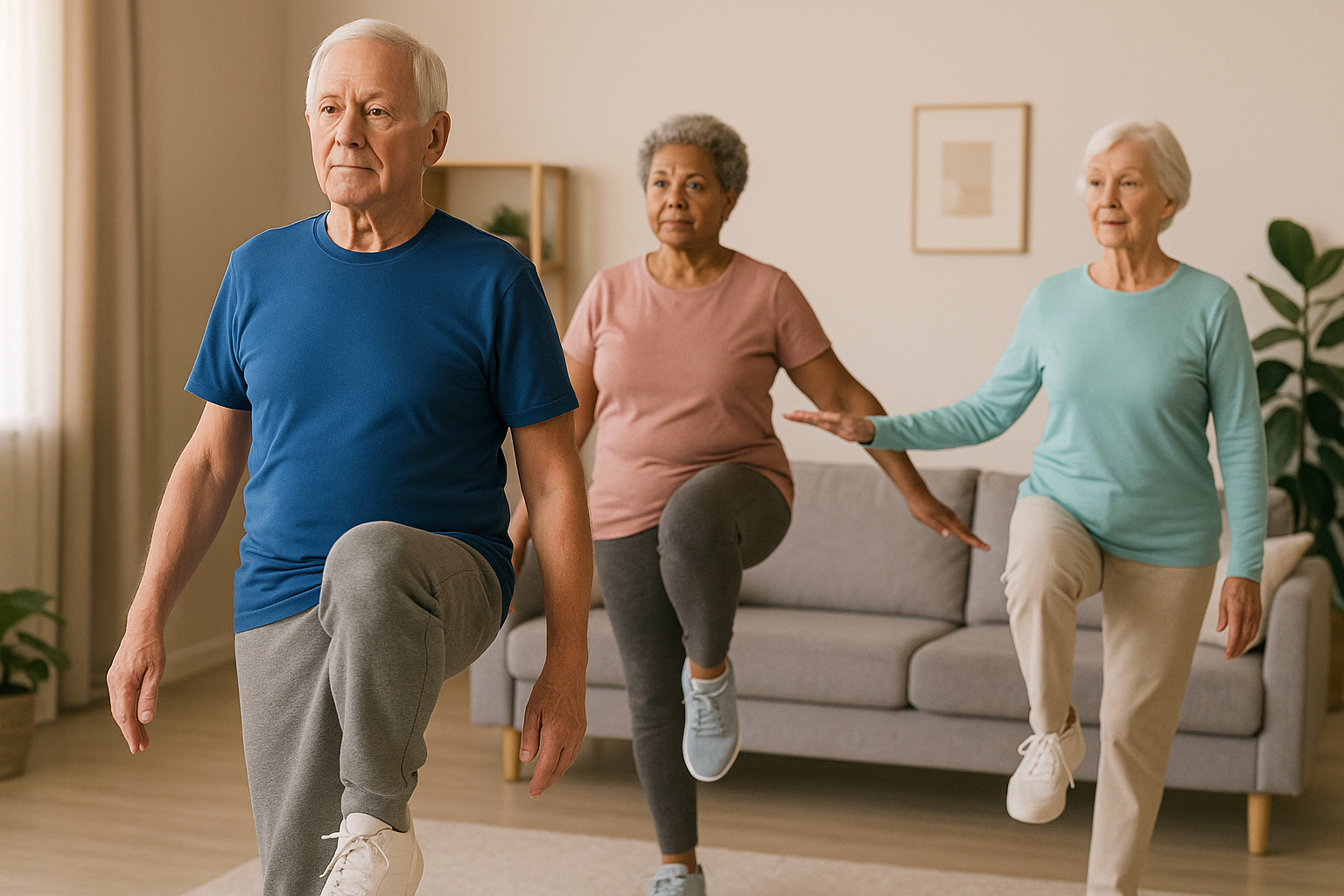
Research shows that one in three adults over the age of 65 will experience a fall each year.
Yet, what most people don’t know is that more than half of those falls can be prevented with simple, targeted balance training.
My name is Melissa, and I’m a Registered Kinesiologist who has trained and led hundreds of seniors through balance, strength, and fall-prevention programs across Ontario and British Columbia.
Over the years, I’ve seen the same truth repeat itself, balance is trainable at any age. Whether someone is 60, 70, or well into their 80s and 90s, the right exercises performed consistently can improve steadiness, confidence, and independence at home.
Many seniors in Hamilton, St. Catharines, and the surrounding areas have told me they feel unsure about starting exercise alone or worry they might make things worse.
That’s why this guide is designed to be simple, safe, and effective movements you can practice right in your living room, using your countertop, a sturdy chair, or the back of a sofa for support.
Below are some of the same at-home balance exercises I’ve taught to clients recovering from falls, joint replacements, chronic pain, and age-related changes to strength and stability. Each one includes clear instructions and a visual.
At-Home Balance Exercises for Seniors
These exercises are designed to be accessible, joint-friendly, and safe for beginners. Always have something stable nearby to hold for support, and work within your comfort level.
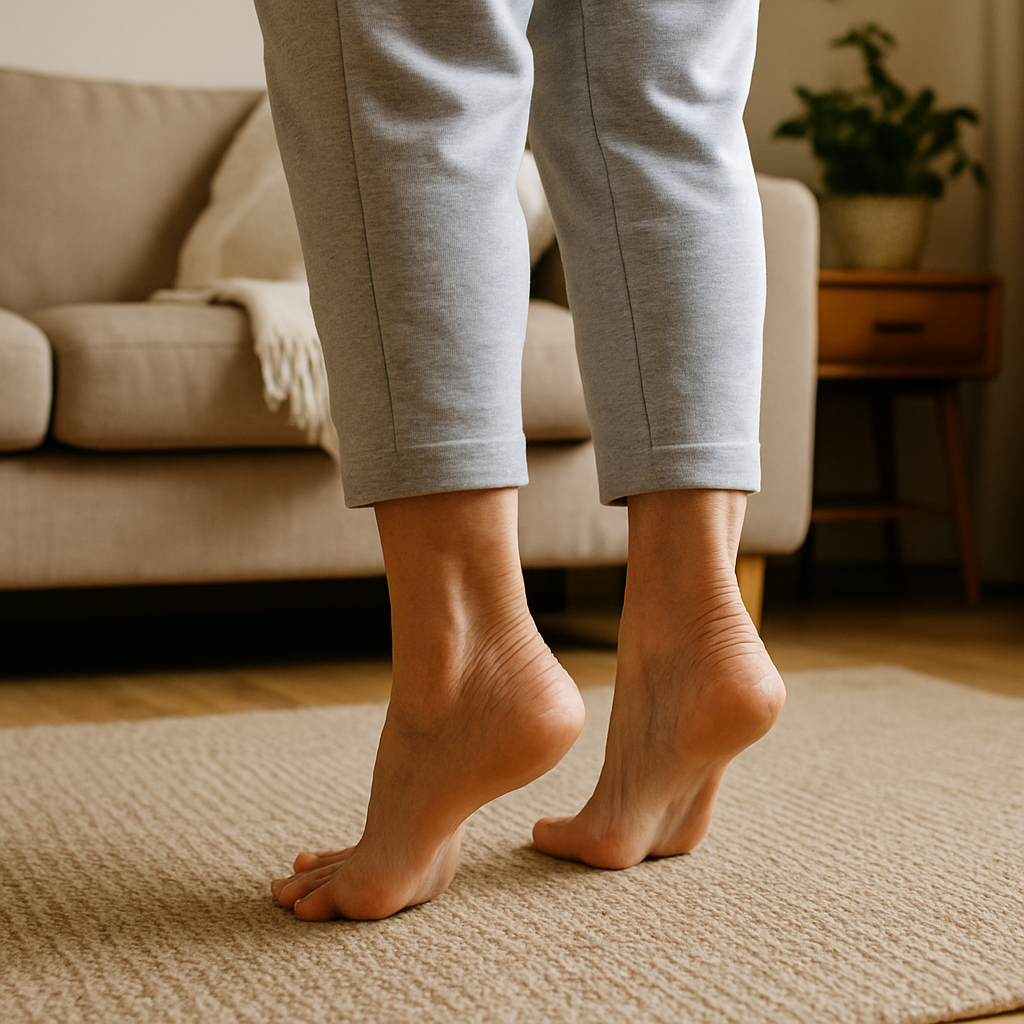
1. Heel-to-Toe Standing
This exercise strengthens the muscles that keep you steady when walking and improves your ability to recover from small wobbles.
How to do it:
Stand tall beside a countertop.
Place one foot directly in front of the other, heel touching toe.
Hold for 10–20 seconds.
Switch feet and repeat.
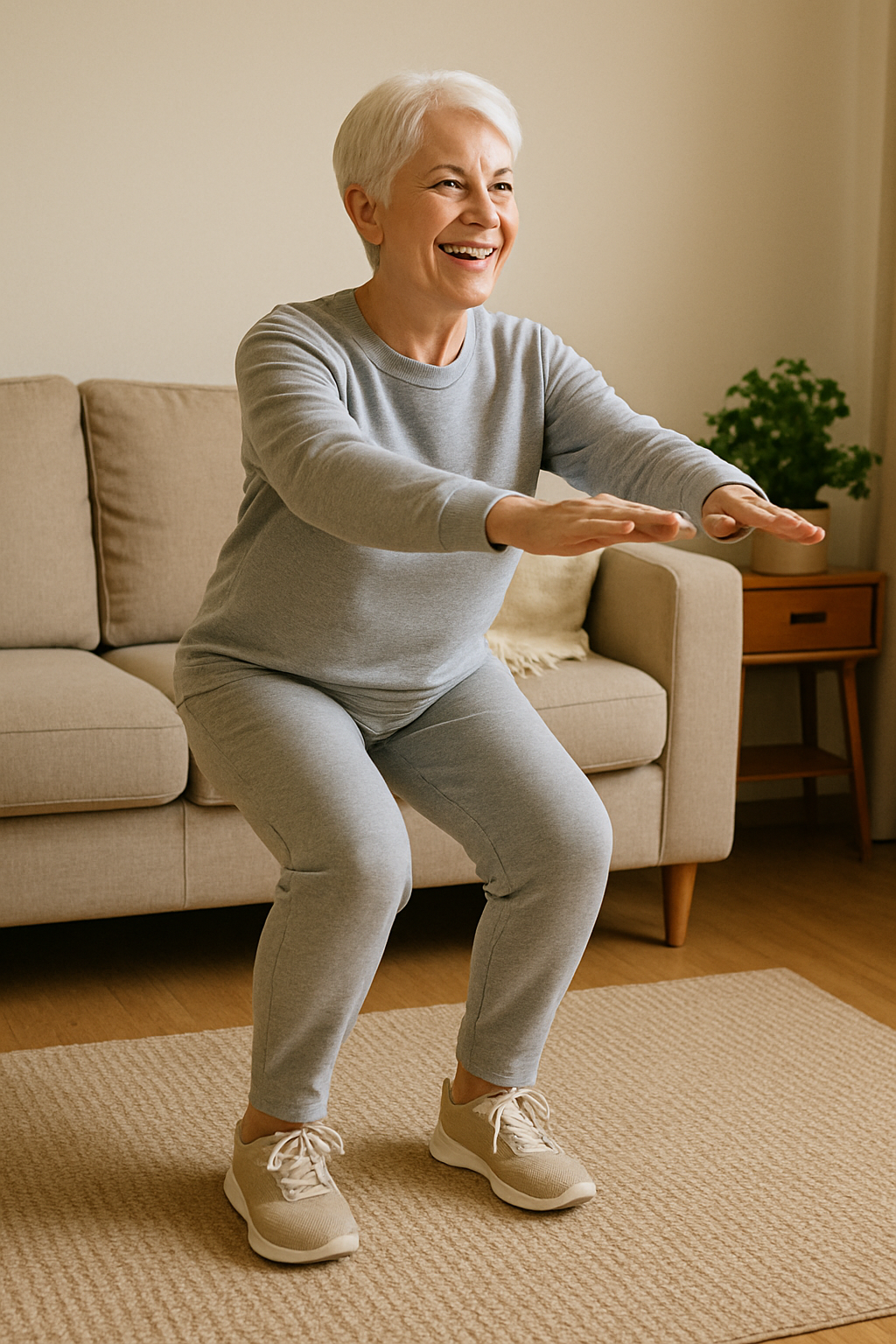
2. Sit-to-Stand
Lower-body strength is the foundation of balance. This exercise strengthens your thighs, hips, and core essential muscles for preventing falls.
How to do it:
Sit in a sturdy chair with your feet flat on the floor.
Lean forward slightly and stand up.
Slowly sit back down with control.
Repeat 8–12 times.
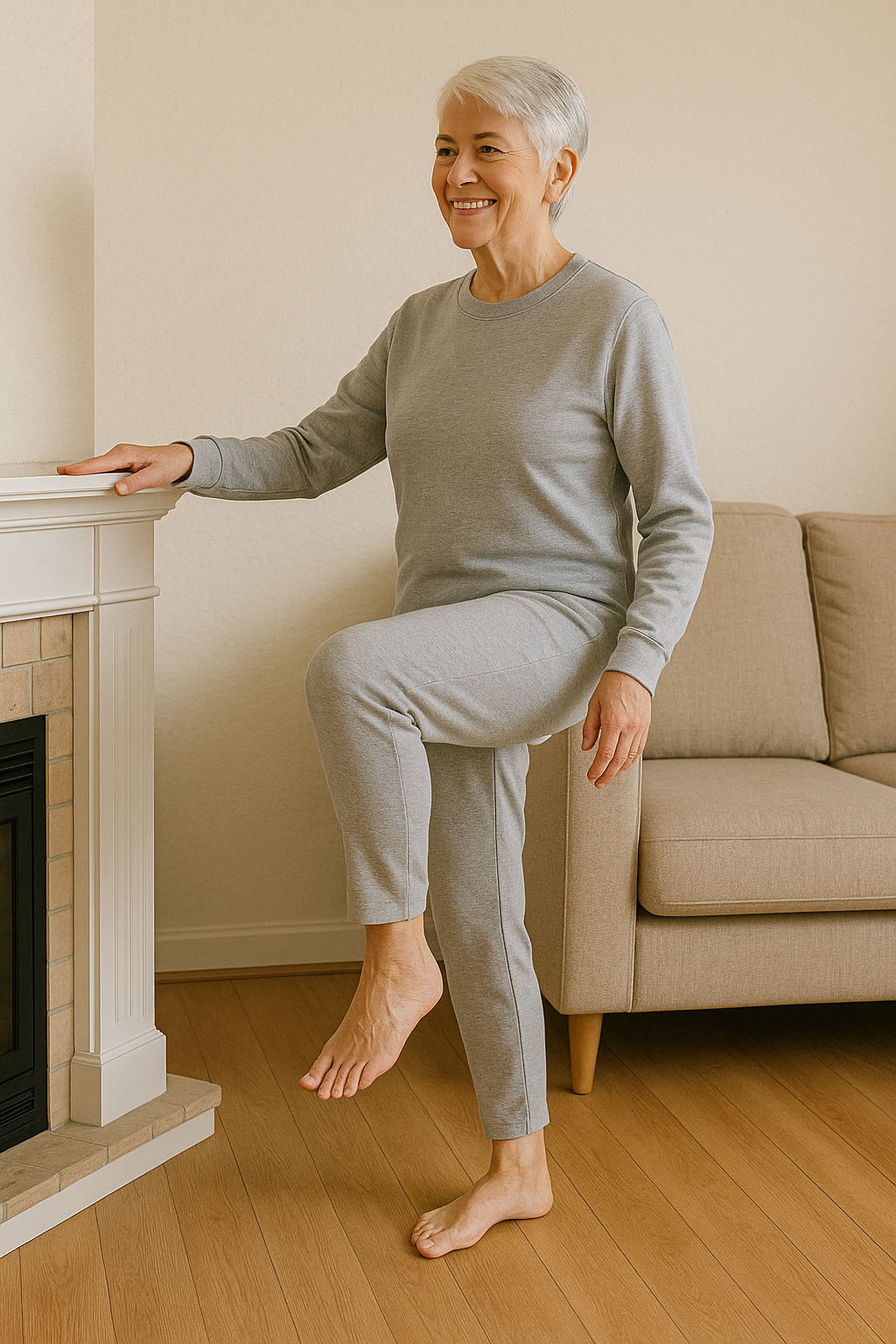
3. Marching in Place
Marching improves hip strength, walking speed, and balance especially helpful for avoiding shuffling steps.
How to do it:
Stand near a counter or sturdy surface.
Lift one knee up as if marching.
Lower it down and lift the other knee.
Continue for 20–30 seconds.
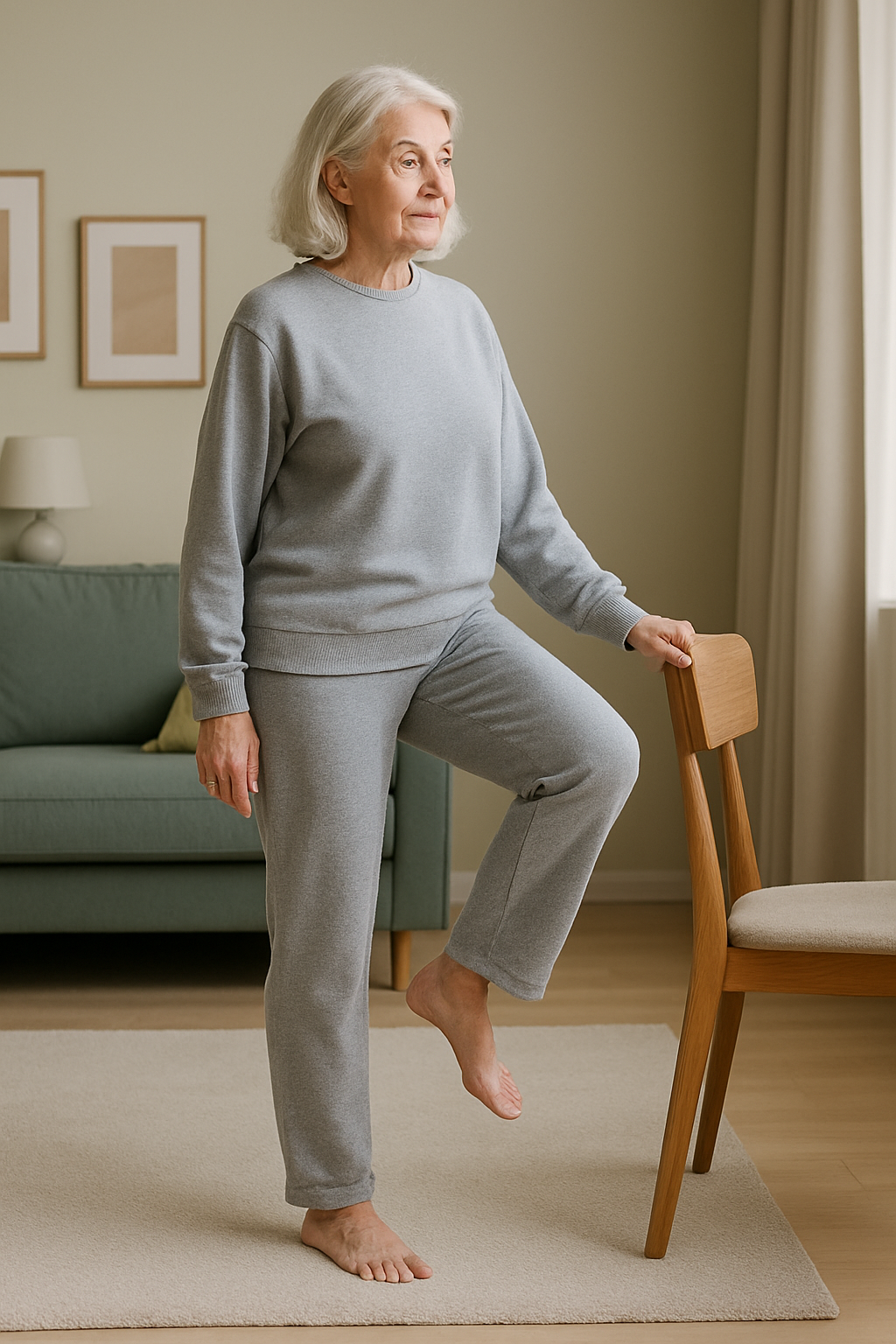
4. Single-Leg Balance (Supported)
This exercise trains your stabilizer muscles and ankle reactions both important for preventing trips and slips.
How to do it:
Hold the back of a chair lightly with one hand.
Lift one foot a few inches off the ground.
Hold for 10–15 seconds.
Switch legs and repeat.
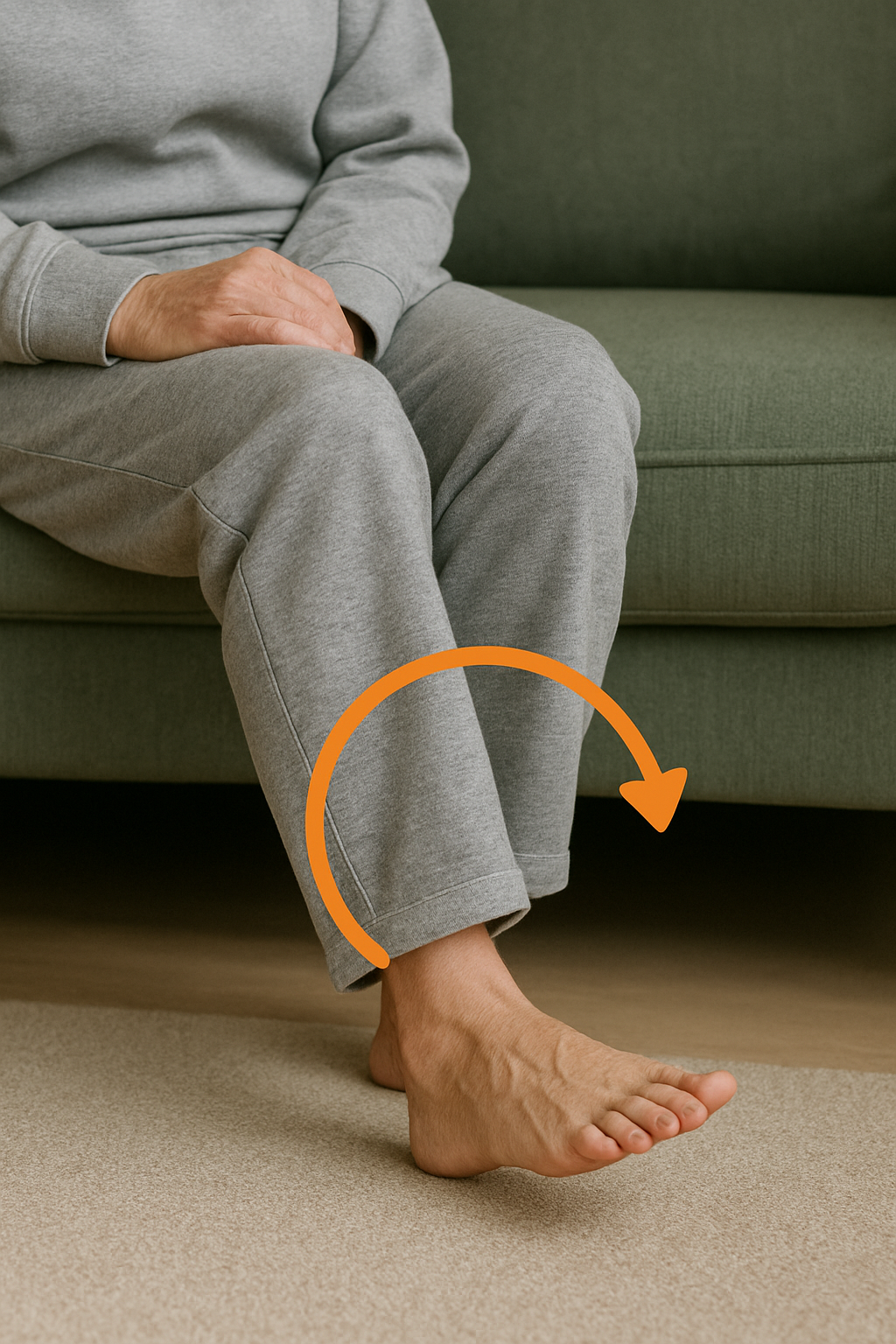
5. Ankle Circles
Stronger ankles mean better balance. This simple movement helps prevent falls caused by missteps or uneven sidewalks.
How to do it:
Sit comfortably in a chair.
Lift one foot slightly.
Slowly rotate your ankle in a circle.
Switch directions, then repeat with the other foot.
Senior Fitness Programs Coming to Hamilton and St. Catharines
Many seniors ask for safe, guided balance classes in their community especially those who prefer smaller groups or age-appropriate programs led by a Kinesiologist rather than general fitness instructors.
We are currently planning to bring our Brain & Balance workshops to both Hamilton and St. Catharines in the new year. These programs are designed specifically for adults 60+, focusing on strength, coordination, posture, reaction time, mobility, and confidence.
In the meantime, we continue to support seniors in these regions through private in-home balance training and fall-prevention coaching.
If you’re part of a senior centre, retirement home, community space, or wellness facility in Hamilton or St. Catharines, you can request to host a Brain & Balance series. All we need is an introduction and our team handles the rest.
Frequently Asked Questions
-
Strengthen your lower body with exercises like sit-to-stands and marching.
Practice simple balance drills consistently, even for just 5–10 minutes daily.
Train reaction time and ankle mobility to prevent falls from small missteps.
-
Kinesiologists specialize in aging, chronic conditions, and safe exercise progression.
We adjust programs for arthritis, joint replacements, dizziness, balance concerns, and pain.
We provide clinical-level movement screening to prevent injury rather than react to it.
-
Incorporate strength exercises at least 2–3 times per week.
Increase protein intake and stay hydrated to support muscle repair.
Prioritize walking, light resistance, and functional movement (sitting, standing, lifting).
Related Posts
Why In-Home Personal Training Is the Safest and Most Effective Fitness Option for Seniors
How Personalized Home Physical Therapy Supports Independence and Faster Recovery
How to Create a Post-Operative Fitness Plan for Seniors: Safe Exercises and Recovery Strategies
Author Bio - Melissa Gunstone, BSc, Kinesiologist
Founder of HomeStretch Ontario Helping Ontario seniors stay strong, safe, and independent — one step at a time.
The 3 Biggest Barriers to Aging in Place - Niagara - St. Catharines, Hamilton, Dundas, Burlington, Toronto - Fall Prevention | Strength & Mobility | Caregiver Resources