How In-Home Personal Training Empowers Seniors to Stay Independent and Active at Home
January 26, 2026
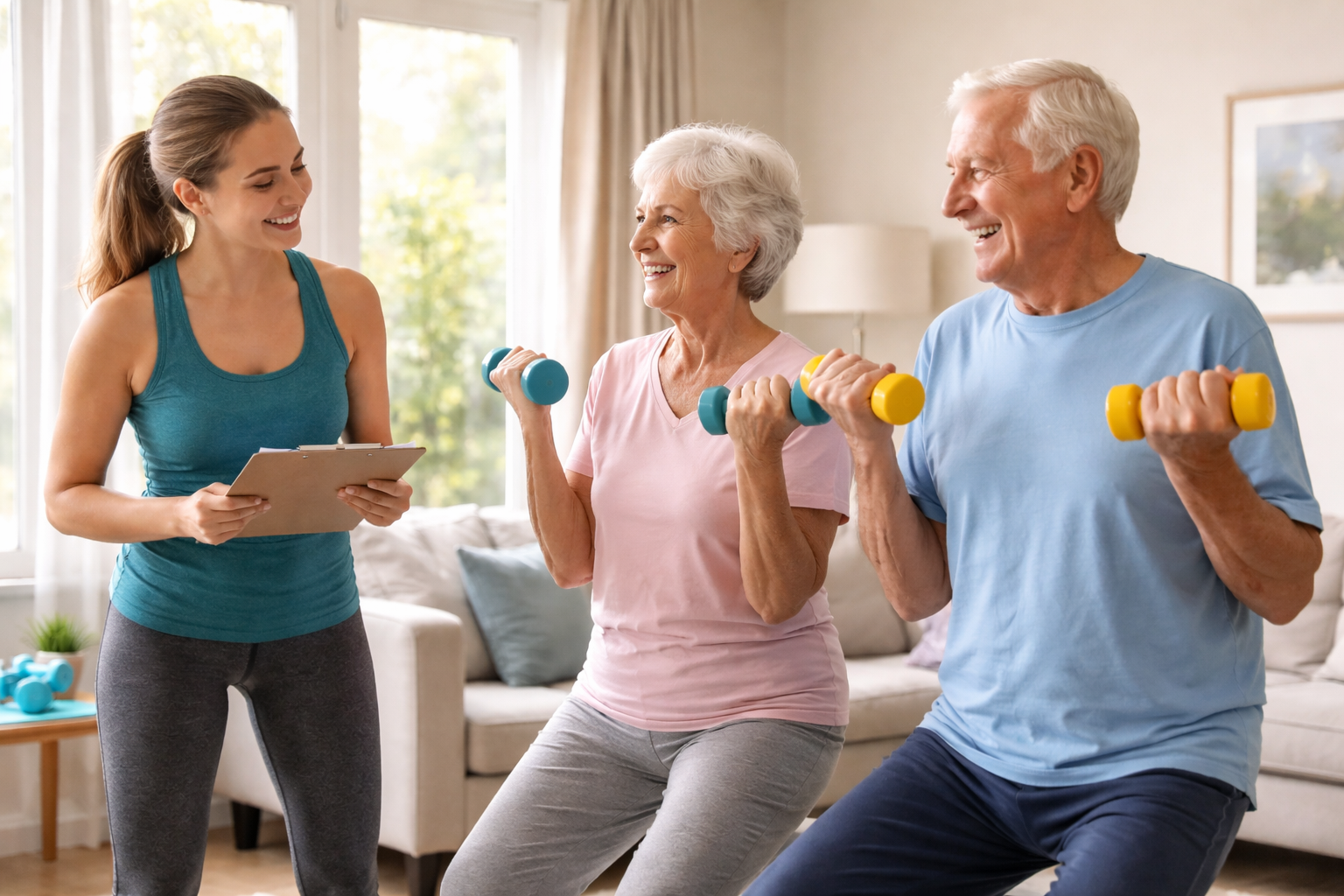
For many older adults, independence isn’t about doing more, it’s about continuing to do the everyday things that matter, safely and confidently.
Standing up from a chair, navigating stairs, walking to the mailbox, or getting out into the community all depend on strength, balance, and mobility.
In-home personal training for seniors is designed around this reality.
Rather than asking older adults to adapt to gyms or group classes, this approach brings a kinesiologist directly into the home, the very environment where daily challenges occur.
This guide explains how in-home personal training supports aging in place, reduces fall risk, improves post-surgery recovery, and restores confidence.
You’ll learn how training programs for seniors are assessed and built, which exercises work best at home, how progress is measured, and how families and caregivers can support success.
What Is In-Home Personal Training for Seniors?
In-home personal training is a kinesiologist-led service that delivers individualized assessment, exercise programming, and safety planning inside a senior’s home.
Instead of generic workouts, the focus is on:
Real-world movements (standing, walking, stair use)
Home-specific challenges (tight hallways, stairs, flooring)
Functional strength, balance, and mobility tied to daily tasks
Because exercises are designed around the home environment, improvements translate directly into safer movement and greater independence.
Who Are Kinesiologists and Why Does Their Role Matter?
Kinesiologists are university-trained movement professionals who specialize in:
Biomechanics and functional movement
Exercise prescription for aging and rehabilitation
Fall prevention and mobility restoration
During in-home visits, kinesiologists:
Observe how daily tasks are performed
Identify movement limitations and fall risks
Design progressive, evidence-based exercise plans
Adjust programs based on health history and progress
This clinical yet practical approach ensures training is safe, personalized, and results-driven, not one-size-fits-all.
Key Benefits of In-Home Personal Training for Senior Independence
In-home personal training consistently delivers improvements across the areas that matter most for aging well.
| Outcome Area | Measured By | Typical Impact |
|---|---|---|
| Balance | Standardized balance tests | Improved stability within 6–12 weeks |
| Strength | Chair-stand tests | Increased lower-body strength in 4–8 weeks |
| Mobility | Timed Up and Go (TUG) | Faster, safer walking in 8–12 weeks |
| Confidence | Self-reported scales | Greater willingness to move independently |
Research consistently shows that supervised, progressive, home-based exercise reduces fall risk and improves functional independence in older adults.
How Fall Prevention and Balance Training Reduce Risk
Falls often occur due to a combination of:
Muscle weakness
Delayed balance reactions
Environmental challenges
In-home balance training addresses all three by:
Strengthening postural muscles
Practising real-world balance challenges
Teaching safer movement strategies in familiar spaces
Exercises progress from supported to unsupported positions and are always introduced with safety in mind.

Strength and Mobility: Why They Matter for Daily Life
Strength and mobility are essential for:
Standing from chairs or toilets
Climbing stairs
Carrying groceries
Walking safely outdoors
Programs typically start with bodyweight exercises or household items and progress gradually. Families often notice easier transfers and reduced reliance on assistance within weeks.
How HomeStretch Active Living Inc. Is Different
HomeStretch uses a kinesiologist-led, one-to-one in-home model focused on:
Continuity of care (same clinician whenever possible)
Evidence-based assessments
Clear, measurable progress tracking
Unlike group classes or generic personal training, HomeStretch integrates rehabilitation principles, fall prevention, and home-safety education into every program, all documented through a structured Movement Score Report.
What Is the Movement Score Report?
The Movement Score Report tracks progress using:
Balance, strength, and mobility tests
Session notes and goal updates
Clear comparisons over time
Families can see tangible improvements (faster mobility times, more repetitions, better stability), while kinesiologists use the data to safely progress programs.
Who Benefits Most from In-Home Personal Training?
In-home training is ideal for seniors who:
Want to age safely at home
Are recovering from surgery or hospitalization
Have balance concerns or fear of falling
Manage chronic conditions
Need individualized, flexible support
Caregivers also benefit from guidance on how to support independence without over-assisting.
What to Expect During a Free Kinesiologist Consultation
A free consultation typically includes:
Review of medical history and goals
Brief movement and balance screen
Home environment scan for safety
Clear explanation of recommended next steps
There is no obligation just practical guidance so families can make informed decisions.
Sample Fall Prevention Exercises at Home
Always practise near a stable surface.
Single-leg stance beside a chair (10–30 seconds)
Tandem (heel-to-toe) walking down a hallway
Controlled weight shifts and stepping drills
Exercises are adapted and progressed based on ability and safety.
Where In-Home Kinesiologist Services Are Available
HomeStretch provides in-home services across:
Niagara Region
Hamilton & surrounding areas
Greater Toronto Area
Vancouver Area
Local teams understand regional environments, seasonal challenges, and community resources, improving relevance and responsiveness.
How to Choose the Right In-Home Trainer for Seniors
When choosing a provider, look for:
Kinesiology credentials and senior experience
Evidence-based assessments
Continuity of care
Transparent progress tracking
These factors ensure safe, effective, and meaningful outcomes.
Independence Is Built Where Life Happens
In-home personal training empowers seniors to stay independent by improving strength, balance, and confidence inside their own homes. With kinesiologist-led guidance, measurable progress tracking, and compassionate support, older adults can move safely, reduce fall risk, and continue living life on their terms.
If you’re exploring options for yourself or a loved one, start with a free consultation and discover how personalized, in-home support can make a meaningful difference.
Frequently Asked Questions
-
Typically 1–3 sessions per week, depending on goals and health status.
-
Yes. Programs are tailored to medical history and coordinated with healthcare providers when needed.
-
Caregivers support setup, encouragement, and communication, while promoting independence.
-
Functional strength, balance drills, mobility work, and flexibility exercises using household items.
Related Posts
What You Really Get with an In-Home Personal Trainer for Seniors
A Safer New Year Starts at Home Understanding Fall Risk Assessments for Seniors
Author Bio - Melissa Gunstone, BSc, Kinesiologist
Melissa Gunstone is the founder of HomeStretch, a kinesiologist with years of experience supporting seniors across Canada. Her mission: to give older adults safe, effective, and individualized movement programs, from in-home training to community-based senior fitness classes and to build a nationwide movement that elevates the role of kinesiology in healthy aging.
The 3 Biggest Barriers to Aging in Place - Niagara - St. Catharines, Hamilton, Dundas, Burlington, Toronto - Fall Prevention | Strength & Mobility | Caregiver Resources