Ensuring Safe In-Home Training for Elderly & What You Need to Know
March 2, 2026

Inviting a trainer into your parent’s home can feel like a big step.
You want them stronger. Steadier. More confident. But you also want them safe.
The good news?
In-home training can be one of the safest and most effective ways for seniors to exercise when it’s done properly.
This guide walks you through; Key safety risks to watch for, How medical conditions affect training, How to create a safer home setup, What qualifications a senior trainer should have, Emergency planning essentials, How caregivers can confidently support sessions
When structured correctly, in-home training doesn’t increase risk, it reduces it.
How Can I Be Sure That In-Home Training Is Safe for My Elderly Parent?
Safety comes down to three pillars:
A qualified professional
A safe home environment
A program tailored to medical needs
Unlike busy gyms, in-home training removes transportation risks, crowded equipment, and unfamiliar environments. Seniors train in the space they navigate daily which actually improves real-life safety and fall prevention.
But not all trainers are trained for senior care. That’s where families must look deeper.
What Are the Key Safety Risks of In-Home Training?
Before starting, it’s important to understand potential risks so you can proactively reduce them.
1. Environmental Hazards
Common home risks include:
Loose rugs
Poor lighting
Cluttered pathways
Slippery bathroom floors
Uneven outdoor steps
Both the National Institute on Aging (NIA) and AARP emphasize home hazard reduction as a primary fall prevention strategy.
You can review their safety resources here:
These guides align with what professional senior trainers assess before beginning sessions.
2. Medical Conditions That Affect Safety
Medical factors may include:
Arthritis
Osteoporosis
Joint replacements
Parkinson’s disease
Stroke history
Heart conditions
Diabetes
Balance disorders
Cognitive decline
A generic fitness program is not appropriate for seniors with these conditions.
Training must adapt to:
Pain levels
Medication timing
Fatigue thresholds
Blood pressure responses
Fall risk level
A proper intake assessment is not optional, it’s essential.
How Do I Create a Safe Home Environment for Training?
What Does a Comprehensive Home Safety Checklist Include?
Before the first session, review this checklist:
Flooring & Pathways
Remove loose rugs
Secure cords along walls
Clear clutter from walking paths
Ensure non-slip mats in bathrooms
Lighting
Bright overhead lighting
Night lights in hallways
Well-lit staircases
Furniture Stability
No rolling chairs
Stable, supportive chairs for sit-to-stand work
Clear space for movement
Emergency Access
Phone nearby
Emergency contact list visible
Medical information accessible
These steps dramatically reduce fall risk during exercise.
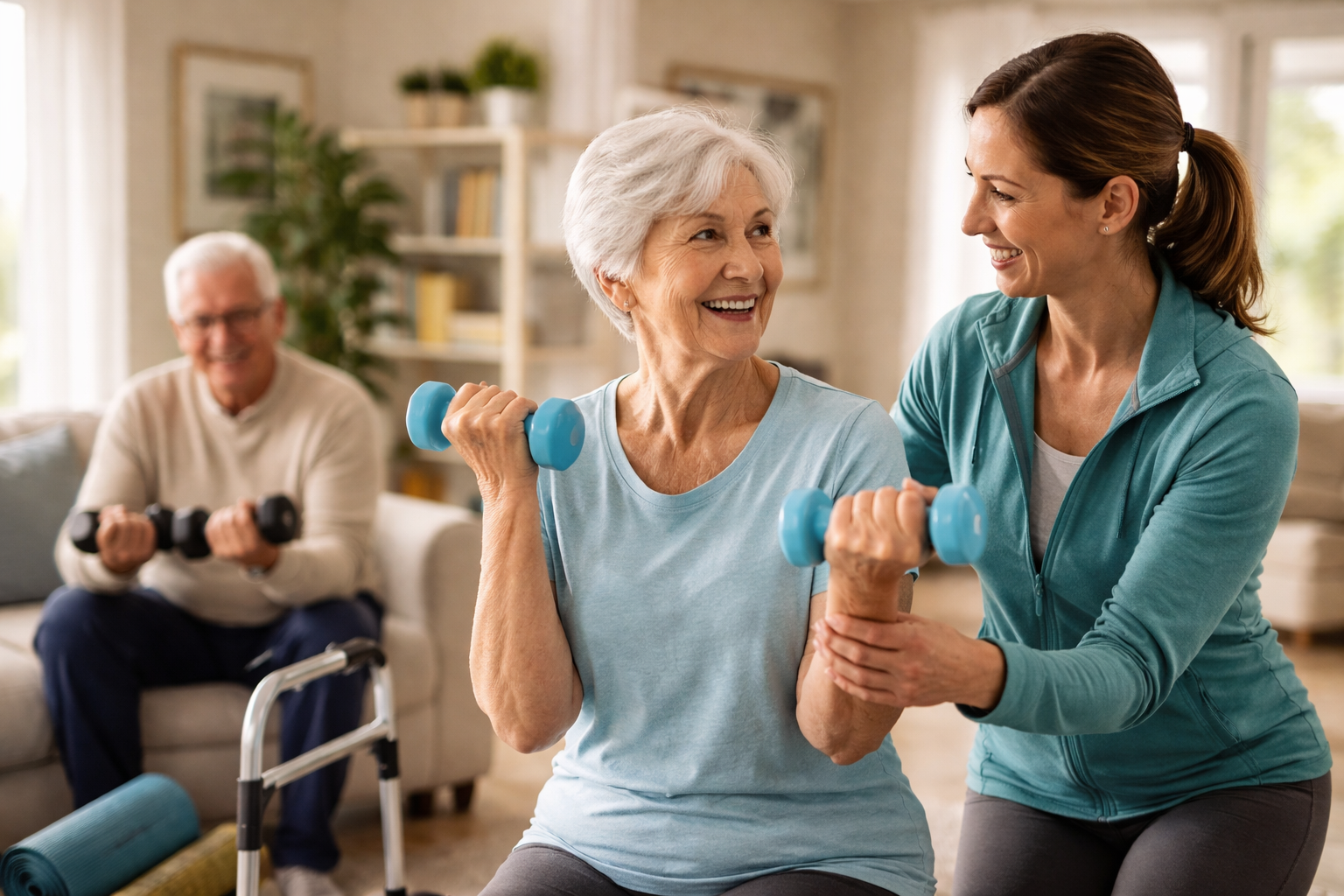
Which Fall Prevention Strategies Are Most Effective at Home?
The most effective strategies include:
Strength training (especially legs and hips)
Balance retraining
Reaction time drills
Gait training
Environmental modification
Research consistently shows that strength + balance training 2–3 times per week significantly reduces fall risk in older adults.
The key is progressive overload not random exercise.
How Can I Select and Evaluate a Qualified Trainer?
Not every personal trainer is equipped to work with older adults.
What Qualifications Should a Senior Trainer Have?
Look for:
Degree in Kinesiology, Exercise Science, or Physiotherapy-related field
Specialized senior fitness certification
Fall prevention training
CPR/AED certification
Experience with medical conditions
Professional insurance
You can also review caregiver training standards
A trainer should understand:
Post-surgical precautions
Contraindications
Medication interactions
Progressive rehabilitation
How Can I Verify a Trainer’s Safety Protocols?
Ask:
Do you perform an initial fall risk assessment?
Do you communicate with physicians when needed?
How do you modify programs for medical conditions?
What is your emergency protocol?
Do you document progress?
A professional should confidently answer each question.
If they can’t that’s a red flag.
What Are the Best Practices for Designing a Safe In-Home Training Program?
Safe programs include:
Warm-up (5–10 minutes)
Gentle mobility and circulation work
2. Strength training
Chair squats, supported lunges, resistance band rows
3. Balance exercises
Tandem stance, single-leg support (with supervision)
4. Functional training
Sit-to-stand, stair simulation, reaching drills
5. Cool down and breathing
Programs must be:
Individualized
Progressive
Supervised
Adaptable to fatigue
Which Exercises Are Safe and Beneficial?
Safe examples include:
Seated marching
Wall push-ups
Resistance band rows
Heel-to-toe walking
Step taps
Supported single-leg stands
Sit-to-stand repetitions
Unsafe exercises often include:
High-impact movements
Rapid twisting
Unsupervised floor transitions
Heavy free weights without stability
How Should Programs Adapt to Specific Medical Conditions?
Examples:
Osteoporosis: Avoid spinal flexion and twisting.
Arthritis: Use low-impact, joint-friendly movements.
Parkinson’s: Focus on large-amplitude movements and cueing.
Stroke history: Prioritize unilateral strength and balance retraining.
Heart conditions: Monitor intensity and exertion scale.
A knowledgeable trainer adjusts weekly based on how your parent responds.
How Can Caregivers Support Safety During Sessions?
Caregivers play a powerful role.
Safety Tips for Caregivers:
Observe the first few sessions
Monitor signs of fatigue or discomfort
Ensure hydration is available
Keep medical devices (glasses, hearing aids) in place
Maintain open communication with the trainer
How Can Caregivers Communicate Effectively?
Encourage your parent to report:
Dizziness
Chest pain
Joint pain
Sudden weakness
Unusual fatigue
Transparency prevents injury.
How Should I Prepare for Emergencies?
A professional trainer should already have protocols, but families should also ensure:
Emergency numbers posted
Medication list available
Clear address information visible
CPR-certified trainer present
AED access if applicable
Know the difference between:
Normal muscle soreness
Warning signs of cardiac distress
Symptoms of stroke
Preparation builds confidence, not fear.
Final Thoughts: Is In-Home Training Safe?
When guided by a qualified professional and supported by a safe home environment, in-home training is not only safe, it is one of the most effective ways to:
Reduce fall risk
Improve mobility
Rebuild post-surgery strength
Increase confidence
Maintain independence
The key isn’t whether training happens at home. The key is who leads it and how it’s structured.
Frequently Asked Questions
-
Yes, when properly supervised. In-home training removes transportation risks, crowded environments, and unfamiliar equipment while allowing exercises to target real-life movement patterns inside the home.
-
Most seniors benefit from strength and balance training 2–3 times per week. Consistency matters more than intensity.
-
Stop if your parent experiences chest pain, dizziness, severe shortness of breath, sudden weakness, or sharp joint pain. Seek medical guidance if symptoms persist.
-
No. Trainers should have senior-specific education, fall prevention knowledge, CPR certification, and experience working with medical conditions. Always verify credentials and references.
Related Posts
Aging in Place, Homecare and Fall Prevention: What Seniors and Families in Ontario Need to Know
Guide to Supporting Seniors: Practical Support Services and Care Options
In-Home Personal Training for Seniors in Toronto: Why Local Kinesiology Matters
Author Bio - Melissa Gunstone, BSc, Kinesiologist
Melissa Gunstone is the founder of HomeStretch, a kinesiologist with years of experience supporting seniors across Canada. Her mission: to give older adults safe, effective, and individualized movement programs, from in-home training to community-based senior fitness classes and to build a nationwide movement that elevates the role of kinesiology in healthy aging.
The 3 Biggest Barriers to Aging in Place - Niagara - St. Catharines, Hamilton, Dundas, Burlington, Toronto - Fall Prevention | Strength & Mobility | Caregiver Resources