Does Balance Decline With Age? And What Seniors Can Do
February 19, 2026
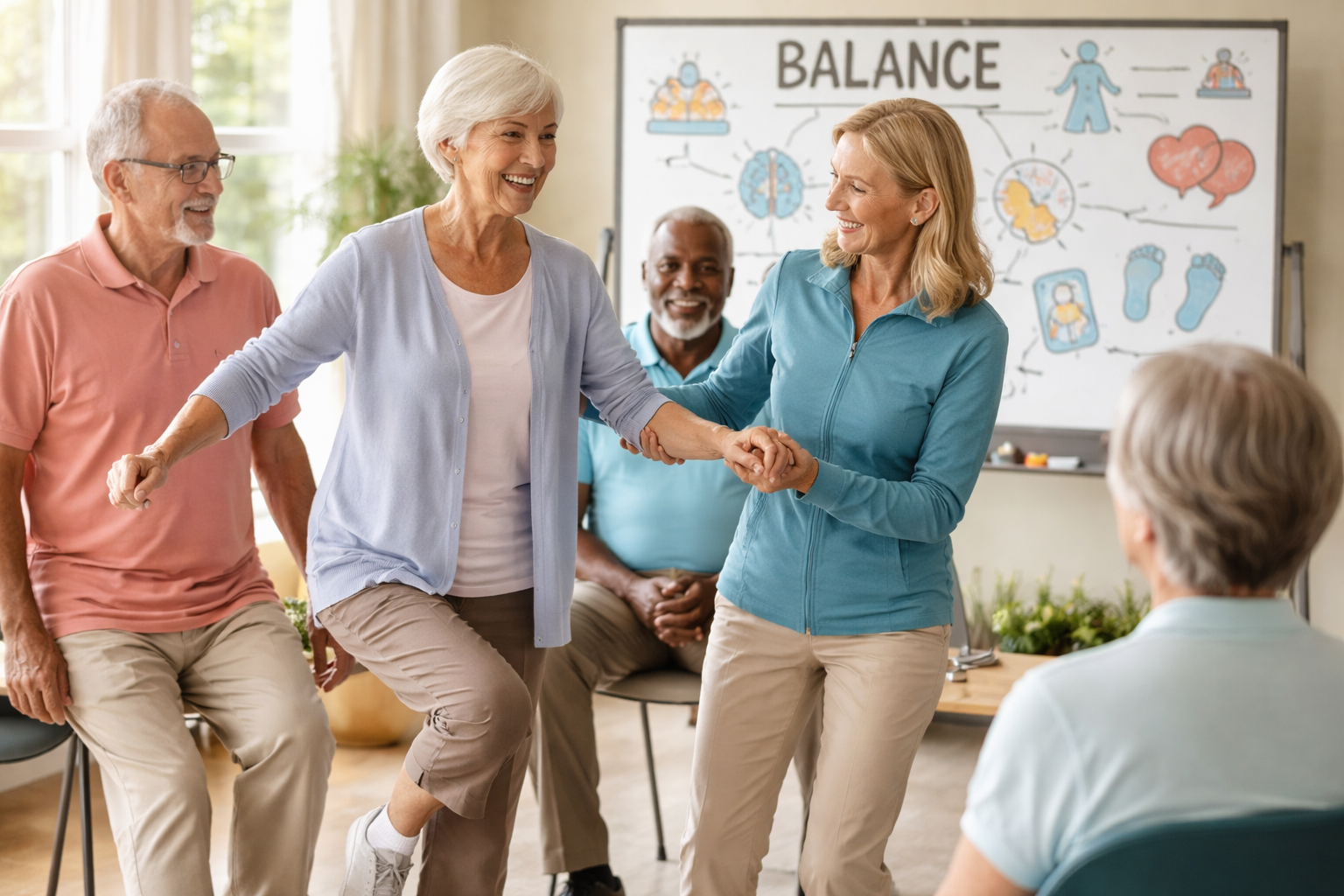
Does Balance Really Get Worse as We Age?
If you’ve ever found yourself reaching for a counter, railing, or wall “just in case,” you’re not alone. One of the most common questions I hear from older adults and their families is:
“Is my balance getting worse because I’m aging?”
The honest answer is nuanced:
Balance can decline with age but it doesn’t have to.
As a kinesiologist supporting hundreds of seniors across Canada, I’ve seen balance improve dramatically when it’s trained the right way.
Aging alone isn’t the problem. The issue is often untrained systems, reduced confidence, and avoided movement.
Let’s break down what balance really is, why it changes, and what you can do about it.
What Do We Mean by “Balance”?
Balance is not just standing on one foot.
From a kinesiology perspective, balance is your body’s ability to:
Stay upright in daily life
Adjust quickly to movement or uneven surfaces
Recover when you trip, slip, or get bumped
Move confidently without fear of falling
Balance depends on three systems working together:
Muscles and joints – especially in the legs, hips, and core
Nervous system – brain processing and reaction time
Sensory systems – vision, inner ear, and sensation in the feet
When one or more of these systems weakens, balance feels harder even if nothing “major” has changed.
Why Does Balance Decline With Age?
1. Muscle Loss and Strength Changes
As we age, we naturally lose muscle mass, particularly in the legs and hips. This process, called sarcopenia, can begin as early as our 40s and accelerate after age 65.
Research shows that adults over 65 may lose 1–2% of muscle mass per year if they are not strength training regularly. Less strength means less ability to stabilize, recover, and catch yourself.
Why this matters:
Lower-body weakness is strongly linked to increased fall risk and reduced mobility in older adults.
2. Slower Reaction Time
Balance is not about staying perfectly still, it’s about recovering.
As reaction time slows with age, it becomes harder to:
Catch yourself when you trip
Step quickly on uneven ground
Adjust to unexpected movements
Even seniors who are otherwise healthy can experience higher fall risk when reaction time is delayed.
Why this matters:
Falls often happen too quickly for strength alone to help. Training reaction time is critical for real-world balance.
3. Sensory Changes (Feet, Vision, Inner Ear)
Many seniors experience changes such as:
Reduced sensation in the feet (especially with diabetes or neuropathy)
Vision changes
Inner ear changes affecting spatial awareness
When the brain receives less reliable information from these systems, balance confidence drops, even before an actual fall occurs.
Why this matters:
Sensory decline is a major, and often overlooked, contributor to falls in older adults.
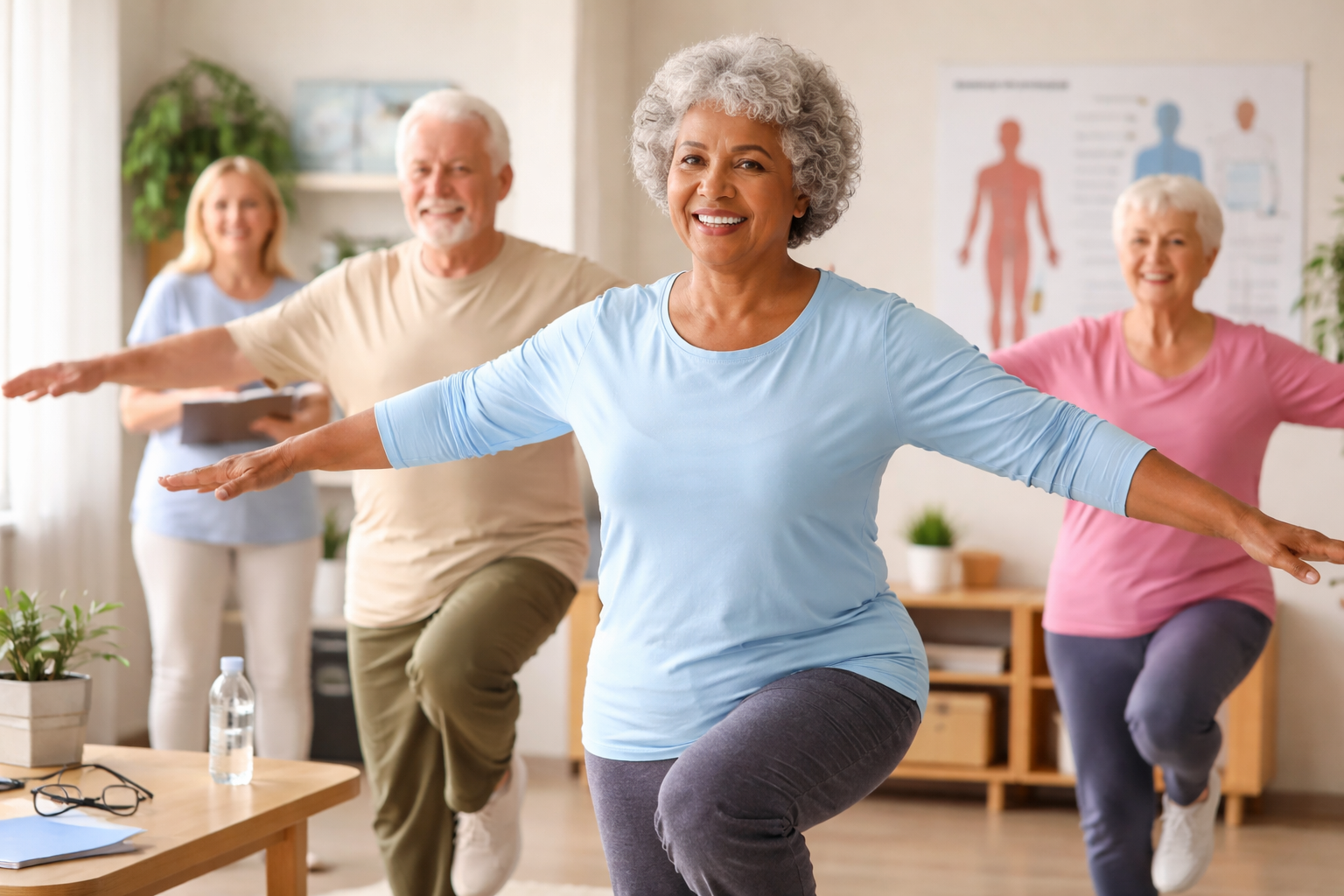
Is Balance Really “Lost” Or Just Untrained?
After years of working with seniors, here’s my professional opinion:
Most balance loss is not permanent. It’s untrained. Balance is a skill.
And like strength, flexibility, or coordination, skills improve when you train them.
Balance tends to decline when:
We stop challenging it
We avoid movement due to fear
We repeat the same “safe” routines for years
When seniors train balance safely and progressively, confidence often returns faster than expected.
How Often Should Seniors Do Balance Training?
Seniors benefit most from:
Balance training 2–3 times per week
Combined with strength exercises
Plus light, daily movement
Even short sessions matter. Consistency always beats intensity.
What Seniors Can Do to Improve Balance With Age
1. Combine Balance With Strength Training
Balance without strength is fragile.
Strong legs, hips, and core muscles give balance exercises their staying power. That’s why fall prevention programs should always blend strength and balance together.
This is especially important for:
Seniors aging in place
Post-operative recovery
2. Change the Environment You Train In
Real life isn’t predictable training shouldn’t be either.
To improve balance:
Practice on different flooring
Change footwear (or go barefoot if safe)
Vary head position and visual focus
These small changes help your nervous system adapt to real-world situations.
3. Join a Group Balance Program (If It’s the Right Fit)
Group programs can be motivating and social, especially for active seniors.
Across Hamilton, Dundas, and the Greater Toronto Area, balance and fall-prevention programs are often offered through:
Hospital outpatient rehab departments
Community health centres
Seniors’ recreation programs
YMCA or municipal programs
These programs focus on education, safe movement, and confidence-building, a great starting point for many seniors.
4. Consider In-Home Personal Training for Seniors
For many older adults, in-home kinesiology is the safest and most effective option.
Benefits include:
No travel risk
Training in a familiar environment
Fully personalized programs
Ideal for post-surgery or complex health needs
This is the core of what we do at HomeStretch helping seniors train balance where they actually live, so improvements carry over into daily life.
Balance may change with age but decline is not inevitable.
With the right approach:
Balance improves
Fear decreases
Confidence grows
Independence lasts longer
The goal isn’t perfection. The goal is staying upright, active, and living life on your terms.
If you’re curious about balance training, fall prevention, or in-home personal training for seniors, start the conversation early. Waiting for a fall is the hardest way to learn.
Frequently Asked Questions
-
Some balance changes are common with aging, but significant decline is often related to muscle loss, slower reaction time, or untrained balance systems, not age alone.
-
Yes. Balance is a trainable skill. Many seniors see improvements in stability and confidence within weeks when training is done safely and consistently.
-
The most effective programs combine lower-body strength, balance challenges, reaction-time training, and safe progression, ideally guided by a kinesiologist.
-
Yes. In-home training is often safer because it removes travel risk, uses familiar surroundings, and allows for fully personalized programs.
Related Posts
What You Really Get with an In-Home Personal Trainer for Seniors
A Safer New Year Starts at Home Understanding Fall Risk Assessments for Seniors
Author Bio - Melissa Gunstone, BSc, Kinesiologist
Melissa Gunstone is the founder of HomeStretch, a kinesiologist with years of experience supporting seniors across Canada. Her mission: to give older adults safe, effective, and individualized movement programs, from in-home training to community-based senior fitness classes and to build a nationwide movement that elevates the role of kinesiology in healthy aging.
The 3 Biggest Barriers to Aging in Place - Niagara - St. Catharines, Hamilton, Dundas, Burlington, Toronto - Fall Prevention | Strength & Mobility | Caregiver Resources