A Kinesiologist’s Perspective on Senior Fitness, Fall Prevention & Aging Well
January 15, 2026
On this page
⚡ Quick Answer
- Kinesiologists improve seniors' strength, balance, mobility, and confidence to reduce fall risk.
- In-home training is safer because exercises match your home layout and abilities.
- Most seniors benefit from balance work 2 to 3 times per week.
- HomeStretch combines education, movement, and social connection across Ontario's Niagara Region.
An interview with Ali, Registered Kinesiologist at HomeStretch Active Living
One of the things we’re most proud of is our growing team of Ontario-based kinesiologists, people who truly understand senior fitness, fall prevention, and what it takes to build confidence at home, not just “work out.”
Meet Ali, our St. Catharines kinesiologist, through a candid conversation about her background, her training philosophy, and what it’s really like supporting older adults across the Niagara Region.
Ali works with seniors throughout St. Catharines, Niagara-on-the-Lake, Thorold, and nearby communities, helping people who want to stay strong, steady, and independent in the home they love.
Who Is Ali, and Why Does She Work With Seniors in St. Catharines?
Before jumping into the work itself, I asked Ali to share a bit about her background and connection to this community.
“Hi guys, I’m Ali. I’m a kinesiologist with HomeStretch Active Living. I did my schooling here in St. Catharines, my undergraduate degree in Kinesiology at Brock University, and my Master of Science in Kinesiology at Brock as well.”
Ali’s roots in Niagara matter. She understands the pace of life here and the reality that many older adults in this region want to age in place, stay close to family, and remain active in familiar neighbourhoods near places like Montebello Park, Port Dalhousie, and downtown St. Catharines.
That local familiarity makes it easier to build a plan that fits real routines walking routes, errands, social activities, and the layout of the home itself.
What Lesson From Kinesiology School Still Shapes Your Work With Seniors Today?
This is one of my favourite questions because the best answers are usually simple.
“Movement is medicine and if you don’t use it, you lose it.”
Ali explained how this became real during placements in seniors’ gyms and community settings.
“Working with seniors during school, I noticed that small, consistent movements kept them moving, kept them more confident, and helped reduce falls. It wasn’t about doing extreme workouts, it was about staying consistent and strong.”
That mindset sits at the core of how we design senior fitness programs in St. Catharines: practical, safe, repeatable movement that fits real life and builds the kind of strength you actually use every day.
Why Did You Choose HomeStretch and Why Older Adults?
Ali’s answer speaks volumes about the culture we’re building.
“I’ve been following your journey since you started HomeStretch in BC. Working in a role like this has always been a dream of mine.”
But her connection to seniors goes deeper.
“I spent a lot of time in nursing homes and retirement centres because my mom worked in one. I’ve always felt more connected to older adults. They have so much wisdom to share, and they’re really looking for genuine connection which can be hard to find.”
And that connection is exactly what turns exercise into something people can actually stick with:
“You’re not just training. You’re talking, laughing, making the session enjoyable.”
That part matters more than most people realize because consistency isn’t built on willpower. It’s built on feeling safe, understood, and supported.
Ali’s Personal Training Philosophy for Seniors
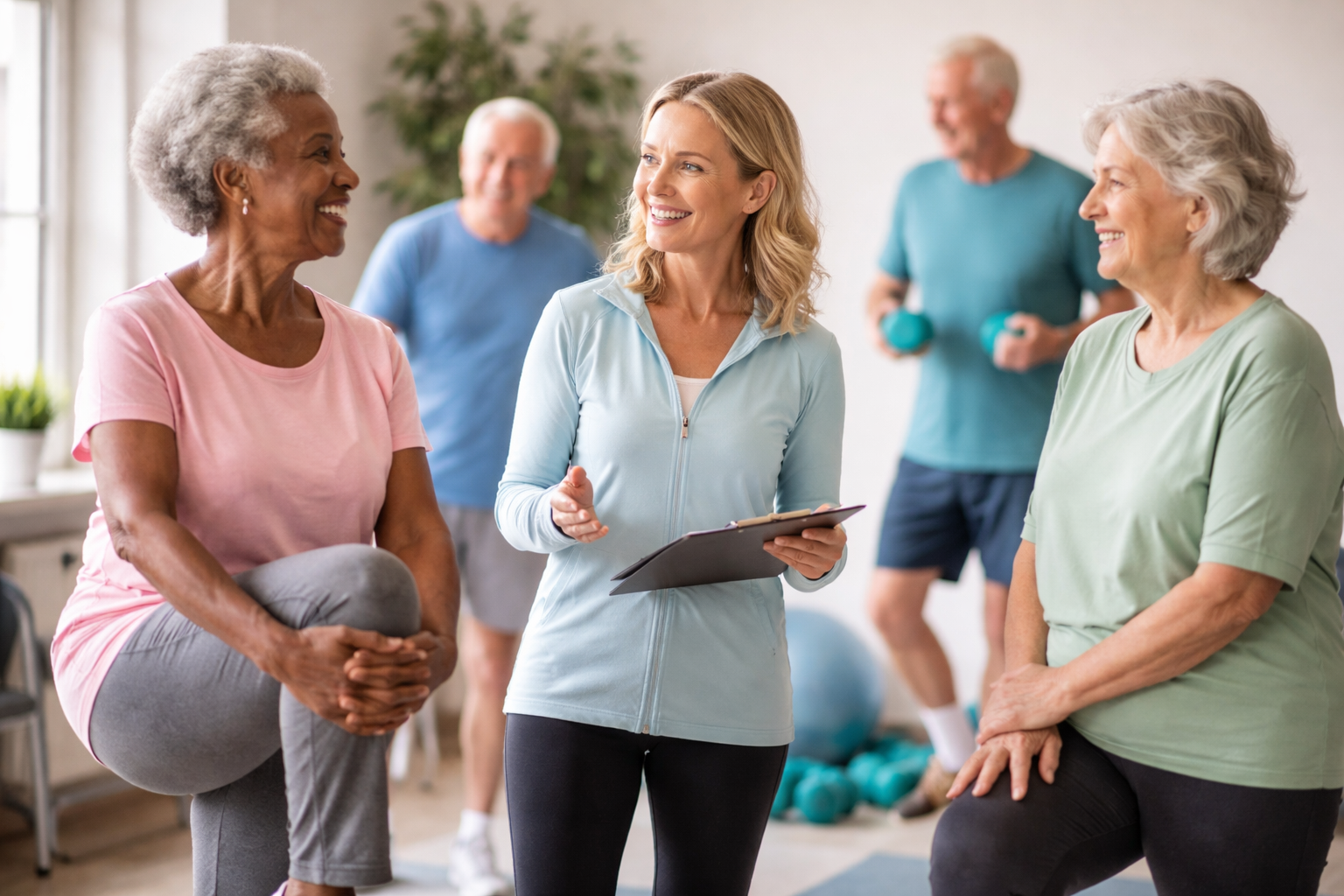
Every HomeStretch kinesiologist brings their own personality, but we share one approach: functional, client-centred training that supports independence.
Ali summed hers up perfectly:
“You have to like what you’re doing.”
So instead of forcing cookie-cutter exercises, she starts with real life:
What do you do for fun?
What does your day look like?
Do you garden? Cook? Walk to get coffee?
What did you love doing when you were younger?
Then she builds exercises that match those movements.
“Then I tailor their exercises to those movements.”
Why does that matter?
Because when exercises connect to daily life, people stick with them and that’s where long-term independence comes from.
How Do You Keep Exercise Meaningful Not Just “Another Workout”?
We talked about how powerful it is when older adults reconnect with activities they once loved.
“If someone used to play a sport or had a physically demanding job, I try to tie movements back to that. When people recognize those patterns, they light up.”
I shared a story about a former rugby player I worked with and Ali immediately got it.
“You could see it on his face. It brought him back to feeling strong and capable again.”
That emotional “click” matters, because confidence is a physical outcome too. When someone feels capable again, they:
move more naturally
walk more often
avoid unnecessary fear
recover faster after setbacks
build momentum instead of avoidance
What Makes HomeStretch Fall Prevention Programs Different?
This is where HomeStretch truly stands apart from many traditional programs.
Ali explained it clearly:
“First, we’re all registered kinesiologists in Ontario. We’ve gone to school, written our exams, and specialize in movement science.”
But credentials are only part of it.
“We bring a ‘back-to-school’ feeling. Half the program is education learning about balance, falls, and the body with handouts and discussion. The other half is getting up and moving together.”
And then there’s the missing piece in many senior programs:
“The social connection. People work together, talk, and build relationships.”
Education + Movement + Connection
Those are our three pillars whether we’re running a group program in Niagara or supporting someone one-on-one at home in St. Catharines.
What Advice Would You Give a Senior Thinking About In-Home Personal Training?
Ali didn’t hesitate:
“If you’ve thought about it, just go for it.”
She addressed one of the biggest barriers we hear:
“It doesn’t matter if you don’t feel fit or confident. That’s what we’re here for to help you build that confidence.”
And I want to add an important clarification:
Your first visit is about clarity and comfort.
You meet your kinesiologist, complete a movement and balance assessment, and receive a personalized plan. From there, you decide if it feels like the right fit.
Most people continue because it’s:
convenient (no travel, no winter worries, no gym intimidation)
personalized (your home, your body, your pace)
safety-focused (confidence without risk-taking)
surprisingly enjoyable (yes, really)
What to Expect in Your First HomeStretch Assessment
If you’re wondering what actually happens during an in-home personal training, here’s the typical flow:
1. Conversation + Goals
What matters to you? Walking farther? Stairs? Getting up from chairs? Feeling steadier in the shower?
2. Movement & Balance Screening
We look at strength, balance, mobility, and any factors affecting confidence.
3. Home-Based Safety Lens
We consider your real environment stairs, lighting, routines, and the areas where people often feel unsteady.
4. Your Personalized Plan
Clear next steps, explained in plain language no confusion, no “random exercises.”
5. Next Steps (Your Choice)
You decide what support level is right: one-on-one sessions, a short-term plan, or ongoing strength and balance work.
Looking for a Senior Kinesiologist in St. Catharines?
Ali currently supports older adults across St. Catharines and the Niagara Region with:
Strength and mobility support
Confidence-building movement programs
If you’re in St. Catharines, Thorold, Niagara-on-the-Lake, or nearby, we’ll match you with a kinesiologist who fits your goals and comfort level.
Frequently Asked Questions
-
A kinesiologist specializes in movement, function, and exercise programming. For seniors, that often means improving strength, balance, mobility, and confidence for daily activities especially to reduce fall risk.
-
Yes, when it’s built for seniors and guided by a qualified professional. In-home training can actually be safer than unfamiliar environments because exercises are tailored to your home layout, your current ability, and your fall-risk factors.
-
Most seniors benefit from balance work 2–3 times per week, combined with strength training and walking (as tolerated). Consistency matters more than intensity.
-
Not usually. Many effective programs use bodyweight, chairs, walls/counters for support, and simple tools (like bands). If equipment would help, your kinesiologist can recommend practical, low-cost options.
-
That’s extremely common and it’s a great reason to start with in-home support. The program begins at your baseline and builds gradually, focusing on confidence and safety first.
Related Posts
What You Really Get with an In-Home Personal Trainer for Seniors
A Safer New Year Starts at Home Understanding Fall Risk Assessments for Seniors
Author Bio - Melissa Gunstone, BSc, Kinesiologist
Melissa Gunstone is the founder of HomeStretch, a kinesiologist with years of experience supporting seniors across Canada. Her mission: to give older adults safe, effective, and individualized movement programs, from in-home training to community-based senior fitness classes and to build a nationwide movement that elevates the role of kinesiology in healthy aging.
The 3 Biggest Barriers to Aging in Place - Niagara - St. Catharines, Hamilton, Dundas, Burlington, Toronto - Fall Prevention | Strength & Mobility | Caregiver Resources