Post-Operative Rehabilitation in Vancouver: What to Expect and How to Recover Safely
December 22, 2025
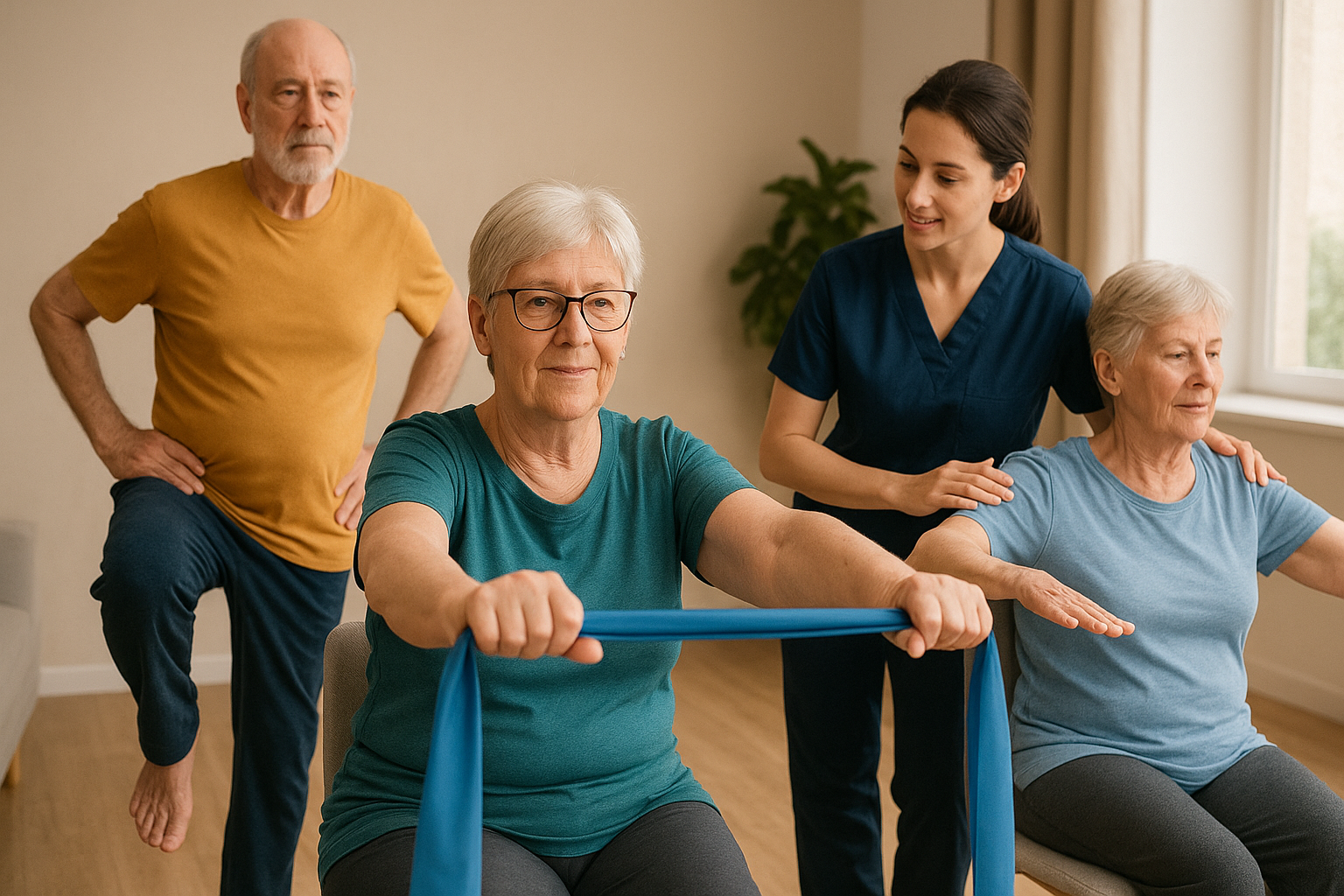
“My experience with Kseniya was superb. She’s professional, always punctual and attentive to appointments, details and ensure my full hour of exercise is well spent.
She takes notes to ensure progress is made. She provides tools and offers the appropriate exercises for my specific needs. I really appreciate her help and wish her speedy recovery. I hope she can come back soon to continue the service with me”.
-Joseph Lam, Homestretch BC google review
This comment was left by one of our post-operative rehab clients, who recovered at an incredible pace after a spinal cord surgery. He started training with our Kinesiologist Kseniya IN the Richmond hospital, he didn’t wait until discharge to get started.
Recovering After Surgery in Vancouver, What Seniors Need to Know
Post-operative recovery is one of the most vulnerable times for older adults. Whether the surgery involves a joint replacement, spinal procedure, fracture repair, or cancer-related treatment, the truth is this.
Most seniors in Vancouver aren’t given enough post-op support once they leave the hospital.
You might get one or two physiotherapy appointments. You might be placed on a waitlist. Or you might be told to “walk more,” without clear instructions on how to rebuild strength safely.
For older adults in Vancouver from Richmond to Kitsilano, Mount Pleasant, Yaletown, and South Vancouver, this lack of structured support can delay healing, increase fall risk, and reduce independence at home.
That’s why post-operative rehabilitation with an in-home Kinesiologist has become one of the most searched-for services among Vancouver’s aging adults.
Seniors are actively Googling phrases like:
“post-operative rehab Vancouver”
“in-home physiotherapy Vancouver seniors”
“Vancouver spinal stenosis recovery exercises”
“rehab after surgery Richmond BC”
“senior mobility training Vancouver”
This guide will break down exactly what to expect, what recovery should look like week-by-week, and how seniors in Vancouver can recover safely with the right kind of support.
Why Post-Op Rehab Matters So Much for Seniors in Vancouver
1. Mobility Declines Quickly After Surgery
For seniors, even two weeks of reduced activity can lead to:
Muscle loss
Poor balance
Reduced walking speed
Increased stiffness
More fatigue
Higher fall risk
That’s why Vancouver hospitals emphasize early mobilization but once you’re home, you’re mainly on your own.
2. Vancouver Waitlists Are Long, Especially for Seniors
Many older adults complete their hospital-based rehab at:
GF Strong Rehabilitation Centre
St. Paul's brand-new hospital campus near Olympic Village (opening 2027)
Richmond Hospital
Vancouver General Hospital (VGH)
But after discharge, the gap begins.
Hundreds of our Homestretch Vancouver clients have come to us after completing their GF Strong program, because they needed continued gait training, strengthening, balance rehab, and functional mobility coaching support that isn’t always available through the public system.
3. Home Is the Safest Place to Rebuild Strength
For seniors recovering from surgery, in-home post-op rehabilitation is often more effective because:
No transportation is needed
No icy sidewalks or stairs
Sessions are tailored to your home environment
A Kinesiologist can modify exercises based on your setup
It reduces fall risk during the most fragile recovery phase
This is why “in-home post-op rehab Vancouver seniors” is now one of the highest-trending search terms in this category.
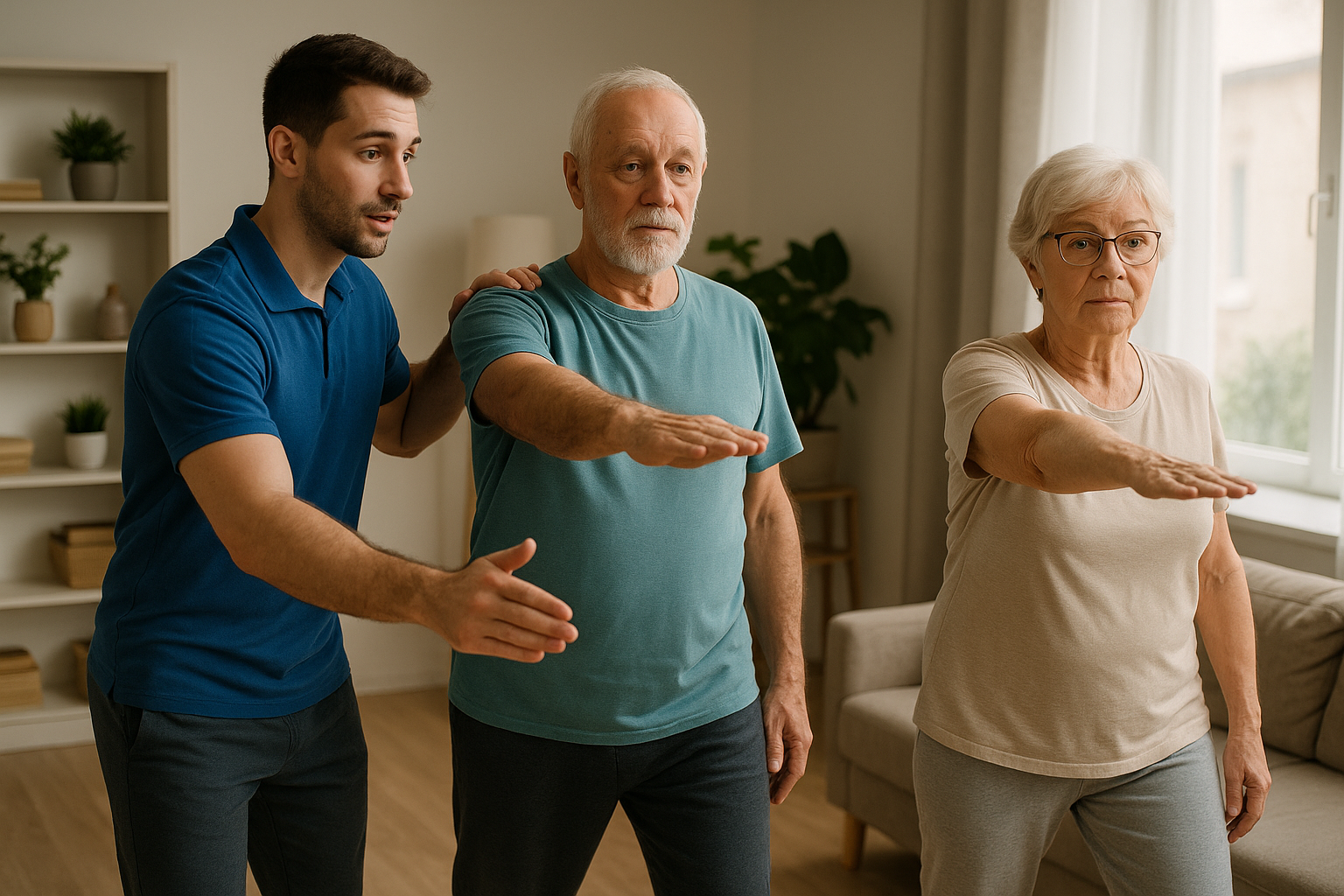
What to Expect After Surgery: A Senior’s Step-by-Step Guide
Step 1: The First Week — Rest, Gentle Mobility, Safety
During the first week at home, the priorities are:
Managing pain
Reducing swelling
Gentle mobility
Re-learning safe movement patterns
A Kinesiologist will help you:
Get in/out of bed safely
Navigate stairs
Learn safe sitting and standing strategies
Avoid fall-risk movements
Begin very gentle range-of-motion exercises
Step 2: Weeks 2–6 — Strength, Walking & Balance Recovery
This is where most seniors start to lose confidence too strong for bed rest, not yet strong enough for independent walking.
We focus on:
Improving walking pattern
Mastering mobility aids (cane, walker)
Leg + core strengthening
Balance drills
Hip and ankle mobility
Safe gait initiation
This stage is critical because seniors who delay training can lose 30–40% of their progress.
Step 3: Weeks 6–12 — Building Power, Endurance & Independence
Most Vancouver seniors at this stage are transitioning from “recovering” to “rebuilding.”
Training includes:
Posture correction
Longer walking routes
Stair training
Improved endurance
Strength progression
Reaction + balance training
Real-life functional exercises (laundry, carrying objects, reaching, bending, getting up from low surfaces)
Many of our post-op clients stay with us beyond 12 weeks because they continue to progress rapidly.
Client Story: John’s Spinal Stenosis Recovery (Vancouver)
When we first met John, a Vancouver client recovering from spinal stenosis surgery, he was re-learning the basics of walking.
He struggled to:
Lift his legs properly
Maintain posture
Walk without support
Coordinate his steps
Stand for long periods
Working with our Vancouver Kinesiologist Pauline
He trained 3 times per week with:
Gait re-training
Core activation
Leg strengthening
Balance and stability exercises
Progressive walking intervals
Today?
John walks around the block with his walker.
His confidence is back, his endurance has improved, and his recovery is exceeding expectations because he got the right support after leaving the hospital.
How Homestretch Helps Vancouver Seniors Recover Safely After Surgery
We support older adults recovering from:
Spinal stenosis surgery
Hip replacement
Knee replacement
Shoulder surgery
Cancer-related surgeries
Cardiac surgery
Fractures
Back or neck operations
General deconditioning after hospitalization
Our in-home Kinesiologists in Vancouver, Richmond, and Burnaby provide
Strength and mobility training
Gait training
Balance and fall-prevention work
Endurance training
Safe progression
Home safety modifications
Step-by-step guidance
This is why so many graduates from GF Strong and St. Paul’s Hospital continue their recovery with us.
Simple Post-Op Exercises Seniors Can Do at Home
(When Cleared by a Medical Professional)
Heel Slides
Improves knee and hip mobility.
Seated Marching
Builds hip flexor strength for gait.
Ankle Pumps & Circles
Supports circulation and balance.
Sit-to-Stands
Strengthens legs for walking and transfers.
Walker or Cane Gait Practice
Improves pattern and confidence.
Frequently Asked Questions
-
Ideally 2–3 times per week.
Balance is like brushing your teeth it needs consistency. Even 10 minutes a day makes a difference. -
Anywhere you want us to!
If you have a connection to a senior centre, retirement home, community space, church basement, Legion, or museum, introduce us our team will coordinate from there.
-
Yes — we serve:
✔ Greater Hamilton
✔ Dundas
✔ Niagara Region
✔ St. Catharines
✔ Norfolk County / Port Dover
✔ Burlington & Oakville
✔ Ottawa
-
A Kinesiologist is a regulated health professional trained in:
Aging bodies
Injury recovery
Falls and balance
Joint replacements
Chronic conditions
It’s safer, more specialized, and far more effective for seniors.
Related Posts
Author Bio - Melissa Gunstone, BSc, Kinesiologist
Founder of HomeStretch Ontario Helping Ontario seniors stay strong, safe, and independent — one step at a time.
The 3 Biggest Barriers to Aging in Place - Niagara - St. Catharines, Hamilton, Dundas, Burlington, Toronto - Fall Prevention | Strength & Mobility | Caregiver Resources