Static Stretching for Seniors in Milton: A Safe Way to Improve Mobility and Prevent Falls
March 12, 2026

On this page
⚡ Quick Answer
- Static stretching means holding a lengthened muscle position for 20 to 30 seconds without bouncing.
- Tight muscles limit step length and hip or ankle mobility, which raises fall risk.
- Seated hamstring, standing quadriceps, and shoulder stretches are safe places to start.
- 3 to 5 short sessions a week, held to gentle tension, work better than occasional long ones.
Why Static Stretching Matters for Seniors in Milton
As we age, muscles naturally shorten and joints stiffen. Simple daily movements, stepping off a curb in Downtown Milton, walking through Mill Pond Park, or reaching into a cupboard, can feel harder than they used to.
For many older adults, this stiffness quietly increases fall risk.
At HomeStretch Active Living, founded by Melissa Gunstone, we often explain that flexibility is not about touching your toes, it’s about staying steady and confident in everyday life.
As Melissa shares in her story, there is often a gap between discharge from rehab and true independence. Stretching is one important piece that helps bridge that gap.
When part of a professionally guided fall prevention exercise program, static stretching helps,
Improve joint mobility,
Reduce muscle stiffness,
Support better posture,
Enhance coordination,
Contribute to safer balance reactions
For seniors looking for senior health improvement training at home in Milton, stretching is often the first safe step toward rebuilding confidence.
What Is Static Stretching?
Static stretching means gently holding a muscle in a lengthened position for 20–30 seconds without bouncing.
Unlike dynamic stretching (which involves movement), static stretching is calm, controlled, and ideal for older adults especially after activity or during a dedicated flexibility session.
Why Is Static Stretching Helpful for Older Adults?
Research shows that consistent static stretching can:
Increase flexibility (moderate-to-large improvements reported in older adults)
Improve joint range of motion
Support muscle activation in sedentary seniors
Reduce stiffness associated with aging
Flexibility improvements alone won’t prevent every fall but when combined with balance and strength training, they significantly improve overall stability.
That’s why an in home balance and coordination trainer seniors will rarely prescribe stretching alone. It works best as part of a complete plan.
How Does Static Stretching Support Fall Prevention?
Falls rarely happen “out of nowhere.” They happen when the body cannot react quickly enough to recover balance.
Tight muscles limit:
Step length
Ankle mobility
Hip rotation
Shoulder reach
When these areas are stiff, the body has fewer options to correct a stumble.
A structured fall prevention exercise program in Milton typically includes:
Flexibility work (static stretching)
Strength training (especially hips and legs)
Balance drills
Coordination exercises
Reaction time training
Stretching improves the “available range” so the body can move more freely when balance is challenged.
Safe Static Stretches for Seniors
Below are three gentle stretches commonly included in senior health improvement training at home in Milton.
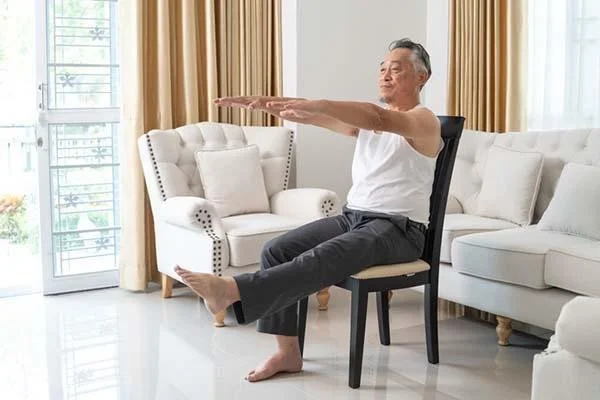
Seated Hamstring Stretch
Targets: Back of thigh
Benefits: Improves walking stride and reduces lower-back strain
How to do it:
Sit tall in a chair
Extend one leg forward
Hinge gently at the hips
Hold 20–30 seconds
Repeat 2–3 times per leg
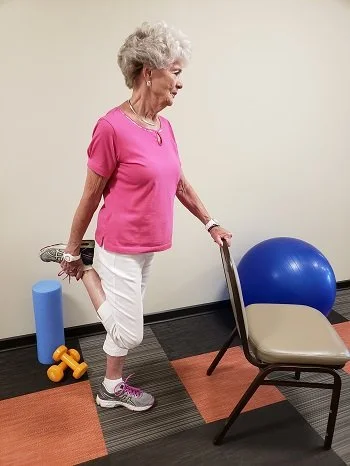
Standing Quadriceps Stretch (with support)
Targets: Front thigh
Benefits: Supports knee health and balance recovery
How to do it:
Hold a chair or counter
Bend one knee gently
Keep knees aligned
Hold 20–30 seconds
Switch sides
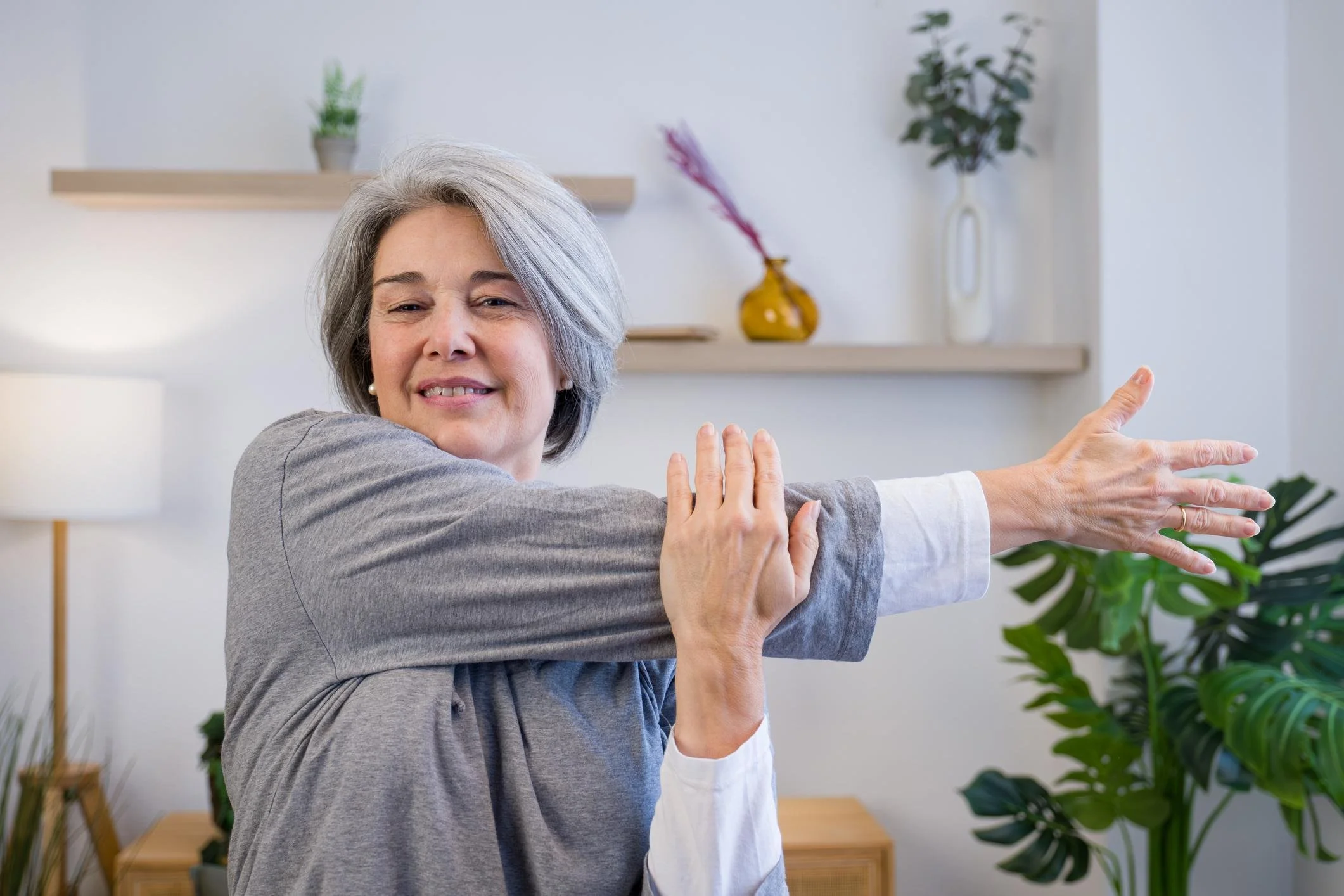
Shoulder Stretch
Targets: Upper body
Benefits: Improves reaching and posture
How to do it:
Bring one arm across your chest
Support with the opposite hand
Hold gently
Avoid pulling sharply
Step-by-Step: A Safe Static Stretching Routine
Warm up first (5–10 minutes of light walking or marching)
Choose 3–5 major muscle groups
Hold each stretch 20–30 seconds
Repeat 2–4 times
Never bounce
Stop if sharp pain occurs
This routine can be completed in 10–15 minutes and fits easily into daily life.
Static vs Dynamic Stretching for Seniors
| Static Stretching | Dynamic Stretching |
|---|---|
| Held position | Controlled movement |
| Best for cool-down | Best for warm-up |
| Lower injury risk | Slightly higher if done aggressively |
| Ideal for improving flexibility | Ideal for preparing for activity |
For many seniors, static stretching is the safer starting point especially when working with an in home balance and coordination trainer seniors in Milton.
The Advantage of In-Home Training in Milton
Many seniors feel most comfortable training at home. Personalized senior health improvement training at home allows:
Assessment of real home hazards
Safer exercise progression
Confidence-building in familiar spaces
Tailored programming for medical conditions
This approach aligns with Melissa’s founding mission, closing the gap between rehab discharge and true independence
A trained kinesiologist doesn’t just show stretches, they evaluate:
Gait pattern
Reaction time
Strength imbalances
Fall history
Home environment safety
Stretching becomes part of a complete strategy, not a standalone fix.
How Often Should Seniors Stretch?
For best results:
3–5 times per week
After walking or exercise
Short sessions (10–15 minutes)
Consistency over intensity
Even small improvements in flexibility can improve step quality and posture over time.
Safety Guidelines
Stretch only to gentle tension
Avoid bouncing
Use support if balance is uncertain
Stay hydrated
Consult your healthcare provider if managing medical conditions
A qualified trainer ensures stretching remains safe and productive.
Ready to Improve Your Mobility in Milton?
If you or a loved one want safer movement, improved balance, and greater confidence at home, consider a professionally guided fall prevention exercise program.
Working with an in home balance and coordination trainer seniors in Milton ensures your stretching routine fits into a complete, safe plan for long-term independence.
📞 Book a consultation today and take the next step toward steady, confident movement at home.
Frequently Asked Questions
-
Low-impact aerobic activities like walking, swimming, and cycling combined with light strength training are most effective and sustainable.
-
A general recommendation is 150 minutes of moderate aerobic activity weekly plus strength training twice per week, adjusted to individual health needs.
-
Yes , with monitoring. Checking glucose before and after activity and following healthcare guidance keeps exercise safe.
-
In some cases, improved insulin sensitivity may reduce medication needs. Adjustments should always be managed by a healthcare provider.
-
Yes. Increased muscle mass improves glucose uptake and insulin sensitivity, making strength training an essential component of diabetes management.
Related Posts
Better Sleep for Older Adults, Practical Strategies for Restful Nights
Kinesiology for Seniors: In-Home Personal Training, Rehabilitation & Fall Prevention in Toronto
In-Home Personal Training for Seniors in Toronto: Why Local Kinesiology Matters
Author Bio - Melissa Gunstone, BSc, Kinesiologist
Melissa Gunstone is the founder of HomeStretch, a kinesiologist with years of experience supporting seniors across Canada. Her mission: to give older adults safe, effective, and individualized movement programs, from in-home training to community-based senior fitness classes and to build a nationwide movement that elevates the role of kinesiology in healthy aging.