Gentle, Effective Senior Workouts to Prevent Falls and Improve Mobility
March 23, 2026

Staying active becomes even more important as we age. For older adults, exercise isn’t just about fitness, it’s about maintaining independence, preventing falls, and feeling confident during everyday activities.
Many seniors notice subtle changes in their movement over time. Standing up from a chair might take more effort. Walking on uneven surfaces may feel less stable. Even reaching or bending can become more difficult.
These changes are often linked to decreases in muscle strength, balance, and flexibility.
The good news is that targeted workouts designed specifically for seniors can significantly improve stability, mobility, and confidence.
When exercises focus on balance, strength, and flexibility, they help the body move safely and efficiently.
In this guide, you’ll learn:
The best exercises for fall prevention
Simple strength movements that improve stability
Gentle mobility routines that keep joints healthy
Safe ways to exercise at home
How personalized programs improve long-term results
With the right approach, seniors can continue moving comfortably, safely, and independently.
What Are the Best Fall Prevention Exercises for Seniors?
Fall prevention exercises focus on strengthening the muscles that support posture, balance, and walking. These workouts improve coordination, increase body awareness, and help seniors react more quickly if they lose balance.
Some of the most effective exercises combine balance training with lower-body strength.
| Exercise | Type | Benefit |
|---|---|---|
| Tai Chi | Balance Training | Improves coordination, stability, and reaction time |
| Heel-to-Toe Walk | Balance Training | Strengthens walking balance and body control |
| Chair Stand | Strength Training | Builds leg strength needed for standing and stability |
Practicing these exercises regularly can help seniors feel steadier on their feet and more confident performing everyday activities.
How Do Balance Training Exercises Reduce Fall Risk?
Balance training strengthens the muscles that keep the body upright while improving the brain’s ability to detect movement and position. This ability, known as proprioception helps seniors quickly adjust when they encounter uneven surfaces, obstacles, or sudden shifts in balance.
Exercises like heel-to-toe walking improve:
Stability while walking
Coordination between muscles and joints
Reaction time when balance is challenged
Over time, these improvements make it easier to navigate stairs, sidewalks, and household tasks safely.
Which Strength Exercises Help Seniors Stay Stable?
Lower-body strength plays a critical role in fall prevention. Strong legs allow seniors to rise from chairs, climb stairs, and maintain balance while walking.
Some simple strength exercises include:
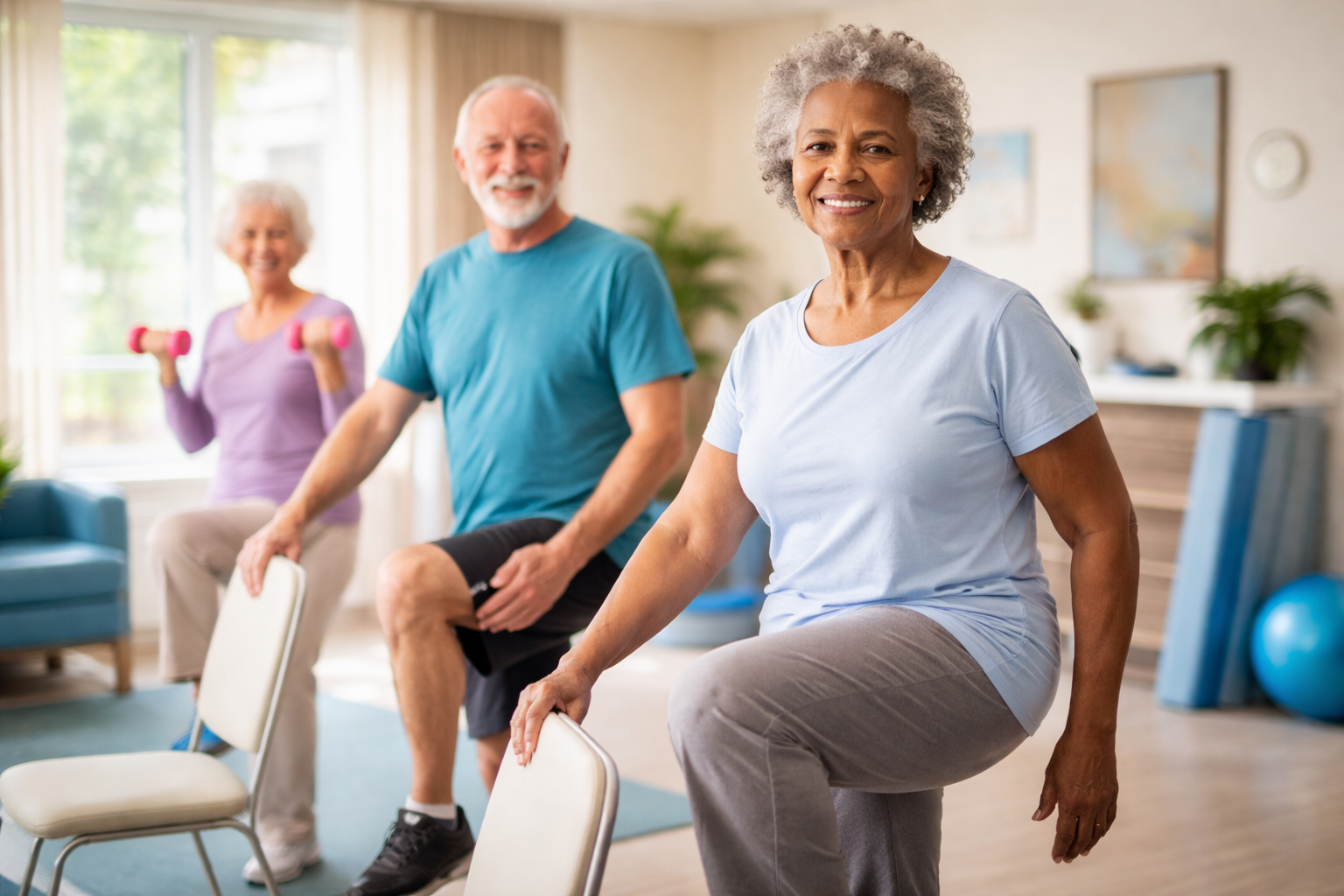
Chair Stands - Standing up and sitting down repeatedly strengthens the thighs and hips. These muscles are essential for daily movements like getting out of bed or standing from a chair.
Leg Lifts - Gentle leg lifts strengthen stabilizing muscles that support balance and posture.
Supported Squats - Using a chair or countertop for support allows seniors to safely build strength in the hips and knees.
When performed consistently, these exercises improve stability and help seniors feel more secure while moving.
Why Strength and Balance Training Matters for Older Adults
Research consistently shows that strength and balance training can help older adults maintain mobility and independence.
Studies of community-dwelling seniors suggest that regular supervised strength and balance training may help slow age-related declines in muscle strength and walking ability.
Maintaining these abilities is essential for quality of life. When muscle strength decreases and balance becomes less reliable, mobility limitations can quickly develop.
By strengthening key muscle groups and practicing controlled movement, seniors can reduce fall risk while improving confidence in daily life.
How Can Seniors Improve Mobility Safely Through Targeted Workouts?
Mobility refers to how easily joints move through their natural range of motion. Good mobility allows seniors to bend, reach, twist, and walk comfortably.
A targeted mobility program combines three key elements:
Flexibility exercises to reduce stiffness
Strength exercises to support joints
Balance exercises to improve control
When these components work together, everyday movements like walking, climbing stairs, and reaching overhead become easier and safer.
What Are Effective Mobility Exercises for Seniors?
Mobility exercises should be gentle, controlled, and easy to perform at home.
Examples include:
Seated Leg Lifts - These strengthen hip muscles while supporting joint movement.
Arm Circles - Slow arm circles maintain shoulder flexibility and improve upper-body mobility.
Gentle Stretching - Simple stretches for the hamstrings, calves, and hips help reduce stiffness and improve movement comfort.
Even a few minutes of daily mobility exercises can make a noticeable difference in how seniors feel when moving throughout the day.
How Does Flexibility Training Support Senior Movement?
Flexibility exercises help joints move through their full range of motion without strain.
When muscles become tight, movement patterns change. This can affect posture, walking stability, and balance.
Stretching exercises such as:
Seated hamstring stretches
Shoulder rolls
Gentle hip stretches
Can relieve tightness and support better posture. Improved flexibility also reduces the likelihood of awkward movements that could lead to a fall.
What Are Safe and Practical Home Workouts for Seniors?
Home workouts are one of the most convenient ways for seniors to stay active. Exercising at home eliminates transportation barriers and allows workouts to be performed in a familiar environment.
A simple home routine may include:
Balance exercises
Gentle strength training
Stretching for flexibility
Short walks for cardiovascular health
Consistency is more important than intensity. Short, regular sessions often provide better results than occasional long workouts.
Which Low-Impact Exercises Work Best at Home?
Low-impact exercises are ideal for seniors because they place minimal stress on the joints while still improving strength and endurance.
Some effective options include:
Walking indoors or outdoors
Seated strength exercises
Gentle stretching routines
Water aerobics (if accessible)
These activities improve cardiovascular health, muscle tone, and endurance without placing unnecessary strain on the body.
How Can Seniors Adapt Workouts to Their Home Environment?
Simple adjustments can make home workouts both safe and effective.
Helpful tips include:
Use a sturdy chair for support during balance exercises
Use water bottles or cans as light weights
Use resistance bands for strength training
Clear the exercise area of clutter and tripping hazards
Ensure the room is well-lit and spacious
Creating a dedicated exercise area helps seniors build a consistent routine while reducing fall risk during workouts.
How Personalized Exercise Programs Improve Results
Every senior has unique physical abilities, medical history, and goals. Because of this, personalized exercise plans often produce better results than generic workout routines.
During a professional consultation, a specialist evaluates:
Balance and stability
Muscle strength
Joint mobility
Health history and limitations
Based on this assessment, a customized exercise program is created to safely improve strength, balance, and mobility. Personalized programs help seniors progress gradually while reducing the risk of injury.
Gentle workouts that focus on balance, strength, and flexibility can make a powerful difference in the lives of older adults. These exercises help reduce fall risk, improve mobility, and support independent living.
With consistent practice and the right guidance, seniors can continue moving safely, confidently, and comfortably in their daily routines.
If you or a loved one wants to improve balance, strength, and mobility, starting a structured fall-prevention exercise program can be an important step toward long-term independence.
Frequently Asked Questions
-
The most effective fall prevention exercises include balance training, lower-body strength exercises, and flexibility movements. Examples include chair stands, heel-to-toe walking, Tai Chi, and gentle stretching.
-
Most experts recommend performing balance and strength exercises two to three times per week. Short sessions of 20–30 minutes can significantly improve stability and mobility over time.
-
Yes. Many fall prevention exercises can be done safely at home using simple tools like chairs, resistance bands, or bodyweight movements. A clear, well-lit space helps reduce risk during workouts.
-
Seniors should consider starting a fall prevention program if they feel unsteady while walking, have difficulty standing from a chair, or have experienced a previous fall. Early intervention can greatly improve safety and independence.
Related Posts
Better Sleep for Older Adults, Practical Strategies for Restful Nights
Kinesiology for Seniors: In-Home Personal Training, Rehabilitation & Fall Prevention in Toronto
In-Home Personal Training for Seniors in Toronto: Why Local Kinesiology Matters
Author Bio - Melissa Gunstone, BSc, Kinesiologist
Melissa Gunstone is the founder of HomeStretch, a kinesiologist with years of experience supporting seniors across Canada. Her mission: to give older adults safe, effective, and individualized movement programs, from in-home training to community-based senior fitness classes and to build a nationwide movement that elevates the role of kinesiology in healthy aging.
The 3 Biggest Barriers to Aging in Place - Niagara - St. Catharines, Hamilton, Dundas, Burlington, Toronto - Fall Prevention | Strength & Mobility | Caregiver Resources